
This article is part of Witness: The Human Impact of Immigration Enforcement, an ongoing documentary project documenting the lives of people affected by immigration enforcement. My goal is to move beyond politics and headlines and help readers better understand the human stories often missing from the conversation.
Read more about the project and how you can participate
It’s the randomness of these traumatic acts that burrow deep into the conscience of the people who are being targeted. The victims never know when or where.
It’s with them always.
Hunkered Down
What surprised me most in Austin was not that people were afraid when immigration enforcement was active in town.
It was how completely a town could hunker down.
Stores emptied. Immigrant children disappeared from classrooms. Parents were afraid to go to work. Families were afraid to shop. They were even afraid to send their children to a school bus stop that the school had designated as a safe place.
“It was not,” Deysy Hernandez told me.
Not they weren’t sure.
It was not safe to them.
Teresa and Deysy are Spanish success coaches with Austin Public Schools. Their job is to help students succeed. But during the enforcement surge, their work became something else entirely. Teachers handed them paper assignments for children who were staying home. Teresa and Deysy drove the homework to families, picked it back up, and delivered groceries because parents were too frightened to leave their homes.
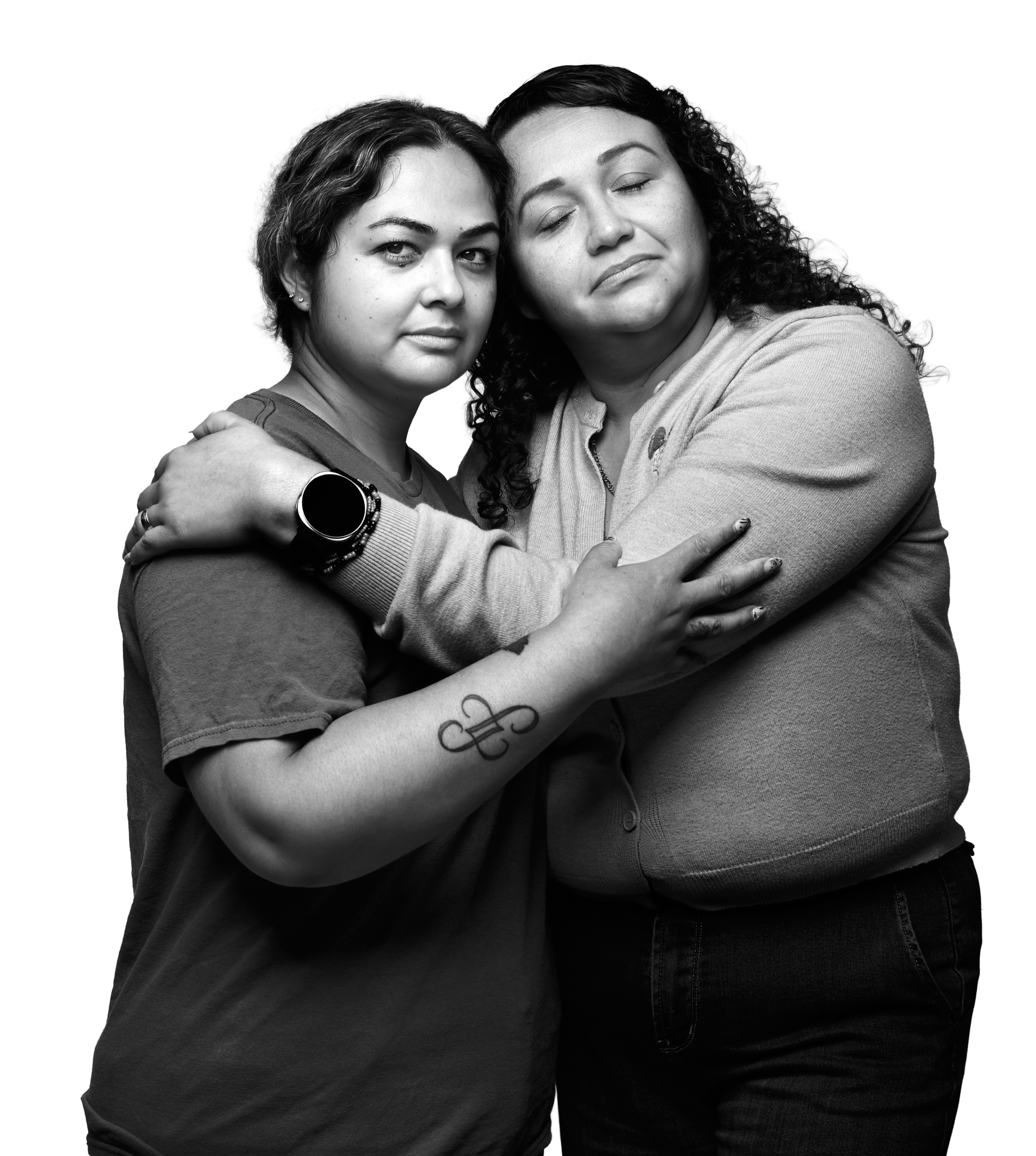
Think about what that means.
The school was open. The teachers were there. The bus was running.
But fear had made those things inaccessible to these children.
Deysy remembers going into stores and finding them nearly empty. As a Hispanic woman walking through town, she could feel people looking at her.
“It was weird,” she said.
Then she repeated it.
“It was really weird.”
Austin had physically hunkered down.
But that wasn’t the part of the interview that really got me.
It was what happened after the visible enforcement activity eased.
“Are We Okay?”
The children came back to school.
The fear came with them.
“Even though [the raids have] passed, and you haven’t heard of a lot of [them], they know that they’re still happening. Like up in the Cities, they know there has been some ICE activity going on, and they ask, ‘Are we still okay to come?’ So they still have that trauma and that distress of even wanting to step out of their house or come to school.”
Teresa told me there are kids who still ask, “Are we okay?”
They know enforcement activity continues elsewhere. So they ask another question:
“Are we still okay to come?”
That hit me.
These kids are trying to understand the rules of a world that suddenly doesn’t seem to have rules.
Because my kids would ask me, “are we going to get pulled over? Are we going to get talked to because of our color and how we look?”
Teresa’s own children ask whether they are going to get pulled over or questioned “because of our color and how we look.”
Deysy’s children ask a different version of the same question:
Do we have to take our passports with us? Our birth certificates?
They are children trying to figure out the protocol.
What documents do I need?
What am I supposed to carry?
What do I do if someone stops us?
And this fear is not confined to undocumented families. Deysy is a legal permanent resident. Teresa was born in Texas. Their children nevertheless understand that the way they look may cause them to be treated differently.1
But statistics don’t tell you what that fear actually looks like.
Deysy did.
Run From the Car to the Door
Deysy’s children wanted her to pick up one of their friends.
Nothing unusual about that.
Then came the rest of the request.
Could she pull the car really close to the house—close enough that their friend could run from the car through the door?
I stopped her.
“So you mean they’re thinking, how am I going to escape if they come?”
“Yes.”
“So they’re always thinking about it.”
“Yes.”
That is shocking when you actually stop and think about it: These are children calculating the distance between a car and a front door because they are afraid they could be taken before they make it inside.
And their fear isn’t some abstract response to cable news.
Deysy told me about an enforcement action outside a Mexican store where children were present.
“It was really traumatic for them,” she said.
She also told me about calling a family one evening after the father had been taken. She could hear the children crying over the phone.
“My papa is gone. What are we going to do?”
They wanted to know where he was. How he was doing. When they could see him. For weeks, the family did not have meaningful contact with him while he was moved between detention locations.
So when another child wants to sprint from the car to the front door, maybe we shouldn’t be surprised. Again, another example of the trauma caused to kids. The agents can leave Austin. But the fear they leave behind can remain lodged in a child’s mind.
A Key for the Children
Then Deysy told me something that changed the entire conversation.
A mother called her.
The woman told Deysy that if something happened to her, she would leave a key in a specific place. Deysy could enter the house, gather what the children needed—And take her children with her. Because there was nobody else.
I actually stopped her.
“She told that to you?”
“Yes.”
Deysy had agreed to accepting the children, a baby, a five-year-old, and a seven-year-old.
Minnesota has a legal mechanism called a Delegation of Parental Authority, or DOPA, that allows a parent to authorize another adult to care for a child when the parent cannot.2
But the paperwork isn’t what stayed with me.
The mother had already done the unimaginable part in her head:
She had contemplated being taken away.
She had decided where to hide the key.
She had chosen the person who would get her children.
And she had prepared her children for the possibility that Mom or Dad might suddenly be gone.
Teresa told me that children still wonder:
“Is my mom going to be home when I get home?”
There it is again.
The randomness.
The waiting.
The constant calculation of what happens if.
When I asked Deysy what it was like to have a mother place that kind of trust—and that kind of responsibility—in her hands, she paused.
She was visibly emotional, almost crying.
“As a human, and as a parent, and as a professional, it breaks you.”
Then she said it again.
“It breaks you.”
That told me a lot about Deysy.
Families don’t hand someone the location of a hidden key and ask them to take their babies because that person has a job title.
They do it because they trust her.
They Came Here for Their Kids
There is a cruel contradiction running through all of this.
Deysy came to Austin from Mexico City when she was 15. Teresa was born in Texas to parents who came from Mexico.
When I asked why their families came to the United States, neither gave me some grand ideological answer.
A better life.
Economic stability.
Opportunity.
And overwhelmingly, opportunity for their children.
Teresa shared parents seeing schools their children could attend and chances for those children to grow.
Deysy put it simply:
“Be more successful and have a better life.”
Later, Teresa told me about a high-school student whose mother and older brother were taken. He was left here by himself. The community tried to help him, but he eventually returned to Mexico because he had nobody to live with and no way to sustain himself.
He would have been a junior this year.
Teresa’s reaction cut directly through the politics:
“It’s hard because these kids and families come for a better opportunity and then just like that to get taken away.”
That is the contradiction.
Parents come here trying to create stability for their children.
And now some of those children are learning how to prepare for their parents to disappear.
What Is Left Behind
Near the end of the interview, I asked Teresa and Deysy what they would say directly to President Trump and the people who architected this enforcement approach.
Teresa answered first.
“We’re all humans. We all deserve the same respect. No matter race, no matter ethnicity. We’re all humans. We should be treated as humans.”
Deysy followed:
“Not all of us are criminals. We have feelings. And we are here to get a better life and better opportunities for our kids and ourselves. And to make a better impact. Not even just in that economy, but in society.”
That is the part that gets lost when immigration is reduced to numbers, legal categories and political slogans.
These policies land on actual people.
And sometimes they land hardest on people who aren’t the stated target at all.
Children.
Children crying because Papa is gone.
Children wondering whether Mom will be there after school.
Children asking whether they need passports or birth certificates before leaving the house.
Children calculating whether they can make it from the car to the front door.
A mother hiding a key.
Two school employees delivering homework and groceries because frightened families won’t come outside.
The stores in Austin are no longer empty. Children have returned to school. The most visible period of enforcement in town has passed.
But that’s not the same thing as saying Austin is back to normal.
For a while, people hunkered down inside their homes.
Now some of them are hunkered down inside themselves.
- “One in four children in the US lives in an immigrant family.“
National research shows that what Teresa and Deysy are seeing is not isolated to Austin. In a December 2025 national survey, 15 percent of adults in immigrant families with children reported that their children experienced increased stress, anxiety, or sadness because of immigration-related worries. Ten percent said their families had avoided school, child care, or after-school activities because of immigration concerns.
Jennifer M. Haley, Dulce Gonzalez, Genevieve M. Kenney, Hamutal Bernstein, and Michael Karpman, “Immigration Concerns Disrupted Families’ Essential Activities and Caused Children Emotional Distress in 2025,” Urban Institute, April 8, 2026.
https://www.urban.org/research/publication/immigration-concerns-disrupted-families-essential-activities-and-caused
↩ - Minnesota has a legal mechanism called a Delegation of Parental Authority, or DOPA, that allows a parent to authorize another adult to care for a child when the parent cannot. Minnesota legal-aid guidance specifically lists the risk of detention or deportation as a reason a parent may want one. We did not establish in the interview whether this particular mother had actually completed a DOPA.
LawHelp Minnesota, “Delegation of Parental Authority (DOPA),” updated July 2026: A DOPA allows another adult to make decisions concerning a child’s care, custody, and property when the parent cannot; the guidance specifically identifies risk of arrest, detention, or deportation as situations in which a parent may want one. https://www.lawhelpmn.org/self-help-library/fact-sheet/delegation-parental-authority-dopa ↩

