
This article is part of Witness: The Human Impact of Immigration Enforcement, an ongoing documentary project documenting the lives of people affected by immigration enforcement. My goal is to move beyond politics and headlines and help readers better understand the human stories often missing from the conversation.
Read more about the project and how you can participate
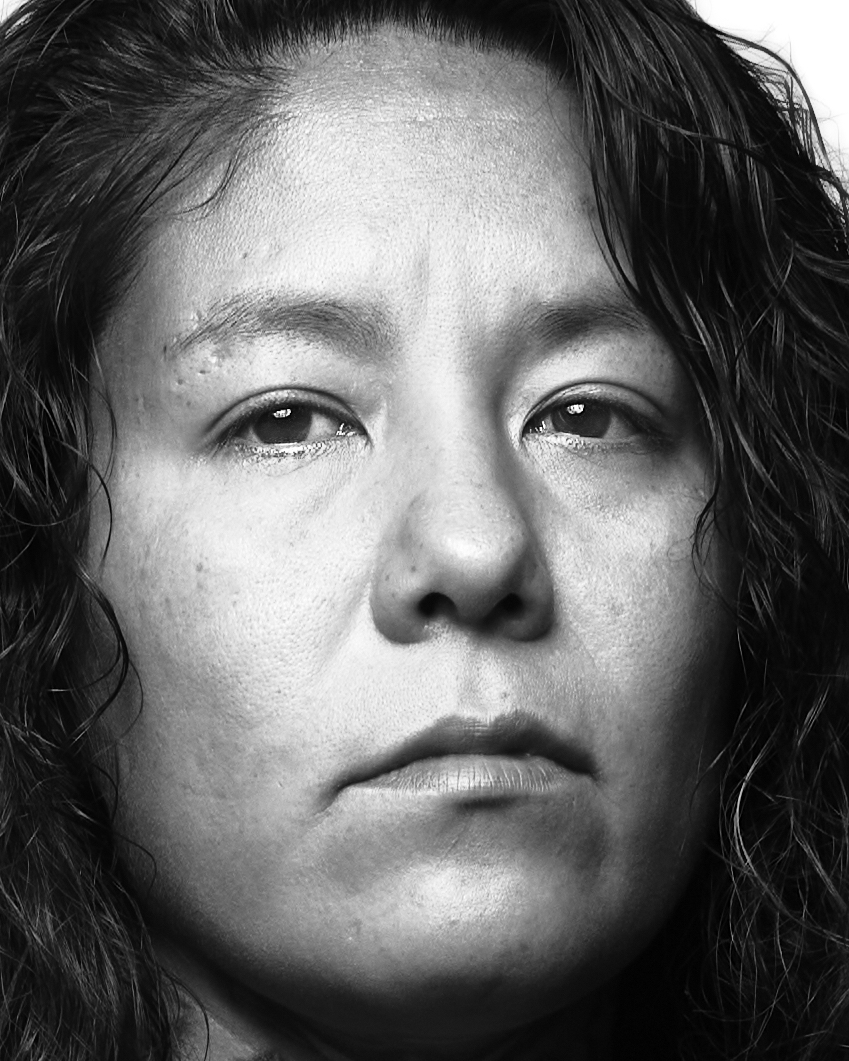
Miriam was born in Casa Grande, Arizona, just weeks after her mother crossed the border from Mexico. Her parents had left behind violence and uncertainty because they wanted something better for their children. Her father eventually moved the family north for a remarkably simple reason: he had asked someone where his children could get the best education.
The answer was Minnesota.
So he bought plane tickets.
Miriam was five years old when Minnesota became home.
She grew up translating for her parents. Over time, helping people became part of who she was. She gives people rides. She helps with appointments. She translates. She is finishing school to become a licensed alcohol and drug counselor. When employers couldn’t accommodate her college schedule, she started doing lawn care and landscaping. She also built a custom clothing business.
She has been through addiction and recovery herself. Faith, she told me, helped carry her through it. Through God, everything is possible, she told me.
Every night, Miriam prays for her community.
This background matters because Miriam’s story didn’t begin with a protest or a confrontation with immigration agents.
It began with her doing what she had been doing most of her life: helping someone who needed her.
It Happened to Me
The trip to Rochester had begun as an ordinary act of kindness.
A young man needed a ride to a medical appointment at Mayo Clinic. He didn’t speak English and did not have transportation, so someone from the Hormel offices reached out to Miriam and asked whether she could help.
She said yes.
On the drive, they talked about immigration enforcement and what was happening across Minnesota. For many in the state’s Latino communities, it had become difficult not to talk about it. The killing of Renée Good in Minneapolis was especially fresh in their minds.1
Miriam remembers thinking that what happened to Good couldn’t happen to her.
I’m a U.S. citizen. But Renée was a U.S. citizen, too.
They reached Rochester and drove toward the Mayo Clinic parking ramp. Nothing seemed unusual. Miriam and her passenger were still talking as she approached the entrance.
“We were just talking about this. I never thought it would happen to me, but here I am.”
Then, in her side mirror, Miriam saw something that made no sense.
A car suddenly jumped the curb, drove across the sidewalk and swung into position beside her, blocking her in. Before she could understand what was happening, lights flashed behind her.
Another vehicle had closed in.
Then another.
These ordinary, unmarked vehicles suddenly surrounded her. And she realized what was happening.
When Miriam told me this part of the story, she stopped.
She began to cry.
Months had passed since that night, and she had resisted calling what happened to her trauma. Even saying the word seemed difficult. Before our interview, she had told others that she was nervous—not about being interviewed, but about what the interview might bring back. She feared reliving that night, and the feelings that came with it.
“It’s just the fact of bringing all those feelings back up that I thought—I didn’t want to call it trauma.”
In broken words and through tears, Miriam tried to explain how she had resisted letting the trauma in—but it had forced its way in anyway, unwelcome.2
“Cause it’s like, how do you let something like, no not how do you let, but you’ve let something like this affect you, but how can you not? Like, how can it not affect you?”
Then, almost as if answering her own question, she reduced it to something much simpler:
“How can you not? Like, how can it not affect you?”
“I’m Not Dying Today”
Then her voice returned to the parking lot on that night.
Her passenger looked at her. Miriam remembers his face as though he had seen a ghost.
“I think he realized [what was going on] as he looked at me. I could see the look in his face. It looked like he had seen a ghost—like he didn’t know what to do or think.”
Agents surrounded the car and began pulling on the locked doors.
Get out of the car!
Open the door!
Put your window down!
The commands came quickly, one on top of another.
“You’re telling me to do all these things at once, and I’m freaking out.”
Miriam reached toward her phone: “Keep your hands where we can see them!”
Her passenger was telling her not to open the doors. Miriam was trying to calm him while trying to follow the agents’ commands herself.
“Listen, relax. I’m going to put my window down. I’m going to put your window down. I’m not going to unlock any doors.”
Around them, other people had begun watching. Some were screaming and swearing at the agents.
That frightened Miriam even more.
She wasn’t only afraid of the armed agents surrounding her car. She was afraid of what might happen if someone in the crowd did something—one sudden movement, one confrontation, one misunderstanding.
“What if somebody on the outside does something? Boom, they’re letting off shots. I was terrified.”
Miriam understood how little room there could be for hesitation—or misunderstanding—once fear took over.3
She put down the window.
The questions began.
What’s your name?
Where are you from?
Are you a citizen?
Miriam was stunned.
“Never in my life did I think as a U.S. citizen that they’d be asking me if I’m legal or not.”
The questions kept coming.
How long had she lived in the United States?
How long had her parents been here?
That question stopped her.
Why would they assume my parents are immigrants, she thought to herself: “You don’t even know where my parents are from because you haven’t even asked me.”
She told them she didn’t want to answer.
And then something changed.
Until that moment, Miriam had been confused and overwhelmed. Now she became afraid that she might be taken.
Everything she had been thinking about on the drive to Rochester came rushing back.
So she concentrated on doing exactly what she was told.
She told them she had lived in the United States all her life. She told them she was a citizen. When they asked for identification, she handed it over. When they told her to get out of the car, she questioned why.
“I haven’t done anything. I’m not too sure why you guys are making me get out of the car.”
She kept her hands where the agents could see them.
“My hands are right here. I’ve given you my ID. What else do you guys want?”
Only then did the agents explain why they had surrounded her car.
They suspected her passenger was someone they were looking for.
The focus was now on Miriam’s passenger.
The agents ordered him out.
He refused.
Miriam pleaded with him.
“Please, please, please, please get out of the car. I don’t want anything to happen.”
She felt terrible asking a frightened man to do something he didn’t want to do. But by then, Miriam’s calculation had become brutally simple.
“I was terrified of getting shot. That was my main thought—I’m not dying today.”
Her passenger finally got out.
The agents asked for identification and began questioning him about his immigration status. He told them he had sought asylum. He showed them his documentation. He told them he had authorization to work and had a pending court process.
Then Miriam asked the question that changed the encounter.
Was he actually the person they had been looking for?
No.
But the questioning continued.
The agents told Miriam they needed to determine whether he was legally in the country.
“That’s not fair. That is not fair.”4
Her passenger tried to convince them.
“I didn’t do anything. Please, guys, I’m legit. You guys see my paperwork?”
He told them about his pending court matter. He told them it wasn’t anything bad. He asked them to look it up.
They told him they would—but they would do it after taking him into custody.
Within hours, he was in Minneapolis.
Miriam remained in the parking lot.
The man she had volunteered to drive to Rochester for medical care would not be riding home with her.
His wife was waiting for him.
And Miriam would have to tell her why he wasn’t coming back.
“It just blew my mind how everything happened so quick. And then I have to go back and report back to his wife and let his wife know that unfortunately he didn’t make it back—that ICE took him.”
Her voice broke again when she told me this.
“That was the hardest part for me.”
Eventually, the agents told Miriam she was free to go, but she didn’t feel free. “It felt like my dignity. Like, you guys kind of stripped me of …”—She couldn’t finish the thought.
She drove out of the parking lot, pulled over and cried.
She called people she knew and tried to explain what had happened. Their reaction was disbelief.
“What do you mean? You’re a U.S. citizen.”
Miriam had believed the same thing only hours earlier. Now her answer was different.
“That doesn’t even matter anymore.”
The Fear Travels
What happened in Rochester didn’t stay in Rochester.
It traveled back to Austin with Miriam.
Her father was furious. They’re not going to mess with my daughter. She’s from here.
“Dad,” Miriam told him, “that doesn’t matter anymore.”
Her parents became afraid too.
Her father had already become reluctant to travel to Mexico to see his 85-year-old mother because he feared something could happen on the way back. Miriam herself has never been to Mexico. She wants to see her aging grandmother.
Now she isn’t sure about going.
This is one of the less visible consequences of immigration enforcement. Fear does not stop neatly at the person being detained.5
That doesn’t mean I am diagnosing Miriam with PTSD. I’m not qualified to do that. 6
But I know what I saw.
Several times during our interview, Miriam stopped speaking and cried. At one point she told me she had been nervous about doing the interview because talking about Rochester brought the feelings back.
“How can it not affect you?”
The Next Right Thing
Miriam could have responded to Rochester by staying home.
Instead, she started going out.
When immigration agents appeared in Austin, she got in her car and went looking for them. She live-streamed locations so people in the community would know where enforcement activity was happening.
Her parents begged her to stop.
Her mother called while Miriam was live.
Where are you? Get away. Go home.
“I have to do something,” Miriam told her.
At another enforcement scene, Miriam watched agents take a man while a young U.S. citizen protested what was happening. Miriam says the young woman was thrown to the ground and arrested. Miriam began yelling too. Her family, watching the livestream, called her and told her to get away.
She stepped back.
But she didn’t stop helping.
Soon people were afraid to leave their houses. Miriam began buying groceries for families. Parents asked her to help get their children home from school.
High school students contacted her late at night because they were afraid to go to class. Their fear wasn’t simply that something might happen to them.
They were afraid they would go to school and come home to find their parents gone.7
This is what immigration enforcement looks like beyond arrest statistics and press releases. It ripples outward through families and communities. Ordinary functions—school, groceries, medical appointments, visiting your grandmother—become calculations of risk.
And people like Miriam begin filling the holes.
There is something else I keep coming back to.
Miriam’s parents came to the United States because they wanted their children to be safe and educated. Their daughter is U.S. citizen, an entrepreneur, a counselor-in-training and the kind of person people call when they need help.
Then one day she volunteered to drive someone to a medical appointment and found herself surrounded by federal agents, wondering whether she might be shot.
Afterward, frightened families began calling her for help.
She answered.
Miriam told me that she knows people make assumptions about her when she walks into a room—she has a tattoo of Jesus on her neck, an expression of her deep faith. But now you know something about who she is. And what she, like so many others in her community and across this country, has lived through.
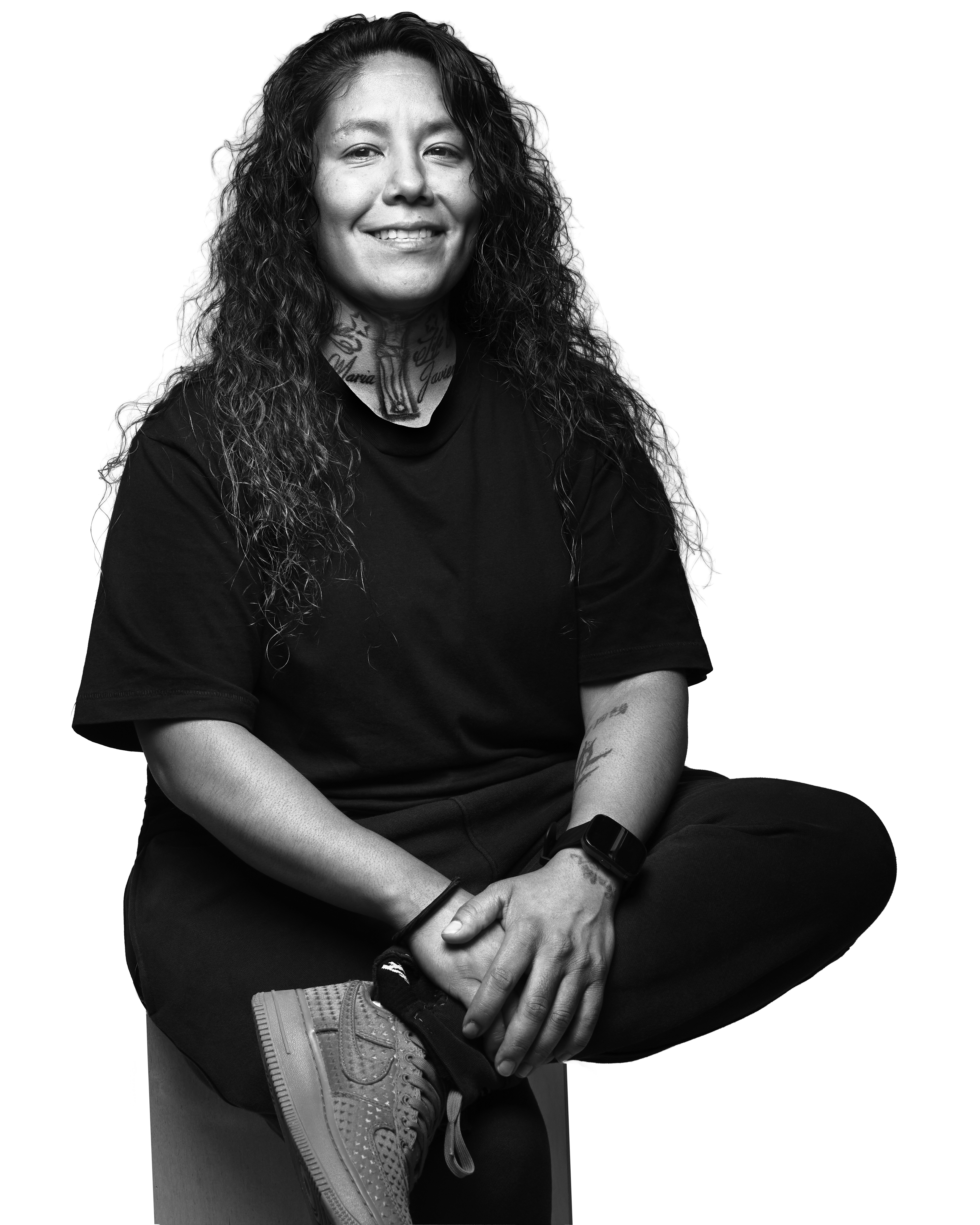
Near the end of our conversation, Miriam described what she was doing in a way that was almost embarrassingly simple.
“I’m just trying to do the next right thing to make the next person at least feel safe at home.”
That may be the part of her story worth remembering most.
Not because Miriam isn’t afraid.
She is.
She just decided fear wasn’t going to make the decision for her.
- Beginning in December 2025, the Trump administration’s Operation Metro Surge brought thousands of federal immigration agents to Minnesota in what federal officials described as the largest Department of Homeland Security enforcement operation of its kind. Immigration arrests and highly visible enforcement actions spread through the Twin Cities and into communities including Rochester. Reports documented Latino residents afraid to leave their homes, go to work, visit businesses, or seek services; U.S. citizens of color also reported being stopped and questioned by immigration agents. The operation became still more charged after ICE officer Jonathan Ross shot and killed Renée Good in Minneapolis on January 7, 2026. Her death prompted large protests and intensified scrutiny of federal immigration enforcement throughout Minnesota.
Brad Heath and Jonathan Allen, “Homeland Security to Send Hundreds More Officers to Minnesota, Noem Says,” Reuters, January 11, 2026, Reuters article. ↩ - Avoidance is a common response following a traumatic experience. People may try to distance themselves from memories, thoughts, or emotions connected to what happened, sometimes because those feelings seem overwhelming. Trauma can nevertheless return through upsetting memories and strong emotional reactions when the experience is recalled. U.S. Department of Veterans Affairs, National Center for PTSD, “Avoidance.” National Center for PTSD — Avoidance. ↩
- In situations of sudden perceived danger, the body can automatically enter a fight, flight, freeze or fawn response, preparing a person to react quickly to a threat. The response can occur almost instantaneously and heighten awareness of potential danger. Cleveland Clinic, “What Is the Fight, Flight, Freeze or Fawn Response?,” Cleveland Clinic Health Essentials, July 22, 2024. Cleveland Clinic article ↩
- Miriam believes they were racially profiled. We can’t know what was in the minds of the agents who approached her, but her experience is not isolated.
ProPublica identified more than 170 U.S. citizens who were held against their will by immigration agents during raids and protests in the first nine months of the second Trump administration. The investigation identified more than 50 citizens who were detained after agents questioned their citizenship and reported that nearly all of them were Latino. Nicole Foy, “We Found That More Than 170 U.S. Citizens Have Been Held by Immigration Agents. They’ve Been Kicked, Dragged and Detained for Days,” ProPublica, October 16, 2025. ProPublica — “We Found That More Than 170 U.S. Citizens Have Been Held by Immigration Agents”. Link ↩ - Research has found associations between immigration enforcement and adverse mental-health outcomes among U.S. citizens with personal connections to people who have been detained or deported. In a study of 3,282 U.S.-citizen participants, those who personally knew someone who had been detained or deported were more likely to screen positive for anxiety and depression and to report greater psychological distress. The associations were particularly pronounced among U.S.-citizen Latinos. Miguel Pinedo and Carmen R. Valdez, “Immigration Enforcement Policies and the Mental Health of US Citizens: Findings from a Comparative Analysis,” American Journal of Community Psychology 66, nos. 1–2 (2020): 119–129. Wiley — American Journal of Community Psychology ↩
- A 2024 study of U.S.-born Latino adults found associations between posttraumatic stress disorder (PTSD) symptoms and several experiences involving immigration enforcement. These included experiencing an immigration raid, having a family member detained or deported, and other direct or family-related encounters with immigration enforcement. The findings suggest that the psychological effects of immigration enforcement can extend beyond the individuals directly targeted and affect U.S.-born members of Latino families and communities. Miguel Pinedo and Christian Escobar, “Childhood Parental Deportations, Immigration Enforcement Experiences, and Posttraumatic Stress Disorder Among US-Born Latino Adults, 2021,” American Journal of Public Health 114, suppl. 6 (2024): S495–S504. American Journal of Public Health — DOI 10.2105/AJPH.2024.307660 ↩
- For a story involving a mother who was abducted by ICE and the impact to the family, see the story Taken ↩

