
This article is part of Witness: The Human Impact of Immigration Enforcement, an ongoing documentary project documenting the lives of people affected by immigration enforcement. My goal is to move beyond politics and headlines and help readers better understand the human stories often missing from the conversation.
Read more about the project and how you can participate
I met with Flor and Maria in Austin, Minnesota, to talk about what immigration enforcement had begun to look like from inside their community. Maria works with CLUES1, helping families connect with food, services and other resources. Flor, an immigrant from Mazatlán and a CLUES volunteer, had become one of the people neighbors called when they were too frightened to leave their homes. Maria interpreted for Flor during our conversation.
What they described was not immigration policy in the abstract. It was missed work, early-morning phone calls, food carried to people afraid to come outside, and families trying to decide whether an unfamiliar car meant danger.
The Door That Stayed Closed
Both women had stopped working. One was single; Flor believed the other had two children. She did not know how they were paying rent, buying groceries or getting through each day. She knew only that they were frightened enough that they would not come outside even to accept a basket of food.
“Just leave the food and you can just go!”
And then they simply stopped seeing them. “We don’t know what happened to them,” Maria explained quietly. For Maria and Flor, those two women became a particularly stark example of what fear was doing to Austin.2
Fear had become so pervasive that ordinary things could suddenly look threatening.
When Maria’s father died and people drove up from Texas for the funeral, unfamiliar license plates appeared around town. Maria remembers people panicking.
“Oh my God, they’re here.”
Some were afraid to come outside until the cars left. Flor found herself reassuring them: No. Calm down. That isn’t ICE.
And then there were the phone calls. People would call Flor at four in the morning before leaving for work and ask her to go look first.
Was immigration enforcement there?
Was it safe to leave?
So Flor would get up and check. She checked workplaces. She watched streets and hotels. She posted what she saw on Facebook, so people would know where officers appeared to be and where they might be able to go safely. She even accompanied people to immigration appointments.
What makes that remarkable is who Flor is.
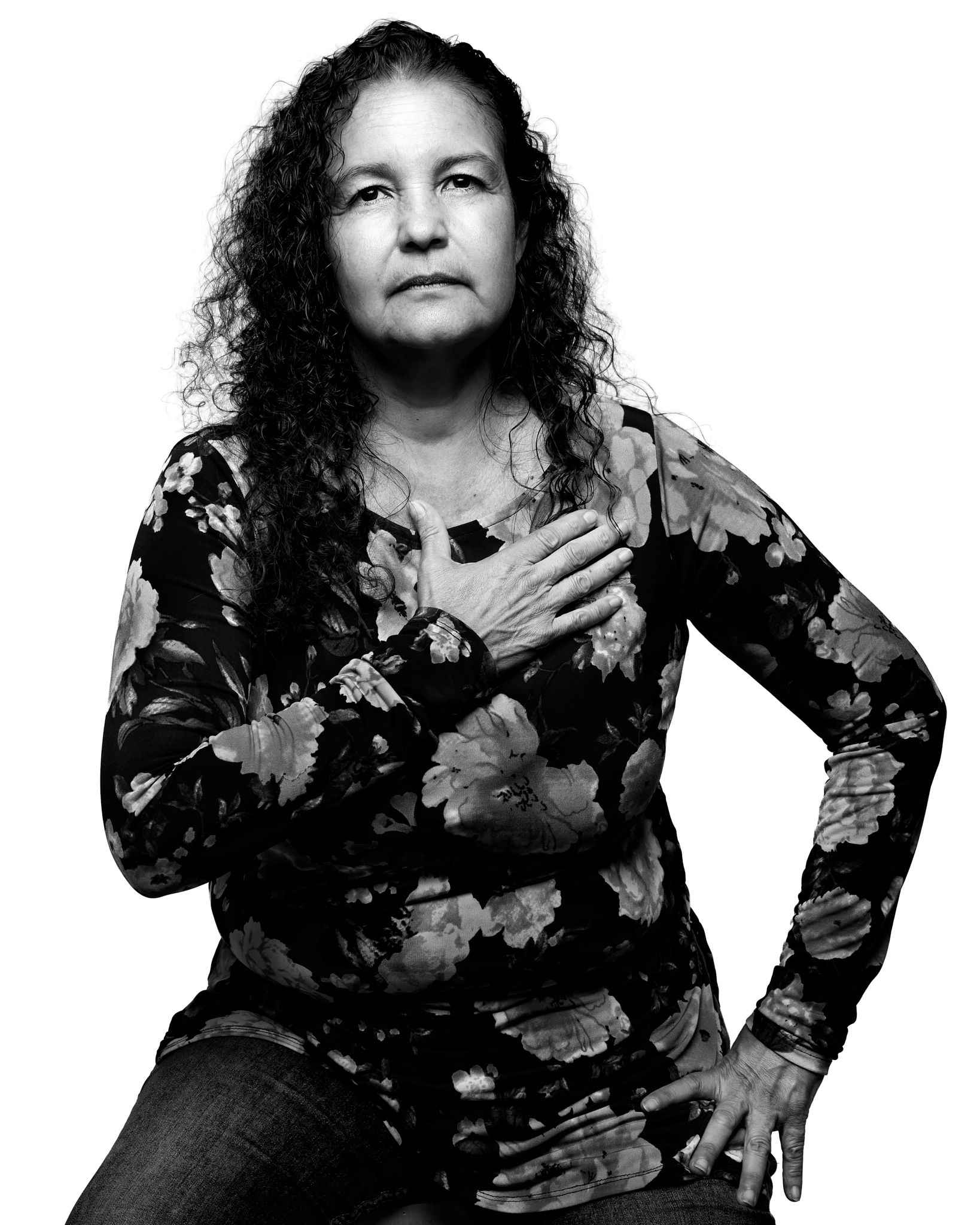
She is not a U.S. citizen. She came from Mazatlán, Sinaloa, and was still working through her own immigration process. An encounter with immigration authorities was not an abstract concern for her.
Maria understood that. She is a U.S. citizen, born in Texas. And yet as she watched Flor moving through Austin while so many others were retreating inside, Maria told me she could hardly understand where Flor found the nerve.
“I’m from here. I was scared.”
Then Maria laughed almost in disbelief.
“Oh my God, I admire you.”
Flor kept going.
The People Who Opened Doors
Maria still remembers being under the blanket.
Her family had left Texas for Minnesota, seven or eight of them crowded into what she remembers as an enormous Cadillac. At a gas station along the way, Maria looked outside at people who did not look or sound like the people she knew back home and pulled the blanket over herself.
“Oh my God, no, no,” she remembers thinking. “I don’t want to get up because I’m so scared.”
She was a child entering a place she did not understand.
What Maria would discover, though, was how often people she did not know were willing to help.
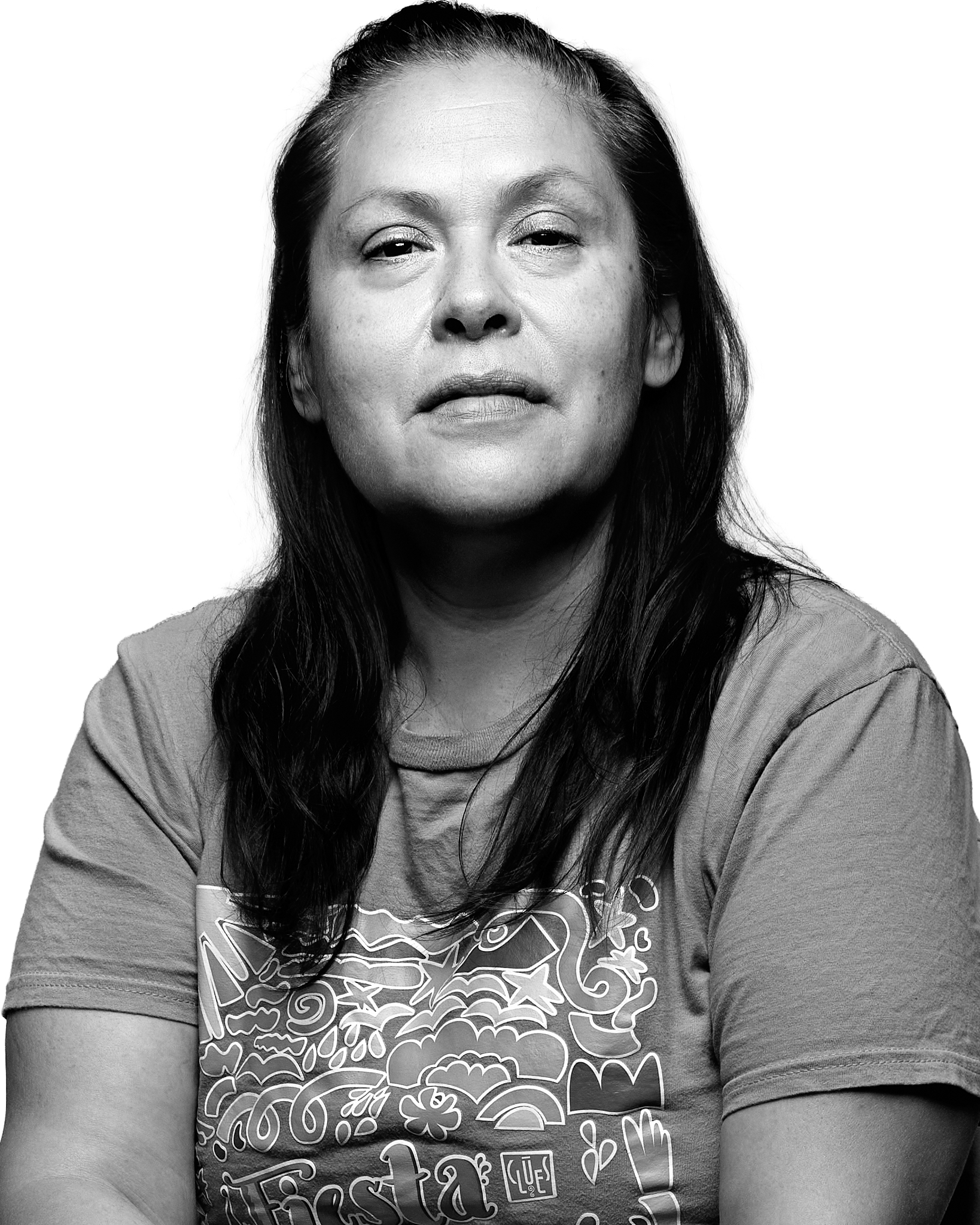
Her father had come from Mexico wanting better opportunities and an education for his children. Near Laredo, Texas, he found work for a farmer named Jerry McHenry—a name Maria still remembers decades later because of what he did for her family. McHenry helped them with food and rent and, Maria remembers, helped her father as he worked toward becoming a permanent resident.
Her father did the rest through work. He took two jobs, working nights as a watchman and days in the fields.
“I don’t know how he did it,” Maria said. “But we always had food. We always had bills paid.”
That generosity did not end when the family reached Minnesota.
When money was short, Maria remembers her mother going to churches for help. Sometimes they needed assistance with rent. One Christmas, church members connected the family with people who gave them a tree surrounded by presents.
“We had an awesome Christmas one day,” Maria remembered. “I remember that was a good Christmas.”
For the little girl who had once hidden beneath a blanket, Minnesota was becoming something else. There were unfamiliar people here, certainly. But some of those strangers were also the people opening doors.
And before long, Maria found herself doing the same thing for her own family.
Because her parents spoke little English, Maria became their interpreter. That responsibility did not wait until she was an adult. Her mother sometimes pulled her out of school because there was a doctor’s appointment or paperwork at Human Services that the family could not navigate without her.
“My mom was like, ‘Well, you can’t go to school today.’”
Maria remembers protesting. She wanted to be in school.
But she went.
She translated for her mother and father. She helped with her brothers and sisters. She sat beside her mother at Human Services and helped fill out forms adults were supposed to understand.
It was an extraordinary amount of responsibility to place on a child. But it also meant that Maria learned very young what it feels like to need somebody beside you when a language, an institution or simply an unfamiliar place becomes overwhelming.
And somewhere along the way, helping stopped being merely something Maria had to do.
It became something she wanted to do.
“I just thought to myself, I really like working with …” she recalled. “I would want to help, and I would want to work with the community. Because I was always the one that would help my mom to …interpret, translate.”
Today, that is essentially what Maria has built her career around. At CLUES, she helps families find food, services, and resources and navigate systems that can be difficult even when English is your first language. And although CLUES grew out of Minnesota’s Latino community, Maria is quick to point out that its help is not limited to Latinos.
There is a quiet symmetry to Maria’s life.
A farmer helped her father. Churches helped her family. As a child, Maria learned to help her parents.
And then she grew up and became someone whose work is opening those same doors for somebody else.
What Flor Carried With Her
Flor knows what it means to be afraid of the people who are supposed to protect you.
She grew up in Mazatlán, surrounded, as she describes it, by narcotics trafficking and violence. Between the ages of roughly 15 and 25, Flor remembers young women disappearing. Some were girls she knew. She described groups abducting women, exploiting them over a weekend and then, in her words, disposing of them “like garbage.”
Flor says she herself narrowly escaped being kidnapped twice.
Then they took her son.
Her older son was living in Mexico when he was kidnapped. Flor says she had to pay to get him back. But what made the experience even more terrifying was who she believed was involved: Mexican federal officials.
“The people that are federal people from the Mexico government,” Maria interpreted for Flor, “they were the ones that kidnapped him.”
That left Flor with nowhere obvious to turn.
“I couldn’t even go to the police or go to the federal people,” she said, “because they were the same people. So I couldn’t do nothing.”
And there was no easy way to put that fear out of sight. Flor lived near the boats in Mazatlán, where federal officers regularly appeared to search for drugs. The uniforms that should have represented security instead became another source of anxiety.
“She was really, really scared,” Maria translated, “because where she was at, the federals were there checking the boats.”
Flor lived with their presence constantly.
When she eventually came to the United States, she found something profoundly different. She wanted better opportunities for her children, particularly education for her son. She remembers being struck by the fact that public education here was free; in Mexico, she said, her family sometimes even had to supply basics such as toilet paper for school.
But coming to the United States did not mean she was finished being afraid of authorities.
Years later, immigration officers came to her home for her husband. Flor was there. Her visa had expired, so they took her too.
Flor spent about a month in detention.
“I was there a month in jail,” she told me.
That detail changes the way I understand everything Flor is doing in Austin now.
She does not have to imagine what it feels like to be taken away. She knows.
She knows what it is like to lose control over where you sleep, when you leave and what happens next. She knows what it is like to encounter officials while knowing that your future may suddenly depend on them. And long before that, she knew what it was like to distrust authority altogether because, in her account, officials themselves had been part of the danger surrounding her family.
Yet when fear spread through Austin, Flor did something that at first seems almost contradictory.
She went out.
When people were afraid to drive to work, they called Flor before dawn and asked her to check whether immigration officers were nearby.
When people were afraid to leave their homes for food, Flor carried food to them.
When someone needed to go to an immigration appointment and others were too frightened to drive her, Flor got behind the wheel.
She was not naïve about the risk. She had already been detained once herself. That is what makes Flor difficult to reduce to a simple story of fear. Everything in her experience might reasonably have taught her to stay away from authorities, stay quiet and protect herself. Instead, when other people became frightened, Flor kept moving toward them.
And the question hanging over her story becomes difficult to avoid:
Why?
We will eventually get Flor’s answer—not as a grand declaration about courage, but almost as if the answer is obvious to her.
That is the paradox at the center of Flor.
She knows fear intimately.
And somehow, when someone else is afraid, her instinct is still to go help.
“I’m Not Scared”
When we returned to what had happened in Austin during the immigration enforcement surge, Maria described a community that seemed to pull inward.
Before, she said, things had felt normal. People came to events. They participated in programs. They showed up for Canasta Familiar food distributions. Then people began disappearing from those ordinary parts of community life.
“A lot of people were scared,” Maria said. “A lot of people were not trying to come out.”
But what disturbed her most was not the empty events. It was what she says she witnessed happening to people.
She talked about people who could not speak English well enough to understand what was happening, much less defend themselves. She described seeing people stopped in Austin, pulled from their cars and forced to the ground.
“And [they] beat them up,” she said.
Then Maria began talking about how easily she believed the same suspicion could fall on someone like her.
“Even if they saw my color, or me speaking Spanish, or whatever, or my plates,” she said.
Then she used her own name to make the point.
“Maria Martinez. Oh, she’s Hispanic. Well, let’s stop her.”
Maria is a U.S. citizen.
What she was describing—a fear that citizens and people with lawful status could also be swept into immigration enforcement—was not confined to Austin.3
Maria had heard that enforcement was focused on criminals. She had no objection to removing people who had committed crimes. Neither did Flor.
But that was not all Maria believed she was seeing.
“They said that they were coming for criminals,” she told me. “I don’t think some of the people that they took were criminals.”4
Her frustration rose as she started listing the people she knew were working around her community:
People cleaning houses.
People doing yard work.
People working in the fields.
People paying taxes and supporting families.
“Why would you bother them?” Maria asked.
Then again:
“What are they doing?”
For Maria, this was not simply an argument about compassion. These were people woven into the ordinary functioning of the country itself—doing work that still had to be done after they disappeared.5
And then I asked Flor how all of this had affected her.
After everything she had already told me—about the kidnappings in Mexico, about her son, about living afraid of federal officials she says she could not trust, about spending a month in detention in the United States—her answer was almost startling.
“I’m not scared.”
She said it again.
“If they want to deport me, deport me. I’m not scared.”
And then came the part that explains Flor better than anything I could write about her:
“But the frustration to me is that sometimes I can’t help the people. I can’t help the people, but I’m trying my best to, like, be there.”
She gave me an example.
The day after Renee Good was shot and killed by an ICE officer in Minneapolis, a woman Flor knew had an immigration appointment.6 Nobody wanted to take her. The woman was terrified. The people around her were frightened too. The shooting had happened only the day before.
Flor drove her.
On the way, Flor tried to calm her.
“Everything’s going to be fine. Just play nice, just play cool. We’ll be there.”
Flor knew perfectly well that she could not promise that.
Flor is not a U.S. citizen. She is a permanent resident. And she told me that when immigration officers check her record, her earlier detention still appears. “It’s a big red flag,” she said. She knows that can mean being stopped while someone investigates further.
She went anyway.
“Even though maybe they would have taken both of us, I still took her.”
The appointment went fine. The woman came home.
What stays with me is not that Flor somehow lacks fear. Her life story makes that explanation almost impossible. She knows what it means to be frightened. She knows what it means to be detained. She knows what it feels like when the people around you are afraid of authorities.
Yet when someone else was frightened, Flor’s instinct was to go with her.
“I just have to be prepared,” she told me.
Near the end of our conversation, I asked Maria and Flor why they had agreed to sit down with me in the first place.
Maria answered first.
“I think it’s important for you to hear our voice, and what we went through with the community of Austin.”
Then she added something that felt less like an explanation than a request.
“I think it’s a voice for us through you that can maybe help us.”
Flor’s answer was even simpler.
“For you to know our story because we’re not criminals.”
She wanted people to understand that immigrants do not arrive as one interchangeable group of people with one motive, one nationality or one story.
“No, we’re not Mexican. Everybody’s different.”
And then Flor said the sentence that, in many ways, explains why she wanted to talk at all:
“Every person has their story.”
A few moments later, she added:
“We deserve respect because everybody comes here for a dream.”
They had spent our conversation telling me what happens when people become frightened enough to hide behind doors, stop going to work, stop attending community events, or become afraid to drive someone to an appointment.
Their final request was much simpler than a policy argument.
See the person before the label makes them disappear.
- CLUES describes itself as Minnesota’s largest Latino-led nonprofit, founded in 1981 by and for Latinos. Maria emphasized during our interview that its services are not limited to Latino families and that the organization helps others in the community as well. https://clues.org/services/community-health-and-wellness/access-to-healthy-food/ . ↩
- Maria said that CLUES’ Canasta Familiar distributions in Austin had typically drawn about 130–150 people, then fell to roughly 50–80 as families became afraid to leave their homes. She said volunteers, including Flor, began delivering food baskets directly to those who were afraid to come themselves. CLUES’ Canasta Familiar is its food-access program in Austin: https://clues.org/services/community-health-and-wellness/access-to-healthy-food/ ↩
- There is documented evidence that the Minnesota enforcement surge reached beyond undocumented immigrants. The Associated Press reported cases in which U.S. citizens were stopped, questioned and subjected to facial-recognition or other biometric identity checks during federal immigration operations. Source: Associated Press, https://apnews.com/article/52662450a15a7be8d9df69036f9b5f12 ↩
- The available enforcement data support Maria’s distinction between an announced emphasis on criminals and the broader population actually being arrested. Available ICE data also show an important distinction within the category of people described as having a “criminal record.” Analyses of ICE data have found that only about 5–7% of detainees or arrestees during portions of the current enforcement campaign had convictions for violent crimes, while many of the remaining convictions involved traffic, immigration, vice, or other nonviolent offenses. By July 2026, more than 70% of people in ICE detention had no criminal conviction at all. These figures help distinguish the relatively small group convicted of serious violent crimes from the much broader population being swept into immigration enforcement.
Cato Institute, Cato Institute, David J. Bier, “5% of People Detained By ICE Have Violent Convictions, 73% No Convictions,” Nov. 24, 2025, https://www.cato.org/blog/5-ice-detainees-have-violent-convictions-73-no-convictions. ↩ - Federal labor statistics support Maria’s observation that immigrants are heavily represented in several of the kinds of work she named. In 2025, foreign-born workers represented 19.1% of the U.S. civilian labor force and were more likely than native-born workers to work in service occupations and in natural-resources, construction and maintenance jobs.
USDA Economic Research Service, Legal status of hired crop farmworkers, fiscal years 1991–2022, using U.S. Department of Labor National Agricultural Workers Survey data. The FY2022 bar represents a three-year average for 2020–22; approximately 32% of hired crop farmworkers were U.S.-born and 68% were foreign-born. Sources: U.S. Bureau of Labor Statistics, https://www.bls.gov/news.release/forbrn.htm ; U.S. Department of Agriculture, Economic Research Service, https://www.ers.usda.gov/topics/farm-economy/farm-labor ↩ - Renee Nicole Good, a 37-year-old U.S. citizen and mother of three, was shot and killed by ICE officer Jonathan Ross in Minneapolis on January 7, 2026. Reuters’ visual analysis found that Ross fired three shots as Good’s SUV moved past him. Federal and Minnesota officials disputed whether the shooting was justified. Flor’s account places the immigration appointment she describes on the following day. Source: Reuters, https://www.reuters.com/world/us/how-fatal-ice-shooting-minneapolis-unfolded-20-seconds-2026-01-09/ ↩

