
This article is part of Witness: The Human Impact of Immigration Enforcement, an ongoing documentary project documenting the lives of people affected by immigration enforcement. My goal is to move beyond politics and headlines and help readers better understand the human stories often missing from the conversation.
Read more about the project and how you can participate.
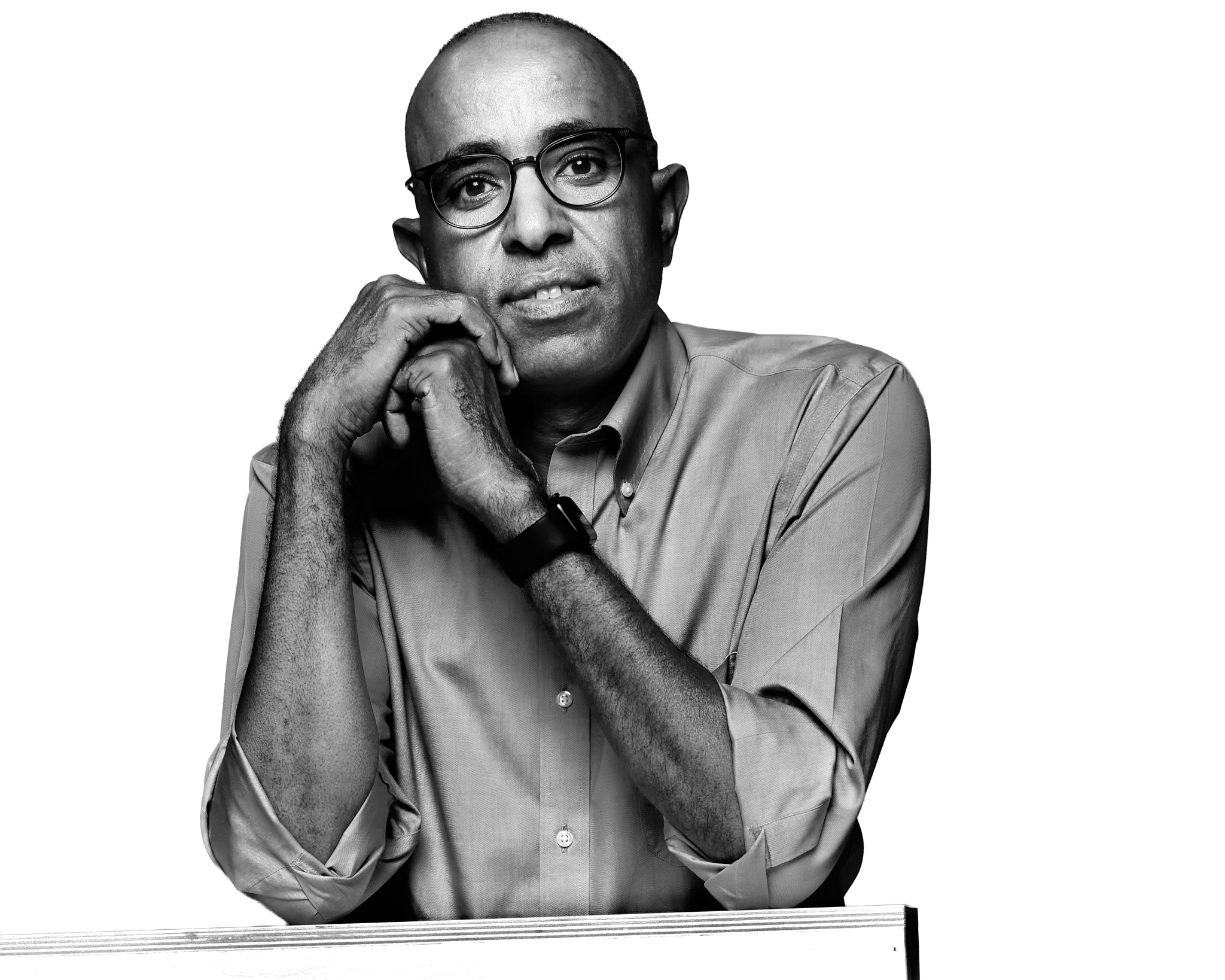
Mohammed Abdinur lost the future he imagined in Somalia. America gave him another. Now the teacher and father worries about what fear is taking from the country he loves.
A Warning From Someone Who Knows
“We don’t want America to become a failed state.”
Coming from someone who has never witnessed the collapse of a country, those words might sound like political hyperbole. But Mohammed Abdinur has lived through precisely that.
He watched Somalia descend into civil war 1. Relatives died. For 18 months, he did not know whether his own parents were alive. The country where he had dreamed of building his future became a place he could no longer safely return to.
“I have suffered that before,” he told me.
Twenty-seven years after finding refuge in America, Mohammed is seeing things that deeply trouble him.
On January 24, he was teaching a class at the International Institute of Minnesota when news broke that federal agents had shot and killed Alex Pretti, an American citizen and intensive care nurse, on a Minneapolis street.
The news reached his students through their smartphones. Some began crying. Others sobbed.
“And then the whole class turns into trauma,” Mohammed recalled.
Just 17 days earlier, another American citizen, Renée Good, had been shot and killed by a federal immigration agent in Minneapolis.
And the fear extended well beyond those two deaths.
During Operation Metro Surge, federal agents stopped and detained people who were themselves American citizens. Human rights investigators documented cases of racial profiling, with people questioned or detained because of their perceived ethnicity or nationality. For many people of color, citizenship no longer felt like a guarantee against being stopped, questioned, or taken into custody.
Mohammed understood their fear. He has been an American citizen for 24 years. Yet when I asked whether his own family was afraid, he acknowledged that they were.
These were not abstract concerns about immigration policy. They were questions about personal safety, civil liberties, and whether the institutions Americans depend upon would protect them.
When I asked whether his family was angry, Mohammed corrected me.
“No, we’re not angry. We are more desperate.”
What struck me was not simply the fear, but where it was coming from. Here was a man who had escaped the destruction of his homeland, built a successful life in America, raised a family, and devoted his career to helping others achieve the same. Now he was worried about the future of the country that had given him opportunity.
Somalia and the United States are profoundly different countries. Mohammed knows that. He was not claiming America had become Somalia.
His warning was about something more fundamental: what happens when people begin losing confidence that their safety, their rights, and their futures are secure.
He had seen where the loss of those things could lead.
And he desperately wanted America to avoid that fate.
To understand the weight of his warning, we need to understand what America means to him.
The Dream Was to Go Home
Mohammed was studying agricultural engineering in Cairo. His dream was to return to Baidoa as an agricultural engineer and use his education to improve food security and help build a future there—America was never on his mind.
Then, in January 1991, Somalia’s central government collapsed amid civil war. The violence and ensuing famine devastated his homeland. Mohammed lost contact with his family. As his country descended into chaos, so did the future he had imagined for himself. He fell into depression.
Then, on January 1, 1993, President George H. W. Bush visited Baidoa during the U.S.-led humanitarian mission Operation Restore Hope.2 Mohammed watched from Egypt as the world’s attention turned toward his home.
“That was the most hopeful day in my life,” he recalled.
He was struck by the strength and determination of a president willing to act, and by the compassion of a nation reaching across the world to help people suffering from war and famine. American troops and an international relief effort were helping food reach those who desperately needed it. To Mohammed, America represented something extraordinary: a country powerful enough to make a difference and generous enough to care. He didn’t dream of leaving Somalia. He dreamed that, with America’s help, his homeland might have a future again. For Mohammed, the operation’s name was not an abstraction. It did restore hope.
After one year and a half, no news … I didn’t know whether my mom is alive, my father is alive, anyone is alive in my family.
Then his brother called from Nairobi. After 18 months of silence, Mohammed learned who had survived. And who had not.
But the country did not recover as he had imagined. His scholarship in Egypt was running out. His Somali passport had expired. He lacked authorization to work in Egypt, and returning home remained dangerous. While volunteering as an interpreter with people seeking help from the United Nations refugee agency, Mohammed began to recognize his own circumstances in theirs.
He, too, was a refugee.
Leaving was agonizing. His mother wanted everyone home. His father refused to leave Somalia. Mohammed, the youngest and especially close to his mother, feared moving halfway around the world.
“The pushing force is much stronger than the pulling force,” he explained.
He had no job waiting in America. He did not even know which country might accept him. When he applied for resettlement, the destination could have been the United States, Canada, Australia, or somewhere in Europe.
Six years passed between the period when he began seeking refugee protection and his acceptance for U.S. resettlement. Then came the news: Richfield, Minnesota.
“Where is Richfield, Minnesota?” he remembered asking.
In April 1999, Mohammed, his wife, and their two children—ages six and four—arrived in a place they had never seen.
Two Strangers Opened Their Home
Rod and Sandra met the family at the airport and brought them to their house in Chaska. They volunteered with World Relief, which helped resettle the family.
For two months, their basement was home. It had bedrooms, a bathroom, books, and a television. But when Mohammed talks about those weeks, the furnishings are almost incidental.
He remembers the hospitality.
Rod and Sandra took them to a neighborhood barbecue, Wisconsin, the State Fair, and a Twins game. Rod explained innings and home runs to a family who had never watched baseball. Their children played together even before Mohammed’s children could speak English.
One day, Mohammed’s young son spotted a squirrel and came running, shouting, “Asad!”—Arabic for “lion!” Having never seen a squirrel back home, he had mistaken the little creature for something far more formidable. Decades later, both families still laugh at the memory.
But another memory stays with Mohammed even more deeply.
Rod was a devoted Christian. Mohammed is Muslim. Their backgrounds, religions, and childhoods were separated by an ocean. Yet, Mohammed watched the way Rod cared for his parents, especially his mother, and recognized something familiar.
“And that’s me,” he told me.
Rod’s family included Mohammed’s family in their prayers. The gesture moved him. He had traveled thousands of miles from a country at war and discovered, in a stranger’s home, a man who loved his family much as he did.
Strip away birthplace, religion, language, and our labels, and two men recognize themselves in each other.
Mohammed has a beautiful way of explaining what their welcome did for him:
“There is a feeling deeper than any other feeling that someone gives you once, and that feeling remains with you the rest of your life.”
“After that, that was the fuel that kept me going.”
What America Received
Mohammed began volunteering at the resettlement agency almost immediately. Within weeks, he was interpreting, translating documents, going to appointments, and welcoming people at the airport—doing for others what had just been done for him. The agency soon hired him.
He and his wife worked. They rented their first apartment. For the first time, they had two incomes and a home of their own.
“So this is the American dream,” he said, remembering that apartment.
He went back to school while working, sometimes holding a full-time and a part-time job. Eventually he owned a home, built a career, and raised three children who all graduated from the University of Minnesota. He takes particular pride in the fact that they work and volunteer.
When I asked what America received in return for the help he was given, his answer was direct: hard work, loyalty, and a commitment to contribute.
Today, at the International Institute of Minnesota3, he teaches professional leadership and entrepreneurship. Before that, he helped aspiring business owners at the Neighborhood Development Center. By his estimate, he has taught a couple of thousand people.
“I’m not teaching from the books,” he told me. “I’m teaching from my experience.”
His lesson is not to refuse help, but to use it as a beginning. Take the job that pays the bills. Learn a skill. Find more reliable transportation. Go back to school. Move toward work that can support a family.
Then help someone else.
Rod and Sandra helped Mohammed build a new life in America. In the decades since, he has helped thousands of immigrants pursue opportunities of their own. Those individuals, in turn, can provide for their families, contribute to their communities, and help others succeed.
What began as one family’s generosity has the potential to multiply across generations. I couldn’t help thinking of a chain reaction: one act of kindness setting countless others in motion, its effects extending far beyond the people who started it.4
Those figures challenge the notion that welcoming refugees is simply charity. But Mohammed’s worth—and anyone else’s—should never depend on passing an economic test. He was a human being deserving of safety before he earned his first American paycheck.
What struck me is what became possible after he was given that chance.
When the Teacher Can No Longer Just Teach
In December 2025, President Donald Trump described Somali immigrants as “garbage” and said he did not want them in the country.5 I thought about that word as Mohammed described his own American life.
Then Mohammed told me what happened during Operation Metro Surge.
Students who had come to the Institute to learn English, prepare for college, train for healthcare jobs, or build businesses became afraid to travel to class. Some relied on public transportation and feared standing at bus stops along Como Avenue, exposed to the possibility of encountering federal agents.
Within days, the Institute shifted classes online. Mohammed converted his two courses to Zoom, rewrote lessons, and tried to replace the interactive group work that was central to his teaching.
Then he encountered something I found almost impossible to comprehend: some students were too frightened even to turn on their cameras.
The fear had followed them home.
Mohammed began opening his Zoom room early for individual check-ins. He listened. He tried to correct rumors and offer reliable information. He offered what he called “virtual hugging.”
The news made matters worse. He recalled teaching when word came of the fatal shooting of Alex Pretti by federal agents in Minneapolis, weeks after Renée Good had also been killed. Students received alerts on their phones. Some cried. The lesson gave way to distress.6
“So I become a teacher, a healer, organizer, misinformation fighter,” Mohammed said. “Sometimes firefighter.”
That sentence stopped me.
His work is to help people acquire skills, advance in their careers, and contribute to Minnesota. Instead, he was spending precious teaching time helping students manage fear. He continued to teach online because he refused to leave them idle, but he acknowledged that the quality suffered.
This is what I think of as mission displacement: organizations built to create opportunity being forced to redirect their energy toward protecting people from the conditions surrounding them.
His classroom was not alone. Minnesota schools and colleges reported students staying home during the surge. In a March 2026 University of Minnesota survey, 80 percent of responding public-school leaders statewide said the operation negatively affected students’ ability to learn.7
We can debate the law and how it should be enforced. But we should also be willing to look at what enforcement is doing in the lives of people who are trying to study, work, and improve their circumstances.
The Future We May Never See
I asked Mohammed to imagine arriving in Minnesota in 1999 under the conditions his students were facing.
His answer was immediate.
“I’ll be isolated. I’ll be angry. I’ll be [lonely]. I’ll be depressed.”
He believed he would have been afraid to pursue a green card or citizenship. He might have kept to himself, accepted precarious cash work, and never progressed beyond survival. He would not have become the teacher sitting across from me.
And what of his children?
Mohammed remembers studying while his children were in elementary school. They watched him read, work, return to college, and build relationships in their new community. As he described it, he was their first window into America.
“For them, this was the first window they saw America. And it was brilliant and good and appetizing.”
He believes that example shaped their ambitions.
Now he sees immigrant parents who are afraid to leave home and students whose plans have been interrupted. What will their children learn about the country around them? What future will they believe is available to them?
“Those role models are disappearing,” he said. “The fear is replacing the hope.”
We cannot count every business never started, career stalled, or young person who stopped believing opportunity was within reach. We may not even recognize the loss when it happens. The doctor, teacher, entrepreneur, or neighbor who could have made a difference is simply missing from the future.
And it is a loss for the rest of us, too.
If that chain reaction never starts.
What We Owe One Another
Near the end of our conversation, I returned to Rod and Sandra. Nearly three decades after taking in a family of strangers, they still check on Mohammed when troubling events unfold in Minnesota.
“And I check on my students,” he replied.
There it was. The chain reaction, in one sentence.
I asked what Rod and Sandra’s America had taught him.
“Love.”
He spoke about their warmth, their prayers, their children, and the way their example stayed with him long after his family moved out of their basement. Their kindness had crossed a religious and cultural divide without asking either family to become someone else.
Mohammed believes ordinary people can still do this for one another—even when the country’s politics are bitterly divided.
“Hosting a family, welcoming someone, volunteering a few hours a week,” he told me, “it doesn’t cost us anything.”
Generosity can cost time, effort, even money. His point was how much we receive in return—and how little it can take to make someone feel they belong.
I began this conversation listening to a man who knows what it means for a country to fail. What I came away with was an understanding of how one country helped him begin again—and how he has tried to repay that generosity ever since.
The question isn’t whether Mohammed has earned his place here. He has spent 27 years building a life, raising a family, and helping other people build theirs.
The question is whether we recognize what we stand to lose when the next Mohammed is too afraid to leave home, enter a classroom, or believe that this country has a future for him.
Rod and Sandra could not have imagined how many lives their welcome might touch.
That was precisely its power.
—
- Following the overthrow of dictator Mohamed Siad Barre in January 1991, Somalia descended into civil war as rival armed factions fought for control. Government institutions collapsed, hundreds of thousands fled their homes, and fighting and looting obstructed humanitarian relief. Combined with drought, the conflict produced a catastrophic famine. The United Nations estimated that as many as 300,000 people died between November 1991 and April 1993, while 4.5 million—more than half the country’s population—were threatened by malnutrition and disease. In Baidoa, Mohammed’s hometown, the CDC documented an especially devastating toll: 12,255 bodies were transported for burial in just over three months in 1992, according to records collected by the Red Cross and Somali Red Crescent.
Sources: United Nations — UNOSOM I Historical Background; CDC — Population-Based Mortality Assessment, Baidoa and Afgoi, 1992. ↩ - U.S. Department of State, Presidential travel record for Somalia (George H. W. Bush visited Somalia December 31, 1992–January 2, 1993, including Baidoa); U.S. State Department, Somalia: U.S. involvement. ↩
- Founded in 1919, the International Institute of Minnesota (IIMN) has spent more than a century welcoming immigrants and refugees and helping them build meaningful, independent lives in their new homeland. Its remarkable work extends far beyond resettlement, providing education, career development, healthcare training, and pathways to citizenship. In 2025 alone, the Institute served 6,017 New Americans from 121 countries, helped 483 people secure employment, and supported 786 people in becoming U.S. citizens. What makes its mission especially compelling is its recognition that immigrants and refugees arrive not simply with needs, but with talents, ambitions, and extraordinary potential. By helping individuals realize that potential, the Institute enriches families, strengthens communities, and contributes to Minnesota’s future. Mohammed’s story is a powerful illustration of that enduring legacy.
IIMN 2025 Annual Report ↩ - The economic benefits of refugee resettlement are measurable. A 2024 study by the U.S. Department of Health and Human Services estimated that refugees and asylees contributed $581 billion in government revenues against $457.2 billion in public expenditures between 2005 and 2019—a net fiscal benefit of $123.8 billion. The study considered federal, state, and local governments. While it did not measure the wider social effects of generosity or resettlement, its findings demonstrate that people welcomed for humanitarian reasons can also make substantial contributions to the country’s finances.
Source: U.S. Department of Health and Human Services, The Fiscal Impact of Refugees and Asylees at the Federal, State, and Local Levels from 2005–2019 (2024). ↩ - PBS NewsHour/Associated Press, Trump says he does not want Somali migrants in the U.S. (Dec. 2, 2025). ↩
- During Operation Metro Surge, two American citizens were shot and killed by federal immigration agents in Minneapolis within 17 days. On January 7, 2026, Renée Good, a 37-year-old mother of three, was fatally shot by an ICE officer as she attempted to drive away from an encounter with agents. Federal officials maintained the officer acted in self-defense, although eyewitness accounts and video evidence raised questions about that explanation. On January 24, Alex Pretti, a 37-year-old intensive care nurse who cared for veterans at the Minneapolis VA hospital, was shot and killed by federal agents. Verified bystander videos show Pretti holding a phone rather than a gun as agents confronted him. An officer removed a handgun from his waistband moments before other agents opened fire. The killings sparked nationwide protests and demands for accountability. As of October 2026, neither shooting had resulted in criminal charges, and Minnesota authorities were still seeking evidence from federal investigators.
Sources: MPR News — Killing of Renée Good; Washington Post — Video Investigation of Alex Pretti’s Killing; MPR News — October 2026 Investigation Update. ↩ - Minnesota Governor’s Office, Childhood Uprooted report (Sept. 2026), citing the University of Minnesota Center for Applied Research and Educational Improvement’s March 2026 survey of school leaders. See also MPR News on school absences during the surge. ↩

