
This article is part of Witness: The Human Impact of Immigration Enforcement, an ongoing documentary project documenting the lives of people affected by immigration enforcement. My goal is to move beyond politics and headlines and help readers better understand the human stories often missing from the conversation.
Read more about the project and how you can participate.
For Bernardo, a Cuban immigrant who has spent decades building a life in America, the simple act of going to work has become a measure of something much larger: safety, belonging, and the willingness of a community to stand beside its neighbors.
The Boundary
“Don’t leave Austin, don’t go other places because you never know.”
Bernardo said it like practical advice. Stay close. He also described people arranging rides to the Minneapolis airport, so their families would not risk the trip themselves.
But consider what he was saying. Bernardo arrived from Cuba in 1980. He has lived in Austin since 1999 and is a lawful permanent resident. Yet, he is warning neighbors that leaving their hometown could be dangerous.
He was not describing a place immune from ICE. He was describing something more fragile: a community that tries to stand beside immigrant families, even as fear follows them beyond the city limits.
One Night, a Different Life
When I asked Bernardo why he left Havana at eighteen, I suggested that perhaps he had wanted an adventure. His answer was not so simple.
“Oh, it was [an adventure]. One day, I was in a boat, and I was in Havana, and then that night I was in here.”
It was 1980, when Cold War politics helped shape the fate of thousands of Cubans. After thousands sought refuge at the Peruvian Embassy in Havana, Fidel Castro opened the port of Mariel to those who wanted to leave. For Castro, the exodus offered a way to rid Cuba of dissatisfied citizens while creating a political crisis for Washington. For the United States, welcoming Cubans fleeing communism served as evidence of the failures of Castro’s government. 1
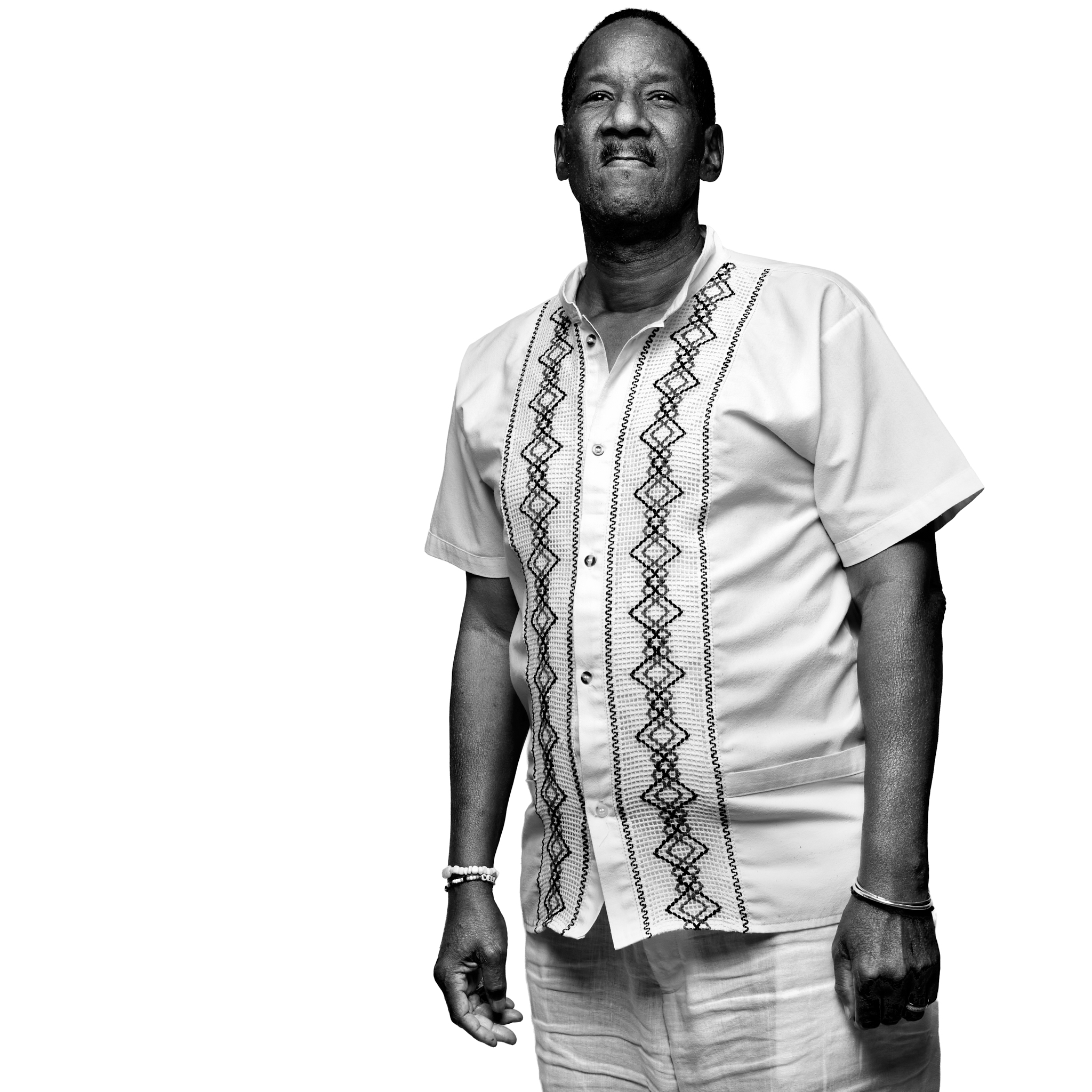
About 125,000 Cubans reached Florida. Bernardo was one of them. He was processed in Miami and taken to a military base for resettlement.
“But it was actually better than it is now,” he told me. Today, Cubans making that same journey face a very different reception, often being intercepted at sea and returned to Cuba rather than resettled in the United States. 2
Bernardo had no family waiting for him. Catholic services found him a place in Los Angeles. He trained as a bilingual medical assistant, worked in health care, became an electrical technician and clinic manager, then lived in New Mexico. Eventually, a friend told him Hormel needed an interpreter in Austin, Minnesota.
That became his first job in Austin. Today, he and his partner run a home-based business interpreting and providing services to the community. He also helps clients with their taxes.
America gave Bernardo a path to a new life and an opportunity to become part of its communities. Decades later, he has built a business, contributed to his community, and helped others find their own way. His story illustrates what a country gains when it gives immigrants the opportunity to belong.
The Town Needs Them, and Made Choices
Austin is a meatpacking town. Hormel Foods and Quality Pork Processors (QPP) are central to its economy, and immigrant workers form a significant part of their workforce.
“The town, Austin, needs QPP and needs Hormel.”
For Bernardo, COVID-19 revealed just how dependent the town was on that workforce. When businesses slowed, the entire community felt the consequences. He believes the experience helped residents recognize something important: immigrant workers weren’t taking jobs away from others. They were filling jobs that needed to be done, supporting the plants, local businesses, and the broader economy.
“That’s why I think that people are more appreciative of us,” he explained, “because they know that we’re not here to take anybody else’s job.”
“There’s a job for everybody. You know, everybody can work. Everybody can participate.”
It is a relationship of mutual dependence. Immigrants need the opportunity to work and build their lives, while Austin depends on their labor to sustain the economy that supports the entire community.
Bernardo recalled an Iowa town that learned, at enormous cost, how much it depended on the immigrant workers some residents had resented.3
Two years before the 2008 immigration raid in Postville, Iowa, hostility toward immigrants had moved into city government. Four of five city council seats had gone to candidates openly critical of the town’s growing immigrant population. One councilman publicly blamed Latino residents for drugs, crime, unpaid bills, and even unwed mothers. The mayor complained about unmowed lawns and garbage. The council distanced itself from Agriprocessors, the meatpacking plant that sustained the town’s economy, and cut funding for a visitors center that had promoted cultural diversity. Its director left, an annual festival celebrating the town’s different cultures was canceled, and the public works director resigned, citing bigoted statements by council members. Seven religious leaders publicly confronted the council over its treatment of immigrant and Jewish residents.
Then ICE came.
Federal agents arrested 389 workers. The following day, 90 percent of Latino schoolchildren were absent. Parents had been detained, families sought refuge in a Catholic church, and frightened children were left wondering where their mothers and fathers had gone. Businesses lost customers, the meatpacking plant fell into bankruptcy, and the town’s population plummeted.
Within months, the same mayor was publicly calling for an end to the raids.
The people some town leaders had treated as a burden were helping keep Postville alive. Their absence exposed that dependence, but the realization came at a terrible human cost. Families were torn apart, children traumatized, and an entire community left struggling to survive.
Similar to Pottsville, Austin’s history is not entirely comforting. Austin’s reliance on immigrant labor grew after a bitter Hormel strike in the 1980s and changes in meatpacking jobs and wages. New workers faced resentment, dangerous jobs, and suspicion from longtime residents.4 Bernardo remembers arriving in a town where he saw very few other Black people.
“People were not necessarily racist,” he said. “People were not used to seeing us.”
Austin was not automatically welcoming. People made choices, and the town changed over time.
What stays with me about Bernardo’s account is that Austin did not simply wake up one morning as a welcoming town. It took years, and it took people making choices.
Bernardo remembers a police officer who, he says, singled out Latino residents. Then, a police chief challenged that behavior. There were football tournaments and community gatherings that brought Hispanic families into the life of the town. He spoke repeatedly about former mayor Bonnie Rietz and her efforts to make sure newcomers were included.
This work began long before the latest immigration enforcement. Austin established a Welcome Center around 2000, and community organizations and churches have spent decades helping newcomers connect with jobs, services, and neighbors.5 Bernardo believes COVID-19 made the town’s dependence on immigrant workers harder to ignore. But the relationships that mattered later were already forming.
Then ICE came.
A Terrifying Month
Bernardo says agents took someone near his front door. He says local police did not help ICE and recalls officers being present to watch for mistreatment.
He also describes what his neighbors did. People watched for enforcement activity. Bernardo was among them. White residents joined in, he said. Passing drivers honked their horns.
And middle-school students gathered on a bridge to protest. “Those are children, you know, Austin children,” he told me. They knew families whose loved ones had been taken.
Think about the difference. Adults had come to understand that immigrant workers mattered to Austin’s economy. The children knew something more immediate: these were their friends, their classmates, their neighbors.
“People come to my house with all kinds of problems,” Bernardo said. “But I see all kinds of solutions, too.”
He was proud of his town. I could hear it. Still, a town’s willingness to help does not mean it can stop federal agents, or make the fear disappear. What people in Austin did was refuse to leave frightened neighbors to face it alone.
“I do feel that the Austin government should get recognition for being behind their community and not allowing ice or the federal government to take over.”
For all that support, Bernardo did not describe a victory.
“That was a horrible month. That was a terrifying month.”
He knows families who were afraid to leave their houses. People still needed to get children to school, reach appointments, earn money, and file taxes. Bernardo adapted his business, preparing some tax returns online or arranging help, so clients would not have to make the trip themselves. Walter, Bernando’s business partner, drove people to the airport so their families could avoid the exposure.
Think about that. A child needs a ride to school. Someone needs help with taxes. A family must reach an airport. Ordinary errands have become calculations about detention or separation.
The economic consequences are real. So is the human cost that an economic calculation alone cannot capture.
Outside Austin
This is the contradiction I cannot get past: Bernardo speaks warmly about Austin’s response while still advising people not to travel beyond it.
He points toward Albert Lea as a different environment. The contrast is not just perception: Freeborn County’s jail in Albert Lea holds federal ICE detainees, and its sheriff entered a controversial immigration-enforcement agreement with ICE in 2025.6
Anecdotally, Bernardo talked about the contrast of other communities where people, he said, are frequently stopped.
“[In Austin] you don’t see police, people can drive, and you don’t see the cops behind them to check all their license or things like that. If there is a crime, they are there to say, you know what, you don’t have to lie, we are here to help.”
And he continued about simple things like going to the hospital, “You can go to a hospital, you can, you know.” Reinforcing the fact that Hispanics don’t have to fear a normal life.
“And so, a lot of the time, people concentrate on the bad things that are happening, and not realizing the good things that also happen in their life. Because here, people can go to work.”
“Because here, people can go to work.”
That last sentence stayed with me. For most Americans, going to work is so ordinary we never give it a second thought. We don’t worry about being stopped by immigration agents or whether we’ll make it home to our families. Yet, Bernardo speaks of simply being able to go to work in Austin as something worth celebrating.
Think about that. Something most of us take for granted has become a measure of safety for others.
Bernardo has lived through another kind of erasure. When people see a Hispanic immigrant, he says, “we are all Mexicans … There is no distinction of countries.” A dehumanizing tactic.7
He is a Black Cuban from Havana. He has worked in health care and interpretation and made a life here. Yet one label can erase all of that. Political rhetoric that ties Mexican immigration to crime has helped normalize the shortcut.8
“What I feel is that now it’s our time,” he said, reflecting on how different groups have been singled out in different periods of American history.
Helping Each Other
Bernardo still has family in Cuba. When we talked about the hardship there due to the current oil embargo, he kept returning to the distinction between governments and the people forced to live with the government’s decisions.
“So the people are dying. It’s the people,” he said. “It’s not the government—it’s the people that suffer.”
It is the same distinction he wants people to make here. A national argument about immigration becomes a frightened family, a missing worker, a child whose classmate is gone, a drive someone else must make.
He is hopeful that this period will end. But he is not waiting for Washington to tell Austin how to treat its neighbors.
“Helping each other,” he said near the end of our conversation. “Helping each other as much as we can.”
Austin has not eliminated fear. Bernardo’s warning proves that. What it offers, at least in the Austin he knows, is a glimpse of something the national debate too often leaves out: people deciding that their neighbors are still their neighbors.
- For the United States, welcoming Cubans fleeing Castro served another purpose: during the Cold War, their departure could be presented as evidence of the failures of Cuba’s communist government.
National Archives, “Castro, Cuba, and a Fleet of Fishing Boats: The Causes and Effects of the Mariel Boatlift” (2021); National Archives, “From Mariel Harbor to Eglin Air Force Base” (2015); U.S. Department of State, CIA assessment of Castro’s objectives, April 29, 1980. The archives document the Mariel exodus and resettlement framework. ↩ - U.S. Coast Guard, “Coast Guard repatriates 14 aliens to Cuba” (Sept. 10, 2026). The Coast Guard reports that 15 Cubans were intercepted; 14 were repatriated and one was medically evacuated. DHS, 2017 policy change on Cuban maritime migration and parole. Repatriation is not automatic in every individual case; applicable protection and immigration procedures still matter. ↩
- Postville, Iowa, immigration raid (2008). The Forward, “Immigration Fight Splits Locals in Iowa Town” (2006), documents hostility toward Latino immigrants among local elected officials before the raid. Education Week, “Iowa School District Left Coping With Immigration Raid’s Impact” (2008), examines the consequences for children and schools. Star Tribune, “Twin Cities Jews Join the Battle” (2008), documents Mayor Robert Penrod’s subsequent opposition to immigration raids. Los Angeles Times, Postville, One Year After the Raid (2009), reports the lasting economic and social damage. ↩
- Minnesota Public Radio, “The strike that changed Austin” and “Newcomers settle in Austin” (2010). Accounts of wages and workforce composition are historical, not current figures. ↩
- City of Austin, “Bonnie Besse Rietz”; Minnesota Public Radio, “Fear and nostalgia in a changing community” (2010). The Welcome Center dates to 2000; Rietz served as mayor before the recent enforcement period. ↩
- Freeborn County, “Jail Roster — ICE Detainee Information”; U.S. District Court, Corey-Gruenes v. County of Freeborn, order (May 22, 2026), describing the sheriff’s March 2025 agreement with ICE. ↩
- This is more than confusing someone’s nationality. When millions of people from different countries are lumped together and portrayed as criminals or dangerous, we stop seeing them as individuals. This is how dehumanization works, making it easier for people to accept harsh immigration policies.
Donald Trump’s 2015 presidential announcement speech associated Mexican immigrants with drugs and crime while extending his warnings to migration from across Latin America. Reuters, “Trump Calls Migrants ‘Animals’” (2024), documents his subsequent dehumanizing rhetoric. Tepper and Gilovich, “The Minority-Groups Homogeneity Effect”, Journal of Personality and Social Psychology (2025), examine how distinct minority groups are perceived as interchangeable. Kteily and Bruneau, “Backlash: The Politics and Real-World Consequences of Minority Group Dehumanization”, Personality and Social Psychology Bulletin (2017), found that dehumanization of Mexican immigrants was associated with support for more aggressive immigration policies. ↩ - PolitiFact, “Tim Kaine falsely says Trump said ‘all Mexicans are rapists’” (2016). It documents Trump’s 2015 comments about people entering from Mexico while distinguishing those words from a claim about all Mexicans. ↩

