
This article is part of Witness: The Human Impact of Immigration Enforcement, an ongoing documentary project documenting the lives of people affected by immigration enforcement. My goal is to move beyond politics and headlines and help readers better understand the human stories often missing from the conversation.
Read more about the project and how you can participate.
Immigration attorney Elizabeth Streefland has spent more than three decades looking for the stranger.
She has never found one.
“I love the story of the stranger,” she told me. “I’m not afraid of the stranger. I’m intrigued by what I can learn from that person.”
That curiosity pulled her toward immigration law. Elizabeth had been an English teacher before law school. She knew she did not want the person-to-person combat of litigation. In what she calls her “most romantic sense,” she wanted something else:
“To be a storyteller. Take the stranger’s story and tell their story and advocate for them so that they can accomplish their dreams.”
After 32 years of doing exactly that, I asked her who these people actually are, the question of the Witness project—the people we flatten into a single word: immigrants.
Her answer took about two seconds.
“They’re you and me.”
The Stranger Disappears
Long before the current crisis, Elizabeth was trying to push immigrant stories into public view.
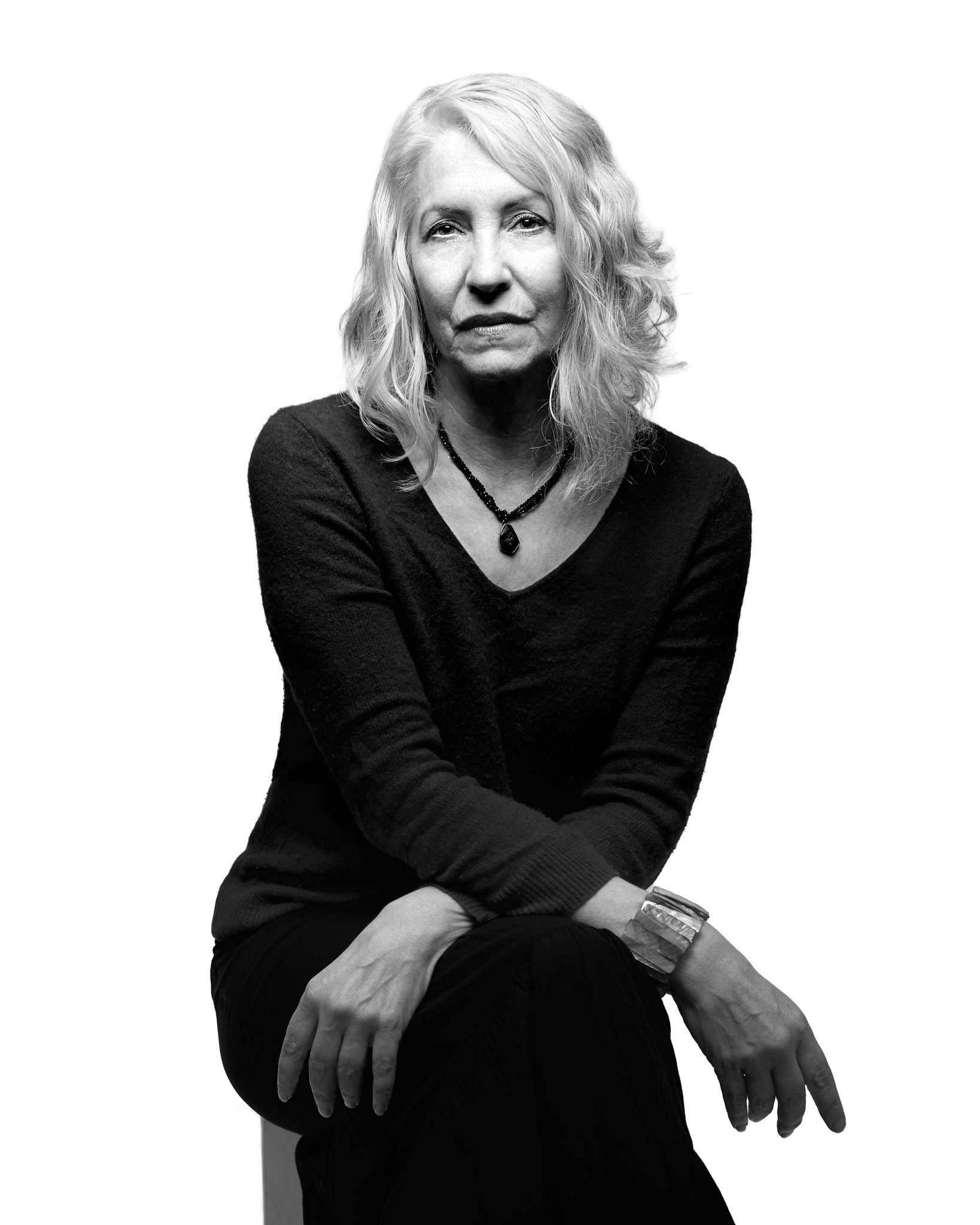
While chairing the Minnesota/Dakotas chapter of the American Immigration Lawyers Association, she wanted immigration lawyers to do something proactive instead of spending all their time reacting to the next problem.
So she created the Immigrants of Distinction Awards—an annual program designed to put a public face on something that too often disappeared from the immigration debate: the contributions immigrants were already making to the communities around them.
And these weren’t abstract contributions.
In 2008, the award went to Nyango Melissa Nambangi, a Cameroonian immigrant who founded the Minnesota African Women’s Association, and Leonid Hurwicz, an immigrant who had just received the Nobel Prize in Economics. Minneapolis and St. Paul both proclaimed May 1, 2008, Immigrants of Distinction Day in recognition of immigrants’ contributions to their communities. Five years later, Governor Mark Dayton proclaimed an Immigrants of Distinction Day statewide.1
Doctors. Restaurant owners. Scientists. Artists.: “It was just so obvious to me that we need to hear about these doctors and restaurant owners and scientists,” Elizabeth said.
Think about what she was doing here. Years before the current immigration crackdown, Elizabeth had already identified the same problem we are confronting now: people were being asked to form opinions about “immigrants” without actually seeing the immigrants living among them.
Her answer was to make them visible.
The award remains one of the things she is most proud of.
“Again,” she said, “it’s the storytelling.”
This is where Elizabeth’s work and Witness collide almost perfectly.
Dehumanization requires distance. Immigrant can remain an abstraction as long as we never have to see the person inside the word.
Elizabeth has spent a career closing that distance.
“I’ve been seeking the stranger. But I’ve never found the stranger because they’re not strange.”
Elizabeth is not naïve about why the abstraction matters.
Immigrants are politically vulnerable. Many cannot vote. Many are afraid to draw attention to themselves. That makes them unusually easy to turn into something frightening.
“And the politicians, if they want, can just use them to create fear so that they get their agenda approved,” she told me.
That sentence gets very close to the heart of what is happening.
Because once the doctor, engineer, farmworker, restaurant owner or mother becomes simply the immigrant, it gets much easier to build policy around the category instead of the human being.
And that brings us to the contradiction I cannot get past.
America needs these people.
Why Wouldn’t We Want Them?
Early in our conversation, Elizabeth started talking about H-1B workers.
A foreign student comes here. Studies. Graduates.
“Why wouldn’t we want them?” she asked. “They’re the engineers, the nurses, the scientists, the doctors. Why wouldn’t we want them?”
Elizabeth’s point was larger than one visa.
We say we want the best people to come here and build things. Employers need workers. Farms need workers. Hospitals and K-12 schools recruit internationally. Immigrants create businesses and jobs. And yet, we keep erecting barriers that tell many of those same people: build somewhere else.2
Elizabeth called it a brain drain.
Later, she went further.
“Most people born in this country are not going to have the drive that an immigrant has, that we have benefited from.”
There is something behind this statement, what Elizabeth has observed over three decades.
Think about the act of immigrating itself.
Leave the country you know. Leave family and friends. Cross a border. Learn another language. Find work. Navigate an unfamiliar culture and legal system. Sometimes start again with very little.
The people willing and able to do that are not necessarily a random sample of the people they left behind—or of the people already here. This is known as self-selection. Studies of voluntary international migration have found evidence that migrants are more willing to take risks and, in some groups, show stronger traits associated with entrepreneurship.3
We can see some of that selection in what immigrants actually do after they arrive. Immigrants start businesses at disproportionately high rates and play an outsized role in America’s high-growth companies and innovation.4
So when Elizabeth talks about “reinvigoration,” ingenuity and drive, I don’t hear her saying immigrants are better Americans.
I hear something different: an understanding of what America has historically gained by attracting people willing to take the enormous risk of becoming Americans.
We say we need them. We benefit from them. Then we make it harder for them to come, harder for them to stay, and harder for businesses to hire them. My own reaction during the interview was simpler: this makes no damn sense.
And other countries are perfectly capable of saying: Fine. Come here instead.
Other countries aren’t waiting around, either. The European Union, Canada, France, and the United Kingdom are spending billions to attract researchers and highly skilled workers from around the world—including people currently working in the United States.5 Meanwhile, what has been reveled in other Witness interviews is that immigrants are asking a more personal version of the same question: whether it is time to leave America and go home.
We’ve made this mistake before. In 1955, the United States allowed Chinese-born Caltech rocket scientist Qian Xuesen to leave after years of suspicion and government restrictions. He went home and became a central figure in China’s missile and space programs.6
Talent doesn’t disappear when you drive it away.
Someone else gets it.
Flood the Zone
Elizabeth has practiced immigration law for 32 years. She has worked through Democratic administrations and Republican ones. She knows anti-immigrant politics did not begin with Donald Trump.
But she believes what is happening now is different.
Not simply tougher immigration policy.
A barrage.
Change a rule. Change another. Alter court procedures. Fire judges. Change fees. Change visa rules. Change enforcement practices. Put another policy into effect while lawyers are still trying to understand the last one.
When Elizabeth started listing examples, I had an immediate phrase for it:
Flood the zone.7
And the numbers bear out the velocity she was describing.
In just the first 100 days of Trump’s second term, the administration took 181 immigration-specific executive actions—more than the Biden administration took during the same period and roughly six times the number from Trump’s own first 100 days in 2017.8
The Immigration Policy Tracking Project, maintained by Stanford and Yale law students working with immigration-law experts, now catalogs more than 1,800 Trump immigration policy actions across his two administrations.9
Not executive orders.
Actions.
Rules. Directives. Guidance. Memoranda. Agency decisions. Procedural changes.
That distinction matters because it gets directly to something Elizabeth sees as fundamentally different.
In earlier periods, she said, even some deeply discriminatory immigration policies came through Congress. She pointed to America’s history of anti-Chinese immigration laws. However reprehensible the result, legislation at least passed through a public legislative process: bills, debate, lobbying, votes.
“There was this dialogue about it.”
Her historical comparison is imperfect—presidents of both parties have long used executive authority to shape immigration policy, and Congress itself enacted major immigration legislation as recently as 2025.10
But the larger point survives scrutiny.
Much of the transformation Elizabeth is struggling to keep up with isn’t happening through one enormous immigration bill that Americans can watch move through Congress. It is happening through a torrent of executive and administrative actions.
For an immigration lawyer, that distinction isn’t academic.
It means waking up and discovering that something you told a client yesterday may no longer be the answer today.
Elizabeth described an immigration system that had become a maze—one where the rules change so frequently that people can scarcely move without risking a violation.
Then she made the absurdity concrete.
Imagine, she said, that the government suddenly decided sitting in that chair was a deportable offense.
You are sitting in the chair.
The rule changes.
Now you have to go.
Of course sitting in a chair is not a deportable offense. Her analogy was about power—and about what happens when the government controls the maze and keeps moving the walls.
She called the current environment “arbitrary.”
And then there are the courts.
The immigration court system was already badly backlogged when the administration began removing judges. By the end of 2025, more than 100 immigration judges out of roughly 700 had been removed or pushed out, according to Reuters.11
Think about that for a moment.
Take an overwhelmed court system. Remove more than a hundred of the people deciding the cases. Then demand that the same system move faster.
Elizabeth also described another change she sees from inside that machinery: people appearing before judges by video.
I have seen that myself at the Whipple Federal Building.
A human being whose ability to remain in this country may be decided by someone appearing on a screen.
This is what Elizabeth is trying to navigate every day: rules changing at extraordinary speed, fewer judges inside an already overwhelmed court system, proceedings increasingly separated by screens, and lawyers trying to explain to frightened people what happens next.
You can support stricter immigration enforcement and still ask a basic question:
At what point does making the system harder to navigate stop being a byproduct of the policy and become part of the policy?
Elizabeth believes we’ve crossed that line.
From where she sits, confusion is no longer incidental.
It has become part of the experience.
“There Are No Answers”
This may have been the line that bothered me most.
Immigrants who make it here tend to be strategic people. They almost have to be. They have navigated countries, borders, languages, jobs, schools and legal systems. They solve problems because their lives require it.
So they ask Elizabeth the kind of question a problem-solver asks:
If I do this, what happens?
And her answer?: “The problem is when there are no answers.”
Then the abstraction disappears completely.
“A lot of them shot straight into poverty … You take the main breadwinner out of the home, put him or her in detention or deport them,” she said. “All of a sudden there’s all these kids with no food.”
Research on immigration enforcement has documented the same cascade: lost income, food insecurity, housing instability and emotional trauma for children after a parent is detained or deported.12
This is what flood the zone looks like after it leaves Washington.
A father disappears.
A paycheck disappears.
The rent does not.
The grocery bill does not.
The children do not.
The Luxury of Asking Why
Elizabeth once told a friend about a Guatemalan family she represented. She wondered aloud about all the unfamiliar things they must have noticed after arriving in the United States—the differences in people, culture, and place.
Her friend stopped her.
“That’s the last thing on their mind. They’re trying to survive.”
It changed the way she thought about what was happening inside an immigrant’s head.
They aren’t necessarily standing back and contemplating the experience of immigration. They’re trying to solve the problems directly in front of them.
Where are we going to live?
How am I going to afford this?
How do we get our kids into school?
What about the language?
Where am I going to work?
Later in our conversation, Elizabeth gave me a sentence that brought all of this together:
“It’s not really ‘why is this happening,’ which is maybe a privileged question. It’s more like who, what, where, when.”
That hit me.
I have the privilege of asking why.
Why is the administration doing this? Why do Americans tolerate it? Why does the system work this way?
But why requires distance. It requires enough safety to step outside the immediate problem and contemplate what it all means.
The person trying to find a job, pay the rent, get the kids into school—or keep a family together—may not have that luxury.
They need to know who?
What?
Where?
When?
They need to know what happens tomorrow.
Put yourself in the place of the person sitting in that courtroom.
Your community has been singled out for increased immigration enforcement.
Your case is moving faster.
The judge may be somewhere else.
The hearing is on a screen.
The judge may know little about your community.
And now you have to explain the worst thing that has ever happened to you in your homeland. 13
You have to convince a stranger that it happened.
That you’re telling the truth.
That sending you back could put you in danger.
This is a court proceeding.
But it is also one human being asking another human being to believe them.
And every layer of distance makes it easier to forget that.
A Human Being on a Screen
Elizabeth told me something had changed in the immigration court where she had practiced for years.
Fort Snelling had always been a relatively small court. Lawyers appeared before the same judges repeatedly. They learned the judges. The judges inevitably learned something about the immigrant communities appearing before them.
Now, she said, Somali cases were being heard differently.
“These Somali cases are all by video with judges from around the country who doesn’t know Somalis.”
Video hearings aren’t new. Immigration courts have used them for decades.14
What was new was what was happening to Somali cases in Minnesota.
Somalia has received Temporary Protected Status since 1991. The protection continued through Democratic and Republican administrations—including Trump’s first term—and Biden extended it again through March 2026.15
Trump’s second administration changed course. Then Somali asylum cases began moving faster.
Beginning in early 2026, Fort Snelling began using what attorneys and court observers called the “rocket docket”—accelerated asylum proceedings overwhelmingly involving Somali nationals.16
And remote judges provided the capacity to do it.17
The government says remote judges can be used to manage an enormous national caseload and has disputed claims that Somali immigrants were improperly singled out.18
The backlog helps explain why the government might use judges sitting somewhere else.
It doesn’t, by itself, explain why the accelerated Minnesota docket was overwhelmingly Somali.
The answer requires looking beyond the court system.
The president repeatedly singled out Somalis in Minnesota. In December 2025, he said, “I don’t want them in our country” and referred to Somali immigrants as “garbage.” His administration intensified immigration enforcement in Minnesota, including operations directed at Somali immigrants, and subsequently moved to terminate Somalia’s Temporary Protected Status. 19
I have watched an immigration proceeding at the Whipple Federal Building conducted by video.
The judge was there.
The person fighting to remain in this country was somewhere else.
My reaction was visceral.
Nothing about that experience proves remote hearings were created to dehumanize immigrants. They weren’t. They can make an overwhelmed court system more efficient.20
But efficiency isn’t the only thing that matters in a courtroom.
Especially an asylum courtroom.
A person may be describing persecution. Violence. Imprisonment. Torture. The murder of someone they love.
And the judge may have to decide whether to believe them.21
The judge is deciding whether to believe another human being.
And sometimes that human being is a face on a screen.
Then there are the judges
At the same time Somali cases were being accelerated, the immigration bench itself was changing.
More than 100 immigration judges were fired, removed or pushed out during the first year of Trump’s second administration. The Justice Department broadened who could serve temporarily, and military lawyers were brought in as temporary immigration judges.22
Military lawyers are lawyers, often experienced ones. But immigration law is its own highly specialized field.23
Elizabeth told me about a Somali man represented by another attorney.
According to that attorney, while the man described traumatic experiences, the judge repeatedly burst out laughing.
I stopped Elizabeth.
Who actually witnessed this?
“The [Somali’s] lawyer did.”
Elizabeth immediately saw the lawyer’s impossible position.
What do you do?
Ask the judge to recuse himself? “He’s the one deciding that?” she said.
“What a broken human being,” I said.
Elizabeth went further. “And what a broken system.”
Keep Telling Stories
After everything Elizabeth had described—the fear, the courtrooms, the constantly changing rules—I asked what we do with it.
Her answer was surprisingly simple.
Start caring about someone.
Listen to their experience.
And keep telling their stories.
“I think the lesson is to not demonize it,” she said. “But to keep telling stories like what you’re doing.”
Keep telling stories.
I wrote that down.
Because maybe that is how you keep people from becoming abstractions.
Not propaganda.
Not saints.
Not carefully selected “good immigrants” who have to earn the right to be treated as human.
Just people.
Visible.
Near the end of our conversation, Elizabeth told me about another group of people she didn’t want me to forget.
Americans.
Through the Welcome Corps, ordinary Americans had formed groups to sponsor refugees they had never met—helping them find homes, jobs, and schools and begin lives here. More than 160,000 Americans had signed up to participate in private refugee sponsorship and related humanitarian programs. 24
The Trump administration suspended this.
At the same time, the administration created a special path for Afrikaners from South Africa, directing the government to prioritize their resettlement as refugees.25
The contrast was hard to miss.
My note from the interview was considerably less elegant:
This is so fucked up.
But Elizabeth didn’t end there.
She went back to all those Americans who had volunteered to welcome people they didn’t know.
“All those people coming forward. That’s beautiful. And that’s hopeful.”
“So that is also who we are.”
Also.
That word stayed with me.
Because after 32 years representing immigrants, Elizabeth still believes in the other America too.
The people who step forward.
Who open a door.
Who listen.
Who welcome someone they have never met.
Who tell their story.
Elizabeth began her career fascinated by what she called “the stranger.”
Thirty-two years later, she told me who she had found:
“They’re you and me.”
Maybe that’s why we keep telling the stories.
So we don’t forget.
- Elizabeth Streefland founded the Minnesota/Dakotas chapter of the American Immigration Lawyers Association’s annual Immigrants of Distinction Awards to promote the contributions of local immigrants. Independent records document the program over multiple years. In 2008, the Minnesota African Women’s Association reports that Nyango Melissa Nambangi received the award alongside Leonid Hurwicz, co-recipient of the 2007 Nobel Prize in Economics; Minneapolis and St. Paul both proclaimed May 1 Immigrants of Distinction Day. In 2013, Minnesota Governor Mark Dayton proclaimed March 14 Immigrants of Distinction Day, writing that immigrants have “enriched and strengthened the fabric of American life.” Minnesota African Women’s Association · State of Minnesota proclamation · Streefland Law Firm ↩
- In September 2025, the Trump administration imposed a $100,000 payment requirement on certain new H-1B petitions—a staggering increase over the ordinary filing costs. Courts have since blocked the policy while litigation continues.
The White House, H-1B FAQ, Sept. 21, 2025. The administration required a $100,000 payment with certain new H-1B petitions: https://www.whitehouse.gov/releases/2025/09/h-1b-faq/
Reuters, Oct. 1, 2026. A second federal judge blocked the $100,000 H-1B fee; the litigation concerns, among other things, the administration’s authority and rulemaking process: https://www.reuters.com/legal/government/second-judge-blocks-trumps-100000-fee-new-h-1b-worker-visas-2026-10-01/
- Research on voluntary international migration supports the idea that migrants are not simply a random cross-section of the population they leave behind. One study examining personality and migration found evidence of self-selection, with international migrants showing greater willingness to take risks and, in some comparisons, a stronger need for achievement—traits associated with entrepreneurship. See Vandor & Franke, “Are voluntary international migrants self-selected for entrepreneurship? An analysis of entrepreneurial personality traits,” Journal of World Business (2021). Journal of World Business study ↩
- That pattern also appears in economic outcomes in the United States. Research published by the American Economic Association using U.S. administrative data found that immigrants are substantially more likely to become entrepreneurs than native-born Americans and concluded that immigrants play an outsized role in U.S. entrepreneurship, including among high-growth firms. See Azoulay et al., “Immigration and Entrepreneurship in the United States,” American Economic Review: Insights (2022). American Economic Association study ↩
- The global competition for highly skilled immigrants and researchers is increasingly explicit. Canada created a program in 2023 specifically offering open work permits to people already holding U.S. H-1B visas; in 2025 it committed C$1.7 billion to recruiting more than 1,000 leading international and expatriate researchers. The European Union launched Choose Europe for Science in 2025 and by early 2026 had committed nearly €900 million at the EU level, alongside 101 national and regional programs representing at least another €1 billion in opportunities. France launched its own €100 million Choose France for Science initiative, while the United Kingdom created a £54 million Global Talent Fund to recruit leading international researchers and their teams. This competition coincides with signs of anxiety within American science: in a March 2025 voluntary Nature poll, roughly three-quarters of more than 1,600 respondents working in the United States said they were considering leaving following disruptions under the Trump administration, with Europe and Canada among the most frequently cited destinations. The poll was self-selected and should not be interpreted as representative of all U.S. scientists. ↩
- The United States has learned before that driving away talent can carry consequences. Chinese-born aerospace scientist Qian Xuesen was a prominent Caltech researcher before becoming a target of U.S. authorities during the Red Scare. After years of surveillance and restrictions, he was permitted to leave the United States for China in 1955. Qian subsequently became a central figure in China’s rocket and missile programs, including development of the Dongfeng ballistic missiles and Long March rockets. Dan Kimball, a former U.S. Navy under secretary who had argued that Qian should remain in America, later called his treatment “the stupidest thing this country ever did.” Caltech — Qian Xuesen ↩
- “Flood the zone” is my description of the cumulative strategy Elizabeth was describing, not her terminology and not a claim that every immigration-policy change is centrally coordinated for the purpose of creating confusion. The American Presidency Project likewise used “Flooding the Zone” to describe the extraordinary volume of presidential directives during Trump’s first 100 days of his second term. American Presidency Project — Trump’s First 100 Days ↩
- The Migration Policy Institute counted 181 immigration-specific executive actions during the first 100 days of Trump’s second term, compared with 94 during Biden’s first 100 days and fewer than 30 during Trump’s first term. MPI described the pace as roughly six times greater than Trump 1.0. Migration Policy Institute — Trump 2.0 First 100 Days ↩
- The Immigration Policy Tracking Project, led by Professor Lucas Guttentag and maintained by Stanford and Yale law students working with immigration experts, catalogs Trump administration immigration policies adopted through rules, directives, guidance, memoranda and other mechanisms, with links to underlying government documents. Immigration Policy Tracking Project · About the Immigration Policy Tracking Project ↩
- Presidents of both parties have long exercised substantial executive authority over immigration, so the distinction is not simply congressional action before Trump versus executive action now. Trump nevertheless relied on executive and administrative action at an unusually high rate during the opening months of his second term. Congress also enacted the Laken Riley Act in January 2025, which the Migration Policy Institute described as the first major stand-alone immigration law passed by Congress in nearly two decades. Migration Policy Institute — First 100 Days ↩
- Reuters reported in December 2025 that more than 100 immigration judges out of approximately 700 had been removed or pushed out since Trump returned to office. Immigration attorneys and representatives of immigration judges warned that the removals would worsen an already severe court backlog. Immigration judges are not Article III federal judges; they work within the Justice Department’s Executive Office for Immigration Review. Reuters — Trump administration removes immigration judges ↩
- Urban Institute, Facing Our Future: Children in the Aftermath of Immigration Enforcement, documenting economic hardship and other consequences for children and families following immigration enforcement: https://www.urban.org/research/publication/facing-our-future ↩
- Somalia has experienced prolonged armed conflict, political instability, terrorism, displacement and serious human-rights abuses since the collapse of its central government in 1991—the same year the United States first designated Somalia for Temporary Protected Status. Al-Shabaab remains responsible for attacks on civilians, forced recruitment and forced marriages, while women and girls face extensive gender-based violence. Female genital mutilation/cutting (FGM/C), which Elizabeth specifically raised in our conversation, remains nearly universal: UNICEF reports that approximately 99 percent of Somali women and girls ages 15–49 have undergone FGM, the highest documented national prevalence in the world. The U.S. State Department has reported that the most severe form, infibulation, is predominant and has documented forced marriage and other gender-based violence by al-Shabaab. These conditions have led administrations of both parties—including the first Trump administration—to repeatedly extend Somalia’s TPS designation.
See
UNICEF, A Statistical Overview of Female Genital Mutilation in Somalia: UNICEF statistical profile;
U.S. Department of State, 2023 Country Reports on Human Rights Practices: Somalia: https://2021-2025.state.gov/reports/2023-country-reports-on-human-rights-practices/somalia/;
DHS, Extension of the Designation of Somalia for Temporary Protected Status (2020): https://public-inspection.federalregister.gov/2020-04976.pdf ↩ - Congress expressly authorized immigration removal proceedings by video conference in 1996. Remote adjudication therefore predates both Trump administrations by decades. See U.S. Department of Justice, Immigration Court Practice Manual, § 3.6: https://www.justice.gov/eoir/policy-manual-eoir/part-II/icpm/chapter-3-6 ↩
- Somalia has been designated for Temporary Protected Status since 1991. During Trump’s first administration, DHS extended the designation through September 2021, citing ongoing armed conflict and extraordinary conditions preventing safe return. In July 2024, the Biden administration extended and redesignated Somalia for TPS through March 17, 2026.
See Federal Register, Extension of TPS for Somalia (2020): https://public-inspection.federalregister.gov/2020-04976.pdf;
Extension and Redesignation of Somalia for TPS (2024): https://public-inspection.federalregister.gov/2024-15829.pdf ↩ - In March 2026, the Minnesota Star Tribune documented expedited online asylum proceedings involving Somali nationals at Fort Snelling. Attorneys and observers called the process the “rocket docket.” Judges and government attorneys often appeared remotely from outside Minnesota. See Minnesota Star Tribune. ↩
- A September 2026 federal court opinion documented more than 834 Fort Snelling hearings handled by out-of-state judges beginning in February 2026, overwhelmingly involving Somali respondents. One Minnesota attorney stated that nearly 100 percent of his Somali asylum cases had been reassigned to judges outside Fort Snelling and conducted remotely. The litigation challenges these practices. Advocates for Human Rights et al. v. Bondi et al., U.S. District Court for the District of Columbia, Sept. 3, 2026. ↩
- EOIR has disputed characterizations that Somali asylum seekers were improperly singled out and says immigration judges may hear cases remotely from other locations to help manage caseloads. See Minnesota Star Tribune: https://www.startribune.com/mn-attorneys-sue-trump-administration-over-somalis-fast-tracked-asylum-cases/601637338 ↩
- In December 2025, Trump said of Somali immigrants, “I don’t want them in our country,” and referred to them as “garbage.” Federal immigration enforcement involving Somali immigrants in Minnesota intensified during the same period, and the administration subsequently moved to terminate Somalia’s TPS designation. Administration officials have said enforcement is based on immigration status and public-safety or national-security concerns rather than ethnicity.
See Reuters, Dec. 2 and Dec. 5, 2025: https://www.reuters.com/world/us/minnesota-officials-defend-somali-community-against-trumps-attacks-2025-12-02/
https://www.reuters.com/world/us/somalis-arrested-minneapolis-immigration-operation-officials-say-2025-12-05/ ↩ - GAO analyzed nearly six million immigration hearings from fiscal years 2022–2025 and found approximately 37 percent were remote. Judges and attorneys interviewed generally cited benefits including flexibility, reduced travel and access to counsel, while also reporting technological and interpretation problems. Merits hearings were approximately evenly divided between remote and in-person proceedings, and some judges told GAO they preferred merits hearings in person because assessing respondents’ and witnesses’ credibility was easier face-to-face. GAO’s fieldwork included Fort Snelling. U.S. Government Accountability Office, Immigration Courts: Stakeholder Perspectives on the Use of Remote Hearings, GAO-26-108110: https://www.gao.gov/products/gao-26-108110 ↩
- There is evidence that the physical distance can matter. Some immigration judges themselves say they prefer important merits hearings in person because it is easier to assess a person’s credibility face-to-face.
GAO analyzed nearly six million immigration hearings from fiscal years 2022–2025 and found approximately 37 percent were remote. Judges and attorneys interviewed generally cited benefits including flexibility, reduced travel and access to counsel, while also reporting technological and interpretation problems. Merits hearings were approximately evenly divided between remote and in-person proceedings, and some judges told GAO they preferred merits hearings in person because assessing respondents’ and witnesses’ credibility was easier face-to-face. GAO’s fieldwork included Fort Snelling. U.S. Government Accountability Office, Immigration Courts: Stakeholder Perspectives on the Use of Remote Hearings, GAO-26-108110: https://www.gao.gov/products/gao-26-108110 ↩ - Reuters reported in December 2025 that more than 100 immigration judges from a corps of roughly 700 had been fired, removed or pushed out since Trump returned to office. DOJ also broadened eligibility for temporary immigration judges, and the Pentagon authorized military attorneys to be detailed to DOJ for temporary service as immigration judges.
See Reuters, Dec. 2, 2025: https://www.reuters.com/legal/government/trump-administration-fires-numerous-new-york-immigration-judges-2025-12-02/; ↩ - Military attorneys are licensed lawyers and may have substantial litigation experience. DOJ requires temporary immigration judges to receive training, and military attorneys detailed to DOJ operate under civilian supervision. The relevant distinction is not whether they are lawyers, but that immigration law is a specialized field different from military practice. DOJ’s qualifications for permanent immigration judges identify immigration-law and adjudicatory experience as preferred. ↩
- Welcome Corps, launched by the Biden administration in 2023, allowed groups of private American citizens to sponsor refugees and help them establish themselves in the United States, including assistance with housing, employment, education and other necessities. By the time the Trump administration suspended refugee admissions and private sponsorship in January 2025, more than 160,000 Americans had reportedly signed up through Welcome Corps and related humanitarian sponsorship programs. Associated Press: https://apnews.com/article/39b5254f5b36ac26b06a86581798af57 ↩
- In February 2025, the Trump administration directed the federal government to prioritize refugee resettlement for Afrikaners from South Africa, asserting that they were victims of race-based persecution, including violent attacks and government confiscation of their land.
The evidence does not support Trump’s broader claims of a “genocide” against white South Africans or widespread government seizure of white-owned farms. South Africa has an extraordinarily high violent-crime rate affecting people across racial groups; farm killings represent a small fraction of the country’s murders and include Black as well as white victims.
South Africa did enact a controversial land-reform law in 2025 that permits expropriation and allows zero compensation in certain very limited circumstances. The law has been challenged by political and Afrikaner groups concerned about property rights. But that is substantially different from Trump’s claim that the South African government was seizing white farmers’ land without compensation: when he made that claim, the new law had not been used to expropriate any land.
Major Afrikaner organizations in South Africa also rejected the characterization that their community faced a genocide or humanitarian emergency requiring mass emigration.
The contrast with U.S. refugee policy was striking: while the Trump administration suspended the broader refugee-admissions program for people fleeing persecution and conflict around the world, it created an expedited exception for Afrikaners. South Africa itself was simultaneously hosting more than 167,000 refugees and asylum seekers, many from other African countries affected by conflict and instability.
See White House, Addressing Egregious Actions of the Republic of South Africa, Feb. 7, 2025: https://www.whitehouse.gov/presidential-actions/2025/02/addressing-egregious-actions-of-the-republic-of-south-africa/;
Reuters, “Trump makes false claims of white genocide in South Africa during Ramaphosa meeting,” May 21, 2025: https://www.reuters.com/world/us/trump-makes-false-claims-white-genocide-south-africa-during-ramaphosa-meeting-2025-05-21/;
Associated Press reporting on Afrikaner organizations’ rejection of claims that they faced a humanitarian emergency: https://apnews.com/article/a99a18025f4b79d0998e6c0e5f10c750;
UNHCR, South Africa: https://www.unhcr.org/us/where-we-work/countries/south-africa ↩

