
This article is part of Witness: The Human Impact of Immigration Enforcement, an ongoing documentary project documenting the lives of people affected by immigration enforcement. My goal is to move beyond politics and headlines and help readers better understand the human stories often missing from the conversation.
Read more about the project and how you can participate
A child came to this country after years in a refugee camp, her teeth damaged because sugar water was one of the few ways her parents could quiet her hunger. Laura Cooper understands what that story means beyond sympathy. As the first woman tenured at the University of Minnesota Law School, a longtime legal scholar, and a volunteer citizenship teacher, she has seen both the law and the human beings forced to survive inside it. This interview is about why immigrants come, what they carry, and what they give back once they are finally seen.
What Laura Helps Us See
- The Child With the Missing Teeth
- Why Laura Cooper’s Voice Matters
- People Do Not Leave Home Lightly
- Arrival Is Not the End of the Struggle
- Immigrant Character
- Immigrant Value
- Citizenship Means Safety
- When the Law Becomes a Trap
- Fear Changes Ordinary Life
- Minnesota Stood Up
- What Would Be Lost
- The Work of Seeing
The Child With the Missing Teeth
The detail that stayed with me was the little girl’s teeth.
Laura Cooper was telling me about a Nepali-speaking refugee family expelled from Bhutan, a family she and her husband Ben helped mentor after they arrived in Minnesota. The family had spent roughly twenty years in a refugee camp before being resettled in the United States. Twenty years. Long enough for children to be born, grow up, and begin adulthood inside a temporary life that had become permanent.
“Their daughter… immediately, when she got here, many of her teeth needed crowns or needed to be pulled. Because the only way their parents could satisfy her hunger was by giving her sugar water.”
When she arrived in the United States, Laura said, the girl needed immediate dental care.
That is the kind of detail that cuts through the political noise. It is not theoretical. It is not a talking point. It is a child’s mouth damaged by hunger, waiting, and the slow machinery of a world that could not decide where her family was allowed to belong.
This is why people come.
Not because they are looking for a loophole. Not because they are trying to game the system. Not because they woke up one morning and decided to abandon their language, their relatives, their food, their neighborhood, and everything familiar for the fun of filling out American paperwork.
They come because staying has become impossible.
Why Laura Cooper’s Voice Matters
The person telling me this was not speaking casually.
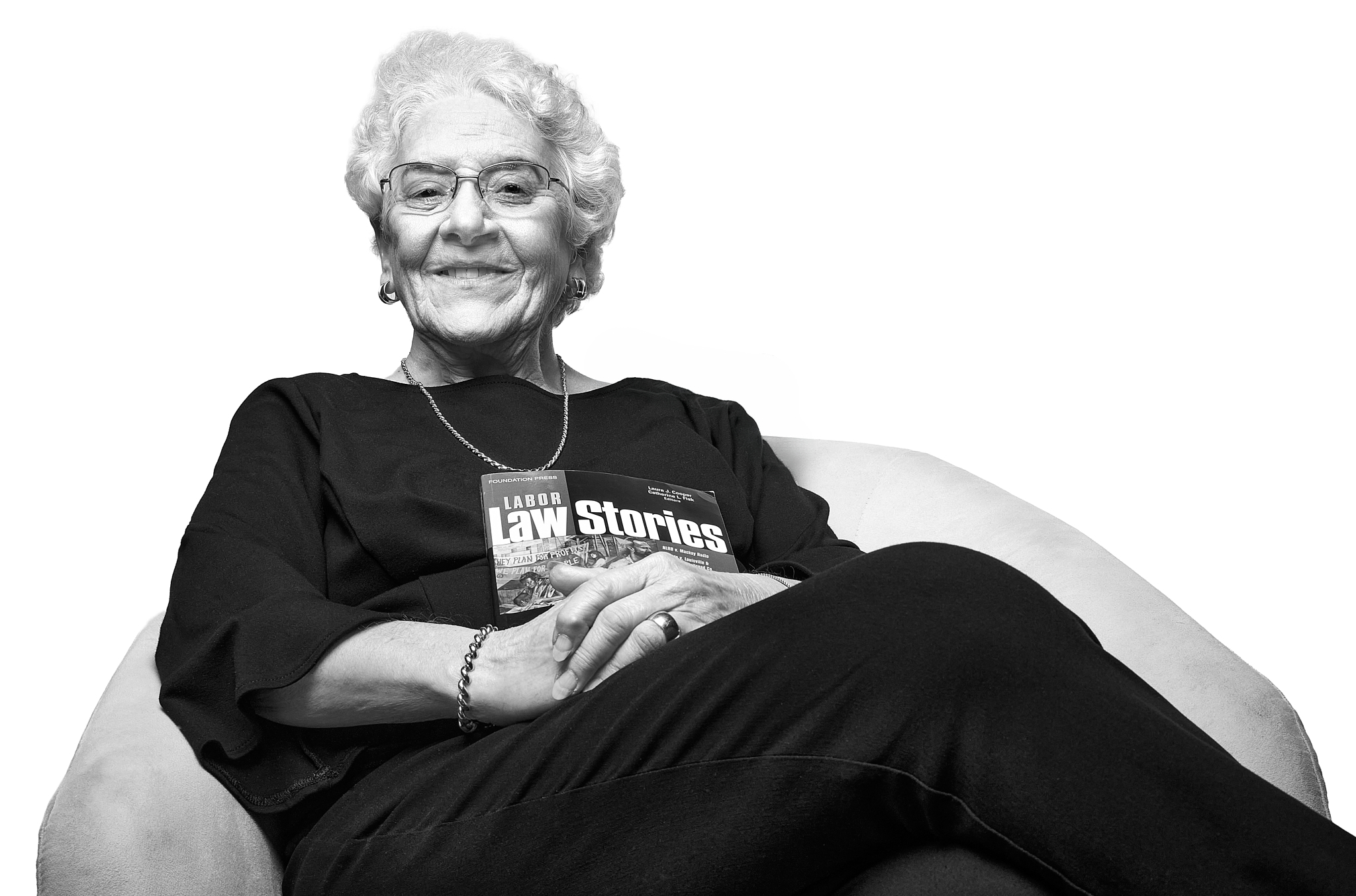
Laura Cooper is Professor of Law Emerita at the University of Minnesota Law School. She joined the faculty in 1975, spent her entire teaching career there, and became the first woman ever to receive tenure at the law school. Her work spans labor law, labor arbitration, mediation, civil procedure, conflict of laws, and alternative dispute resolution. She has spent a lifetime thinking about institutions, rules, fairness, conflict, and how systems work when people with unequal power are forced into them.1
That background matters.
Because this conversation was not just about kindness. It was about law. It was about citizenship. It was about the difference between a system that protects people and a system that quietly turns ordinary life into a trap.
Laura has seen immigration from several angles: as the grandchild of immigrants, as a legal scholar, as a mentor to refugee families, as a longtime supporter and volunteer with the International Institute of Minnesota, and as a teacher of U.S. history and citizenship.
So when she talks about immigrants, she is not working from slogans. She is working from experience.
This piece is part of a larger body of work I am building around immigration, enforcement, fear, and the ordinary people caught inside it. The long-term goal is a book: portraits and testimony, person by person, each subject standing on their own. Laura will be one of those voices because she helps explain something central to the project: immigrants are not abstractions, and the law is not neutral when it strips people of safety, dignity, or a future.
People Do Not Leave Home Lightly
Laura’s own family history begins with immigration. Her parents were children of immigrants from Eastern Europe. They were educated in the City Colleges of New York, moved west, and built a life in California.
Later, after Laura’s mother retired from teaching, she volunteered teaching English as a second language. There she met a Cambodian refugee family. The relationship became lifelong. Laura’s parents helped the family understand jobs, finances, homeownership, and the daily mechanics of American life.
That family had fled the Khmer Rouge2. Laura described the terrors of Cambodia, the jungle, the murders, the refugee camp. Then she told me what happened later: the family’s children graduated from college. One became a lawyer. One became a teacher. The family owned a home.
“…in Cambodia, the Khmer Rouge was killing people,” Laura said. “That’s why they left Cambodia.”
That story matters because it shows the full arc. Terror. Flight. Arrival. Help. Work. Stability. Contribution.
That is not dependency. That is survival turning into rootedness.
The Bhutanese refugee family Laura and Ben later mentored had a different geography but a similar wound. They were ethnically Nepali, expelled from Bhutan, and spent about twenty years in refugee camps before coming to the United States. Their family was scattered across the world. Some relatives ended up in New Zealand. Others somewhere in Europe. The internet was not a luxury for them. It was how their family stayed intact after being broken across continents.
Laura and Ben helped them get a secure, reasonably priced internet connection. That sounds small until you understand what it meant: a family separated by displacement could still see each other’s faces.
That is one of the quiet truths immigration debates flatten. The public argument often starts at the border. The human story starts much earlier: in the country people had to leave, in the camp where they waited, in the family members scattered across the world, in the child given sugar water because there was no food.
Arrival Is Not the End of the Struggle
Getting here does not mean the hardship ends.
Laura described what it was like to help the refugee family through ordinary American life. Bank mail. County forms. Medical assistance paperwork. Car insurance. Tax forms. Internet service. The things most of us complain about even when we speak English, have a car, know how systems work, and can spend an hour on hold without losing a day’s wages.
One bank closed the family’s account and mailed them the balance in a check. The check said, “pay to the order of.” They thought it was a bill. Of course, they did. They were new to the language and new to the system. The paper said “pay.”
Laura asked a simple question: “how can you tell an internet scam from a real notice if you don’t understand English?”
Every Saturday, Laura and Ben helped sort their mail. This is important. This is junk. This needs a response. This can wait. They helped with doctors, dentists, medical assistance renewals, and county forms that required pay stubs, rent receipts, copies, postage, and patience.
That kind of help sounds mundane until you see what is at stake. A missed form can mean losing health care. A misunderstood insurance option can mean owing money on a car you no longer have. A phone company can lock a low-income family into an overpriced plan they do not need.
The problem is not that immigrants are incapable. The problem is that the system assumes everyone arrives with language, money, time, transportation, legal knowledge, and a photocopier.
That assumption is absurd. And cruel in its consequences.
Laura said the experience helped her understand “the complexity of life when you come from a different culture, with a different language, and with no resources.”
That sentence should be taped to the desk of every person who writes immigration policy.
Immigrant Character
One of Laura’s clearest observations was also one of the most important.
Immigrants who make it here, especially refugees, have already shown extraordinary strength. They have endured waiting, vetting, loss, poverty, uncertainty, and separation. They have had to be strong-willed and stable enough to keep their families moving forward under conditions most Americans will never face.
Laura said it directly: they want to do the best for their family. And in doing the best for their family, they do the best for the community.
“Immigrants have such a drive,” Laura told me. “They wouldn’t have gotten here had they not been really strong-willed, stable people who want to do the best for their family, and to do their best for their family, they do the best for our community.”
That is the moral center of this whole conversation.
The first generation often struggles. Laura did not romanticize that. The father in the Nepali family became an over-the-road truck driver, away from home for weeks at a time. The mother cared for children and elderly parents. Money was tight. During COVID-19, work became unstable.
But their children were doing well. Their daughters were bright, artistic, strong students. One was in chess club and loved science. Laura described it as a typical immigrant story: the first generation carries the weight, and the next generation moves forward.
That is not automatic. It happens because parents sacrifice. It happens because children work. It happens because families keep going.
The question Americans should ask is not, “What are they taking?”
The better question is, “What kind of people survive all this and still build a life here?”
Laura’s answer is clear: people with drive, discipline, and devotion to family.
Immigrant Value
Laura has watched Minneapolis change since she arrived in 1975. She remembered the city as culturally limited, a place where “international cuisine” meant bad Italian and bad Chinese.
Now the Twin Cities are different. Restaurants, markets, cultural events, street fairs, music, theater, health care, elder care, child care, construction, cleaning, roofing. Immigrants are woven through the daily life of the region.
Laura spoke about immigrant health care workers with particular force. An immigrant woman cared for Laura’s mother in her final days with cancer. Laura said a huge proportion of health care workers in Minnesota and around the country are immigrants, doing work the country depends on.
Then she asked the obvious question: what happens if those people leave?
The “day without immigrants”3 idea makes the point. What if immigrants did not show up? Who takes care of children? Who cleans homes and offices? Who tends gardens? Who washes cars? Who replaces roofs? Who staffs nursing homes and hospitals? Who cooks the food?
The country likes the labor. It likes the food, the child care, the elder care, the construction, the music, the markets, the restaurants. It likes the benefits of immigration.
But too often it refuses to grant immigrants full dignity.
That contradiction is at the heart of my view of immigration policy. We need a system that uses the legal framework honestly, enforces it with humanity, and redesigns it to reflect reality. The U.S. economy depends on immigrant labor, while the political system often criminalizes or destabilizes the very people doing that work.
That is not order. That is incoherence.
Citizenship Means Safety
I asked Laura what citizenship means.
Her answer was plain: safety, opportunity, and the ability to participate in a democracy.
That word safety matters. Citizenship is not only a ceremony, a flag, or a test. For immigrants, it can be the difference between living with fear and having a firmer claim to belonging.
Laura teaches U.S. History and Citizenship through the International Institute of Minnesota. Her class is not simply test prep. The official citizenship test skips entire chapters of American history. It leaps from slavery to Martin Luther King Jr.4 as if Reconstruction, Jim Crow5, racial terror, voter suppression, and the long struggle for civil rights barely happened.
Laura fills in the gaps.
She teaches Dred Scott6. She teaches birthright citizenship. She teaches the story of Eliza Winston7, an enslaved woman brought to Minnesota, where slavery was illegal but tolerated because wealthy southern tourists were good for business. She tells students that Minnesota has its own history of compromise, courage, and hypocrisy.
That matters because citizenship is not just memorizing answers. It is understanding the country you are joining, including the parts the country would rather forget.
Laura made a point that stayed with me: why tell the bad stories? Because the bad stories also tell us who fought to change things.
That is not anti-American. That is the only honest way to be American.
When the Law Becomes a Trap
This is where Laura’s legal background becomes essential.
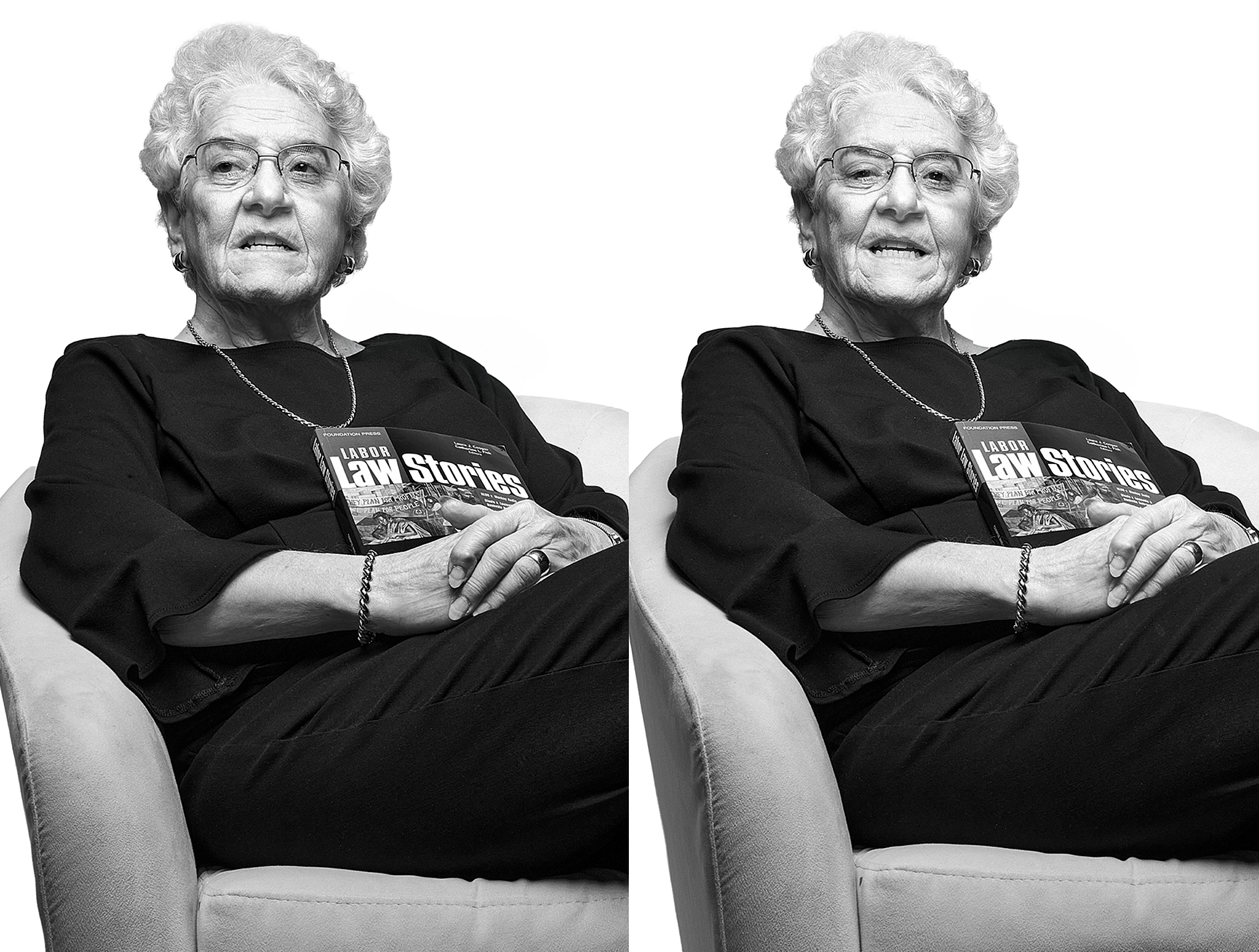
She understands procedure. She understands discretion. She understands how a system can appear neutral on paper while becoming dangerous in practice.
She discussed the citizenship test becoming harder. The older test had 100 questions. The newer version had 128, with more orally asked questions, more required correct answers, and language that she found unnecessarily difficult. One example asked applicants to name an American “innovation” without defining the word clearly.
Laura did not treat that as an accident.
When I asked why they made it harder, Laura did not wander around the answer.
“To make it harder to pass. No question.”
She also shared the way small misunderstandings can become legal landmines. The citizenship application asks whether someone has ever been “cited” by law enforcement. If an applicant does not understand that a traffic ticket may count, and later the government says they failed to disclose it, the error can be framed as fraud8.
That is not a fair system for people navigating a second language and a foreign legal culture.
It is especially disturbing because refugees have already been vetted intensely: criminal background checks, health checks, checks into the accuracy of their claim, years of waiting, years of check-ins, then study for a test many native-born Americans could not pass.
A sane country would say: you made it through all that, welcome.
Instead, the system can still move the line.
Laura described the current atmosphere as frightening enough that the International Institute now advises immigrants not to show up at USCIS offices for citizenship interviews or routine check-ins without a lawyer or certified legal representative.
That should stop people cold.
A citizenship interview is supposed to be a step toward belonging. It should not feel like walking into danger.
Fear Changes Ordinary Life
One of the most revealing moments in the interview came when I asked whether the refugee family Laura and Ben helped fears what is happening now.
Laura said, “I dare not ask.”
Not because she does not care. Because she does.
She does not want to make people more fearful than they already are. She draws the same line in her citizenship class: give people the information they need to be safe without making them more terrified. She used to ask students to introduce themselves and say how long they had been in the country. She does not ask that anymore.
That is what fear does. It changes the questions people are willing to ask in a classroom.
Even in a class meant to prepare people for citizenship, Laura thinks carefully about what gets said, what gets recorded, and what could put someone at risk. A student once wanted to transcribe the class. Educationally, that could have helped. But Laura said no because she did not want a written record of someone saying something about their status or application history that could later harm them.
This is not paranoia. It is care in an atmosphere where the rules are unstable, and the consequences are severe.
Minnesota Stood Up
One of the strongest parts of Laura’s interview was her explanation of why Minnesota was able to respond so quickly when immigration enforcement intensified.
It was not magic. It was infrastructure.
Lawyers. Nonprofits. Refugee organizations. Legal aid. The International Institute. Mid-Minnesota Legal Aid. Advocates for Human Rights. The Center for Victims of Torture. People who knew each other. People who had done this work for decades. People who had already built trust before the emergency.
During the Reagan administration, federal rules restricted what legal services organizations could do with federal money. Across much of the country, organizations simply stopped doing the restricted work. But in Minneapolis, Laura said, the lawyers on the Legal Aid board said, “hell no.”
“So all over the country, legal services for low-income people just stopped doing the things that weren’t on the list,” Laura said. “And the lawyers that were on the board with me in Minneapolis said, hell no. What we’ll do is we’ll create a sister organization.”
They created a sister organization. One entity would take federal money and do what it legally could. The other would do immigration work and lobbying, funded by local lawyers and corporations.
It was totally outlandish.
And they did it.
That is how communities survive attacks: not by suddenly becoming brave, but by having institutions and relationships already in place when the pressure comes.
Laura connected this to David Weissbrodt9, her former University of Minnesota colleague, who helped found both the Center for Victims of Torture and Advocates for Human Rights. Those organizations were not invented yesterday. They were here. They were ready. When immigrant communities needed legal defense, those networks knew what to do and whom to call.
Laura wondered whether some of Minnesota’s response comes from Scandinavian culture: collaborative, communal, uncomfortable with standing out, raised on stories where people succeed through community rather than individual conquest. That is not the whole explanation, but it is part of the texture.
Minnesota’s best civic instinct is not perfection. God knows there is plenty of contradiction here. But there is a real tradition of building the systems before the crisis.
“The Minnesota community just stood up to that,” Laura said. At the International Institute, she watched the main assembly room become a food distribution center, with volunteers packing groceries, writing notes, and delivering food without writing down addresses in case they were stopped.
And when ICE came, people used those systems.
What Would Be Lost
Near the end, I asked Laura what would be lost if immigrants stopped coming, or left.
Her answer was not abstract. It was daily life.
Children would not be cared for. Gardens would not be tended. Homes would not be cleaned. Cars would not be washed. Roofs would not be replaced. Health care would lose essential workers. Restaurants, markets, art, music, and theater would become smaller and poorer.
The country would not just lose labor. It would lose texture. It would lose entrepreneurs, food, language, resilience, ambition, and the next generation of doctors, lawyers, teachers, artists, nurses, truck drivers, engineers, parents, and citizens.
This is the part I want people to understand without needing a chart.
Immigrants are not a category. They are the woman caring for your mother when she is dying. The person replacing your roof in July heat. The father driving a truck for weeks so his children can study. The mother filling out county forms after work. The child in chess club. The student preparing for a citizenship test. The volunteer delivering food to someone else because someone once helped them.
That is the human side of immigration.
That is what disappears when people become abstractions.
The Work of Seeing
Laura has a poster that says, “Fight Ignorance, Not Immigrants.”
She said it tells the whole story.
I think she is right.
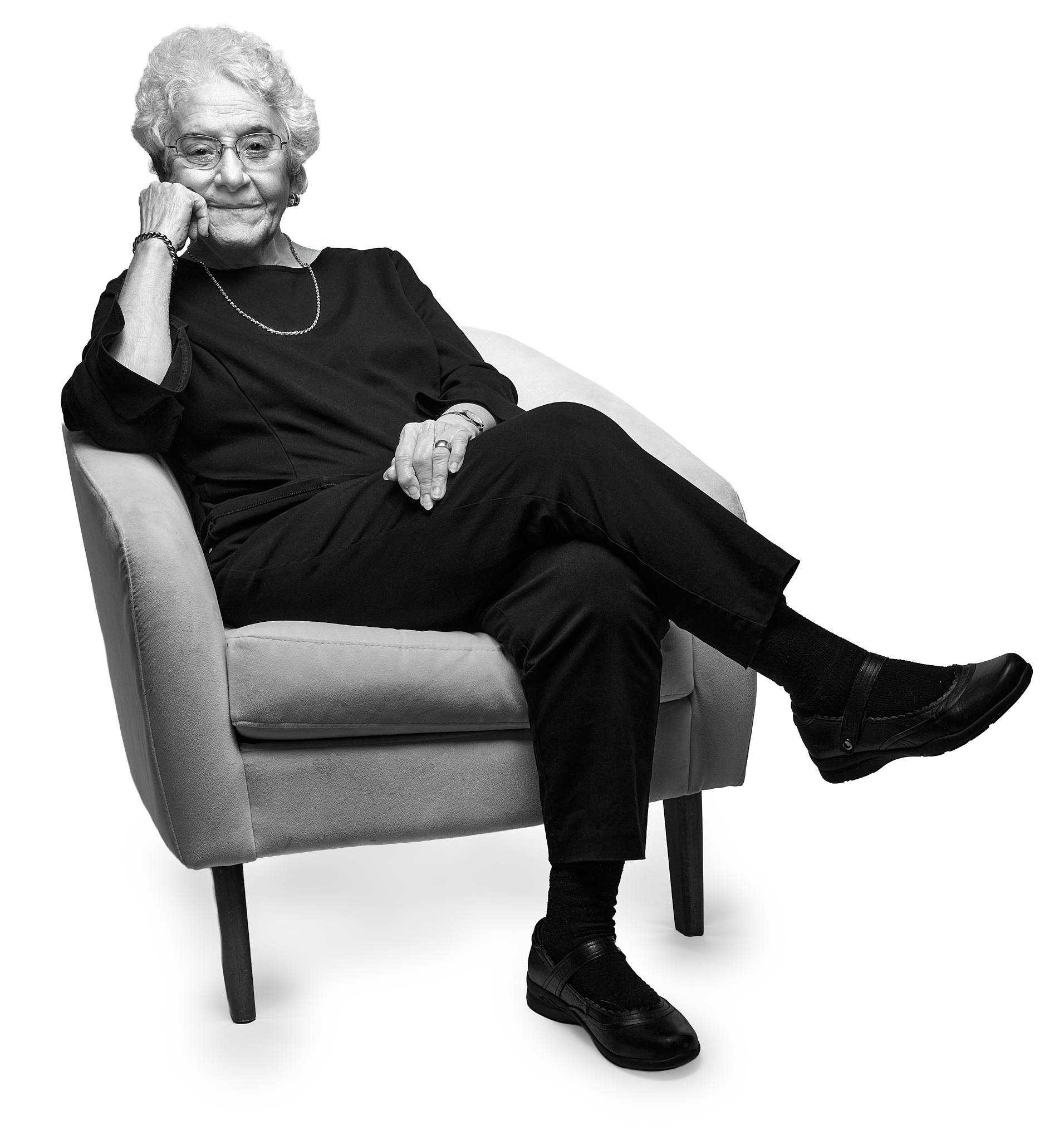
Ignorance is not only not knowing. Sometimes it is refusing to know. Refusing to see the family in the camp. Refusing to see the child’s teeth. Refusing to see the years of vetting. Refusing to see the work. Refusing to see the fear created by laws and enforcement practices that treat people as threats long after they have proven themselves to be neighbors.
The work of this project is to make that refusal harder.
Not with slogans. With testimony. With portraits. With stories that hold still long enough for people to look.
Laura Cooper’s story belongs in this project because she stands at the intersection of law and lived experience. She can explain the legal machinery. She can also describe the Saturday mail sorting, the child’s missing teeth, the citizenship classroom where even asking the wrong question can feel unsafe.
That combination is rare.
And it matters.
People come because they have to.
They contribute because that is who they are.
The question is whether this country can build a system honest enough, humane enough, and practical enough to recognize it.
- Laura Cooper is Professor of Law Emerita at the University of Minnesota Law School, where she joined the faculty in 1975 and became the first woman ever to receive tenure. She held the J. Stewart and Mario Thomas McClendon Professorship in Law and Alternative Dispute Resolution, taught and wrote in labor law, labor arbitration, civil procedure, conflict of laws, and alternative dispute resolution, and served as a labor mediator and arbitrator. She was elected Vice President of the National Academy of Arbitrators in 2016. She earned her B.A. summa cum laude from USC and her J.D. summa cum laude from Indiana University, then clerked for Judge John S. Hastings on the U.S. Court of Appeals for the Seventh Circuit. In retirement, she has volunteered with the International Institute of Minnesota, mentored refugee families with her husband Ben, taught citizenship and U.S. history classes, served on the Institute’s Capital Campaign Committee, and supported scholarships for immigrant nursing students. ↩
- The Khmer Rouge ruled Cambodia from 1975 to 1979 under Pol Pot. Its regime emptied cities, forced people into labor camps, and carried out mass killings, torture, starvation, and persecution. An estimated 1.7 to 2.2 million people died. For many Cambodian refugees, leaving was not a political choice; it was survival. Reuters ↩
- A recent “Day Without Immigrants” action took place on February 3, 2025, with businesses closing and workers, students, and consumers staying home in cities across the United States to protest Trump administration immigration policies and show the country’s dependence on immigrant labor. The action included closures and demonstrations in California, including the Bay Area and Southern California, as well as other cities nationwide. This is similar to earlier actions, especially the May 1, 2006 Great American Boycott. Sources: Associated Press, “Some US businesses close in a ‘day without immigrants,’” February 3, 2025; San Francisco Chronicle, “A Day Without Immigrants: Bay Area businesses close to protest Trump policies,” February 3, 2025. ↩
- Martin Luther King Jr. was a Baptist minister and one of the central leaders of the U.S. civil rights movement. He helped lead campaigns against segregation, racial violence, and voter suppression, including the Montgomery Bus Boycott, the Birmingham campaign, the March on Washington, and the Selma voting-rights campaign. He was assassinated in 1968. Laura references him because the citizenship test often moves from slavery to King without fully explaining Reconstruction, Jim Crow, and the century of struggle between legal emancipation and meaningful civil rights. Sources: The King Center; National Park Service; Stanford University, The Martin Luther King, Jr. Research and Education Institute. ↩
- Jim Crow was the system of laws, customs, and violence that enforced racial segregation and Black disenfranchisement after Reconstruction, especially in the South, from the late 1800s into the civil rights era. It made citizenship unequal in daily life: in schools, voting, transportation, housing, work, courts, and public spaces. Laura teaches Jim Crow because the citizenship test often skips the long gap between emancipation and the civil rights movement, where rights existed on paper but were denied in practice. Sources: Library of Congress; National Museum of African American History and Culture; Plessy v. Ferguson, 163 U.S. 537 (1896). ↩
- Dred Scott lived with his wife, Harriet Robinson Scott, at Fort Snelling from 1836 to 1840, when the fort was in the Wisconsin Territory, where slavery was prohibited. After returning to Missouri, the Scotts sued for their freedom, arguing that their residence in free territory had made them free. In 1857, the U.S. Supreme Court ruled in Dred Scott v. Sandford that Black people, whether enslaved or free, could not be U.S. citizens and therefore could not sue in federal court; it also held that Congress could not prohibit slavery in federal territories. Laura teaches the case because it connects Minnesota directly to the long American struggle over citizenship, race, law, and who is allowed to belong. Sources: National Park Service, Fort Snelling history; Dred Scott v. Sandford, 60 U.S. 393 (1857). ↩
- Eliza Winston was an enslaved woman from Mississippi who was brought to Minnesota in 1860 by Richard and Mary Christmas. Slavery was illegal in Minnesota, but wealthy Southern tourists still brought enslaved people north with them. With help from Black and white abolitionists, Winston was brought before a Hennepin County judge on a writ of habeas corpus and declared free. Christopher P. Lehman’s 2024 book, It Took Courage: Eliza Winston’s Quest for Freedom, published by the Minnesota Historical Society Press, tells this story in detail and was recognized through the Minnesota Book Awards. ↩
- The Trump Administration considers making an inaccurate statement in an application for citizenship as fraud against the government. A finding that one has committed fraud against the government is not only a basis for denial of citizenship, but also, if first identified after naturalization, can result in denaturalization, deportation, and family separation.
https://forumtogether.org/article/denaturalization-fact-sheet/
↩ - Celebrating the Legacy of Professor David Weissbrodt and the Human Rights Center, YouTube video. The University of Minnesota Law School notes that Weissbrodt founded the Human Rights Center in 1988. See also University of Minnesota Law School, “History of the Human Rights Center.” ↩

