
This article is part of Witness: The Human Impact of Immigration Enforcement, an ongoing documentary project documenting the lives of people affected by immigration enforcement. My goal is to move beyond politics and headlines and help readers better understand the human stories often missing from the conversation.
Read more about the project and how you can participate
After nearly four decades at the International Institute of Minnesota, Jane Graupman has seen refugees rebuild their lives, sustain essential institutions, and endure policies that treat their humanity as expendable.
There was one thing Jane Graupman said early in our conversation that everything else seemed to orbit around: Americans talk about immigrants as if they are part of a separate history. They are not. Immigration is not a side story running alongside the story of the United States. It is inseparable from it—our families, our labor, our economy, our hospitals, our neighborhoods, and the idea of the country itself.
That should be obvious. Somehow, it is not.
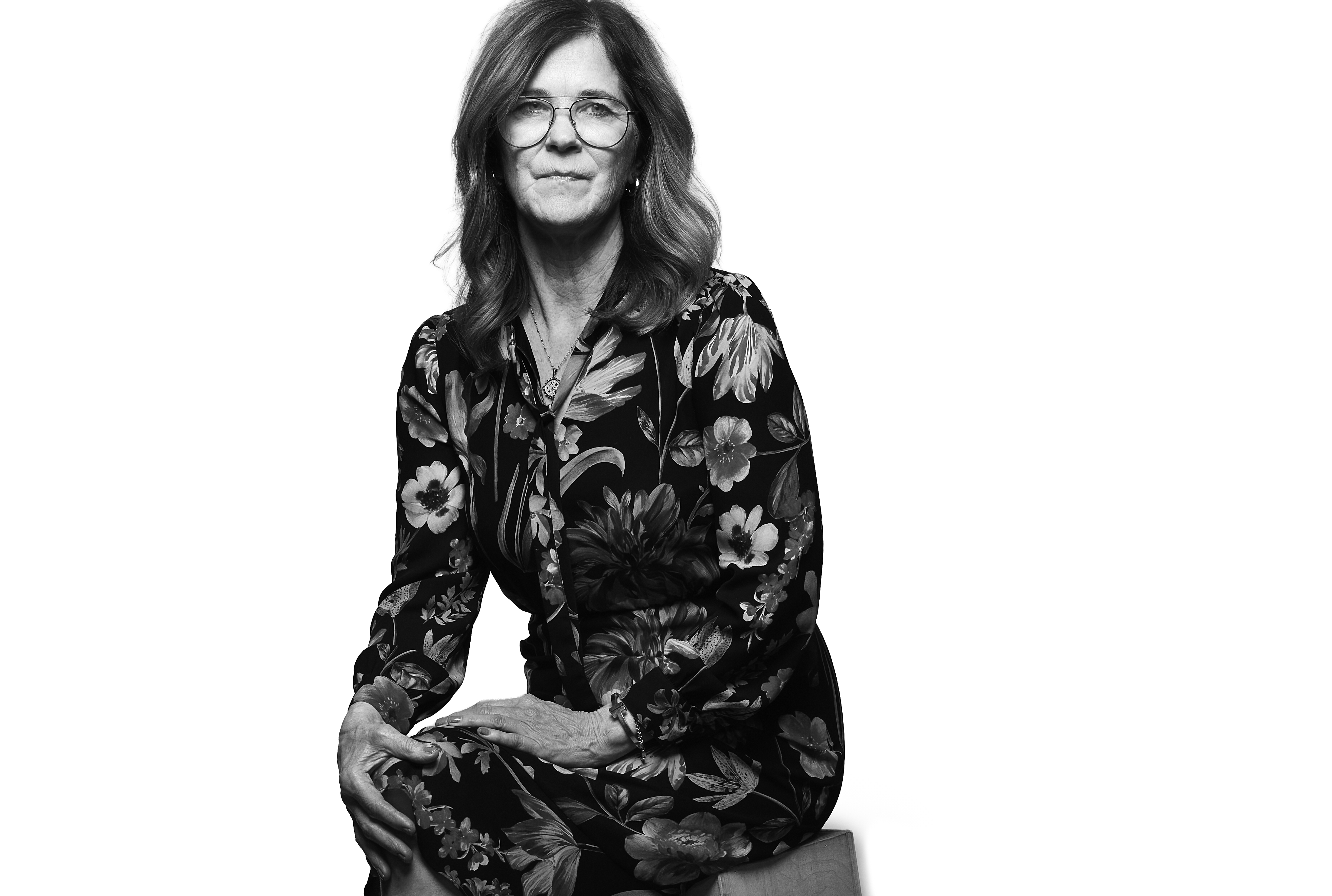
Jane is the executive director of the International Institute of Minnesota1, where she has worked for almost 37 years. She grew up in Bemidji, one of six children raised by two teachers. After college, she spent two years teaching in Bangkok. She returned to Minnesota with student loans, began substitute teaching at the Institute, and eventually helped create its nursing-assistant program. That program grew into a medical-careers pathway that has now trained more than 4,000 New Americans for health-care work in Minnesota.
One of my professors found a position and asked, “…you want to go to Bangkok, Thailand?” And I’m like, sure.…
But a résumé does not explain why someone stays for nearly four decades. Jane said it was the people: students from all over the world who arrived hungry to learn, disciplined, and unwilling to take an educational opportunity for granted. Through them, she began seeing her own country differently. Possibilities she had barely noticed looked extraordinary to someone who had been denied them.
Leaving Is Not the Easy Choice
The mythology surrounding immigration often begins with a false premise: that leaving is easy. That people casually discard their homes, languages, professions, grandparents, neighborhoods, food, and history because life might be more comfortable somewhere else.
So sometimes they had to give their kids opium or something to help them not cry. How do you keep an infant from not crying?
Jane has listened to people who traveled at night, so soldiers could not find them. She has heard stories of pregnant women crossing dangerous terrain and parents trying to keep terrified children silent while armed men hunted them. When she began working at the Institute, she said, people might spend two or three years in a refugee camp. Now, 20 years is common. Children are born there, grow up there, and may reach adulthood without ever having lived anywhere else.
“Leaving it is hard,” Jane said. Even when home has become dangerous, it is still home.
Many adults do it for their children. They accept the pain of becoming linguistically clumsy, professionally diminished, and culturally disoriented so their sons or daughters might have a future they can no longer imagine at home. Strip away the legal categories and political language, and much of immigration comes down to something ordinary: parents enduring hardship for their children.
“Where Is Everyone?”
Arrival is often described as an ending: the refugee is safe; the flight has landed; the case is closed. In reality, arrival begins another disorientation.
People reach Minnesota exhausted, often after moving through multiple airports with children and belongings. Almost immediately there are health appointments, English classes, school enrollment, job searches, buses, faucets, toilets, leases, unfamiliar mail, and the invisible rules of American life. Their first home may be a worn apartment in an unfamiliar neighborhood. They are expected to become self-supporting quickly; many begin working within weeks.
When Jane was teaching, students repeatedly asked her a question she did not initially understand: “Where is everyone?”
They would go home to their apartments and see no one. They would look outside and see empty sidewalks. They had come from cultures in which people lived outside, gathered with extended family, and rarely ate alone. What looked to an American like privacy looked to them like disappearance.
The rules at work could be equally invisible. Jane remembered a woman who was doing an excellent job in a nursing home. Her supervisors liked her and told her so during her annual performance review. Then, as American employers do, they identified areas where she could improve.
She did not return to work.
The nursing home called the Institute because she had never missed a shift. When staff reached her, she explained that she had been fired. The praise, she assumed, was merely a polite prelude to the dismissal. Nobody had explained what an American performance review was, so the Institute added simulated reviews to its curriculum.
From the outside, that moment could have been read as unreliability or incompetence. It was neither. She was learning a rule no one had told her existed.
What would change if we offered people a little grace while they learned those rules?
The People Holding the System Together
Jane helped launch the Institute’s nursing-assistant training when nothing like it existed for New Americans in Minnesota. Graduates returned asking how to become nurses, so the Institute built the next step, and then the next. The result is a pathway that has trained more than 4,000 immigrants and refugees for health-care work2.
I hear my mother, “Oh, that’s my daughter, and she works at the International Institute”.… And he’s like, “The International Institute of Minnesota? Yeah, I’m in the nursing assistant training program there now!”
That number became visible to Jane when her 95-year-old mother had back surgery at Regions Hospital. Her surgeon was an immigrant. So were nurses and other members of her care team. A man gently wheeled her toward an MRI while she proudly told him that her daughter worked at the International Institute. He turned around and said he was currently enrolled in its nursing-assistant program.
Later, back in Bemidji, Jane’s mother told her bridge group not to believe what they were hearing about immigrants. Some of her best nurses, she told them, had been Somali3.
This is how abstraction breaks. The immigrant is no longer a threatening figure in a campaign speech. He is the person guiding your mother down a hospital corridor. She is the nurse checking the medication, the surgeon operating on your back, or the aide who notices that something is wrong.
Jane remembered an early long-term-care partner that decided New American workers were its future. At first, there were misunderstandings—accents, unfamiliar workplace conventions, and families uncertain about caregivers who looked or sounded different. Over time, the facility hired enough Institute graduates that it no longer needed expensive temporary nursing staff. Costs fell. Continuity improved. Residents received care from people who knew them.
That is not charity. It is civic infrastructure.
The Institute also discovered that many capable students were being routed into years of “developmental education”: remedial college courses that consumed time and financial aid but earned no credit toward a degree. Jane called it a “big black hole.” So the Institute created free college-preparation classes that helped students move more directly toward nursing programs instead of spending Pell Grant money4 on courses that would not advance them.
….and they’re not using taxpayer money for credits that are not going to help them graduate.
The people who make it through return to speak with new nursing-assistant students. They know the doubt in the room because they once carried it themselves: You think you cannot do what I did. I thought that too. It is not easy, but you can do it.
Doing It the “Right Way”—and Still Being Stopped
The refugee program is one of this country’s lawful immigration pathways. Applicants are screened outside the United States, often for years, with at least 14 security clearances. Jane has described it as, in practice, a family-reunification program.
In January 2025, that process was abruptly suspended5. Jane told MPR News about a 26-year-old woman who had been separated from her parents and brothers because illness prevented her from traveling with them. She was scheduled to rejoin them in Minnesota6. She could not come. In another case, two children from Burma whose parents had died in a car accident were supposed to join relatives here. Their travel was stopped too. In both cases, they had been fully vetted and approved to come.
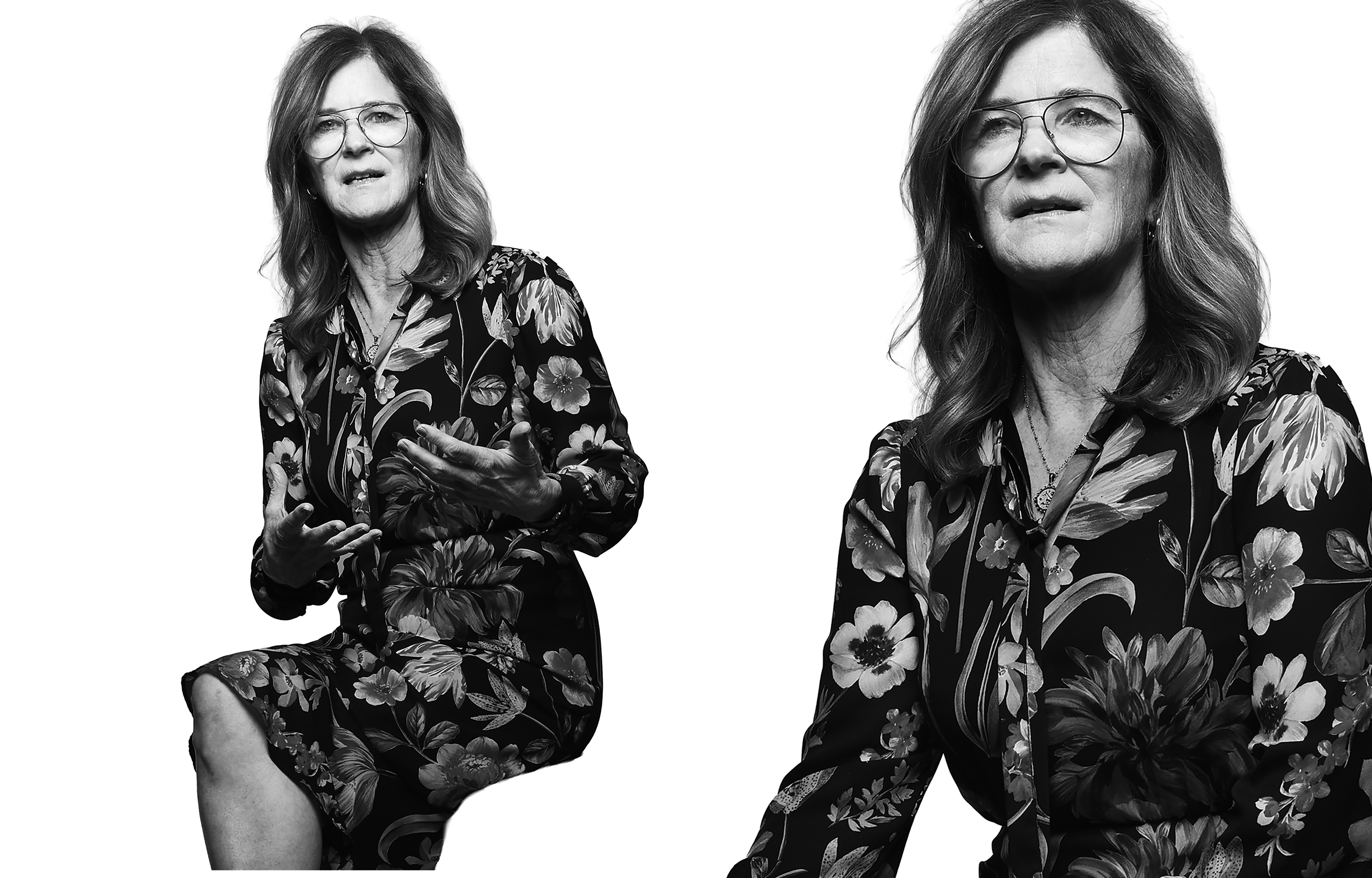
These were not people avoiding the system. They had survived it.
When I asked Jane what became of the children, she said they remained in care abroad while relatives in Minnesota stayed in contact with them. The Institute had visited the family and considered what it could do, but there was only so much an organization in St. Paul could repair after the United States closed the door.
Policy language makes this sound administrative: a pause, a review, a suspension. Inside a family, it is an empty chair, an unanswered question, and another month in which a child is not living with the family who were prepared to care for them.
We tell people to follow the law, then narrow or halt the lawful routes. We say immigrants take jobs, while entire industries say they cannot find enough people to do the work.
The damage does not stop with immigrants. It reaches the parents and children already here. It reaches employers waiting for workers, patients waiting for care, farms missing labor, and classrooms missing students. We tell people to follow the law, then narrow or halt the lawful routes. We say immigrants take jobs, while entire industries say they cannot find enough people to do the work.
We need them, but we deny them.
Kakuma Is Not Far Away
At an Institute breakfast, Jane spoke about suffering in Kenya’s Kakuma refugee camp after cuts to U.S.-supported aid. That account stayed with me because it stripped “foreign assistance” of its bureaucratic disguise. This was about people trying to live on fragments of a ration—something like a cup of rice and a cup of sorghum.
Why should an organization in Minnesota care about a camp in Kenya? Because people living here have family there. Because the distance between Kakuma and St. Paul is crossed by memory, obligation, grief, and hope.
Jane learned more about Kakuma through Eskinder Nagesh at the Institute’s national network. He had lived in a refugee camp himself. When he learned that girls in Kakuma were missing school because they lacked menstrual products, he helped raise money and deliver supplies. Returning was not abstract service for him. He told Jane that visits made him physically sick because they brought back what had happened to him.
When the USAID cuts began, his warning was immediate: “People are going to starve”. This is a man-made Hunger Crisis.
The World Food Programme warned in May 2025 that roughly 720,000 refugees in Kenya would receive only 28 percent of a full food ration unless new funding arrived7. ProPublica later reported that the U.S. cutoff left more than 136,000 Kakuma residents with no ration at all8. Hunger also creates another vulnerability Jane knows well: a child who has no food is easy prey for someone promising a meal.
From Washington, this can be made to look like arithmetic. In Kakuma, it is a parent deciding who eats. It is a girl missing school. It is a pregnant woman becoming malnourished. It is a child learning that an adult offering food may demand something in return.
The Miracle We Refuse to See
Near the end of our conversation, I asked Jane what she wished Americans could see if they sat across from an immigrant.
She spoke first about gratitude—not submission or indebtedness, but gratitude for an opportunity that many Americans barely notice. Then she spoke about determination. She has known people who lost half their families, lost children, or watched parents murdered in front of them. Somehow, they left, survived a camp, reached another country, learned a language, found work, and began remaking a life.
Jane’s voice broke. She cried.
She did not describe people who had transcended suffering, as if trauma disappears once someone becomes productive. She described people who carried it forward while doing what most parents try to do: give their children something better.
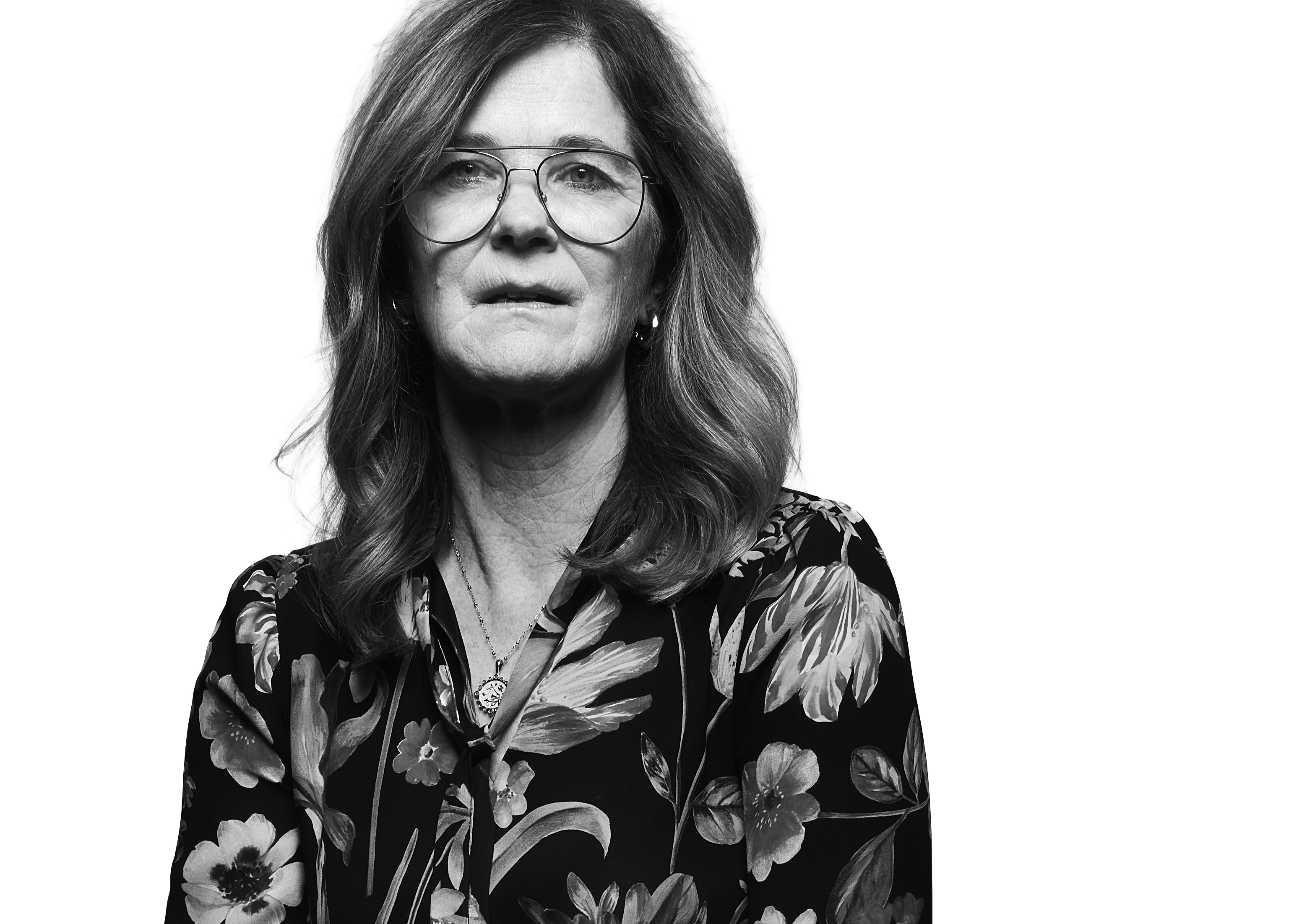
Every day at the Institute, Jane said, she sees a kind of rebirth—of people, communities, and the country itself.
I really feel like it’s a miracle,” she told me, “that so many people don’t get to see.
That may be the central failure in how America talks about immigration. We argue over a category while refusing to look at the person inside it. We depend on people we describe as burdens. We accept their care in hospitals, their labor in nursing homes and farm fields, and their food in restaurants, then allow them to be flattened into threats.
Jane told me that if immigration were bad for the country, she would not have devoted her life to it. She loves her country. Her work is not an argument against law or order. It is evidence that law detached from humanity—and policy detached from reality—can injure the very country it claims to protect.
Dehumanization requires distance. It becomes harder when the person in front of you has a face, a family, a job, a loss, a stubborn hope, and a story that sounds, in its essentials, a lot like your own.
- The International Institute of Minnesota (IIM), founded in 1919, is an independent nonprofit organization based in St. Paul that assists immigrants and refugees through refugee resettlement, English-language education, employment services, and citizenship programs. Although independent, it works closely with the national refugee resettlement system and federal agencies responsible for refugee admissions.
International Institute of Minnesota, “About Us,” https://iimn.org/about-us/. ↩ - After five years of the nursing assistant program, several graduates returned to the Institute to ask if there were more ways to advance in the healthcare field. The Medical Career Advancement program was soon created, and a few years later College Readiness Academy.… The result… has been over 4,000 New Americans trained and working in healthcare.
International Institute of Minnesota, “Celebrating 35 Years of Medical Careers Training”, https://iimn.org/news/celebrating-35-years-of-medical-careers-training/
↩ - At my recent physical, the medical assistant, Samlaie, was warm, capable, and easy to joke with. At times, we had difficulty understanding each other. The difficulty was real, but so were her professionalism, kindness, and humanity. Giving her grace allowed the encounter to remain what it actually was: one person caring for another. ↩
- A Pell Grant is a subsidy the U.S. federal government provides for students who need it to pay for college. Federal Pell Grants are limited to students with exceptional financial need, who have not earned their first bachelor’s degree, or who are enrolled in certain post-baccalaureate programs, through participating institutions.
A Pell Grant is generally considered the foundation of a student’s financial aid package, to which other forms of aid are added.
https://en.wikipedia.org/wiki/Pell_Grant ↩ - The refugee admissions process is one of the United States’ longest-standing legal immigration pathways. Applicants are screened abroad through the U.S. Refugee Admissions Program, a process that often takes years and includes extensive security vetting before travel is approved. President Trump’s Executive Order 14163, signed January 20, 2025, suspended refugee admissions, immediately halting the travel of refugees, including people who had already completed the approval process and were scheduled to come to the United States.
See Executive Order 14163, 90 Fed. Reg. 8449 (Jan. 20, 2025)
See also: Congressional Research Service. U.S. Refugee Admissions Program. CRS Report R47399. Washington, DC: Congressional Research Service, January 4, 2023. https://crsreports.congress.gov/product/pdf/R/R47399 ↩ - Emily Bright and Aleesa Kuznetsov, “Refugees Set to Resettle in Minnesota Next Month Now Barred Entry After Trump Order,” MPR News, January 21, 2025, updated January 22, 2025.
https://www.mprnews.org/episode/2025/01/21/refugees-set-to-resettle-in-minnesota-barred-entry-after-trump-order ↩ - United Nations World Food Programme, “Refugees in Kenya at Risk of Worsening Hunger as WFP Faces Critical Funding Shortfall,” news release, May 22, 2025, https://www.wfp.org/news/refugees-kenya-risk-worsening-hunger-wfp-faces-critical-funding-shortfall ↩
- Brett Murphy and Anna Maria Barry-Jester, “Inside the Trump Administration’s Man-Made Hunger Crisis,” ProPublica, December 17, 2025,
https://www.propublica.org/article/kenya-trump-usaid-world-food-program-starvation-children-deaths ↩

