
This is one story in a series of stories about Cuba. Here, Caridad’s husband would not reveal his name. Images from this story is available in my gallery.
“There’s an old parable about a boiling frog: Toss a frog into hot water and it scrambles out. Place it in cool water and turn up the heat—slowly—and it stays, unaware of what’s happening, until the end.”
Confined Within
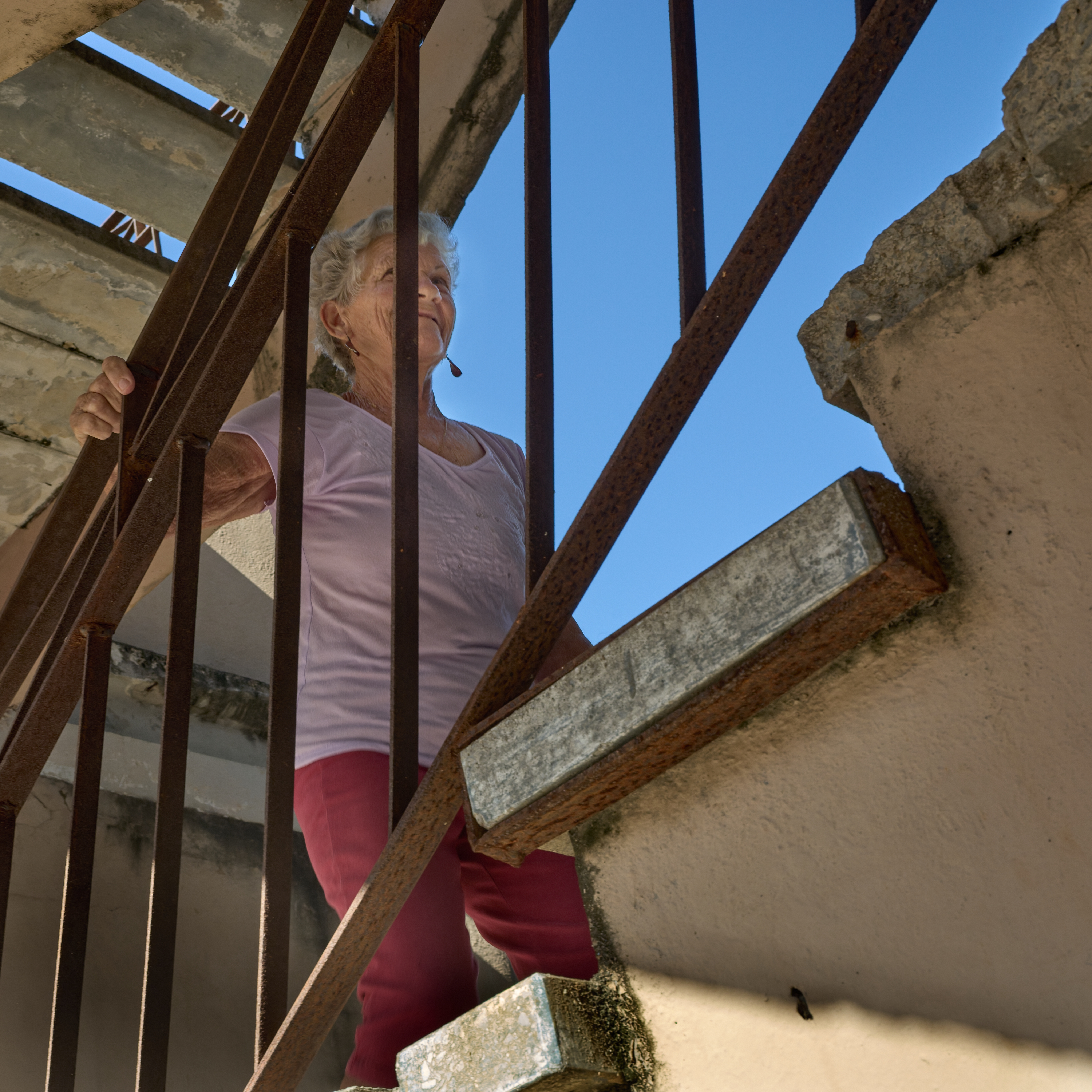
In a decaying concrete apartment block in Central Havana, Caridad and her husband find themselves suspended between the past and the present, struggling to survive.
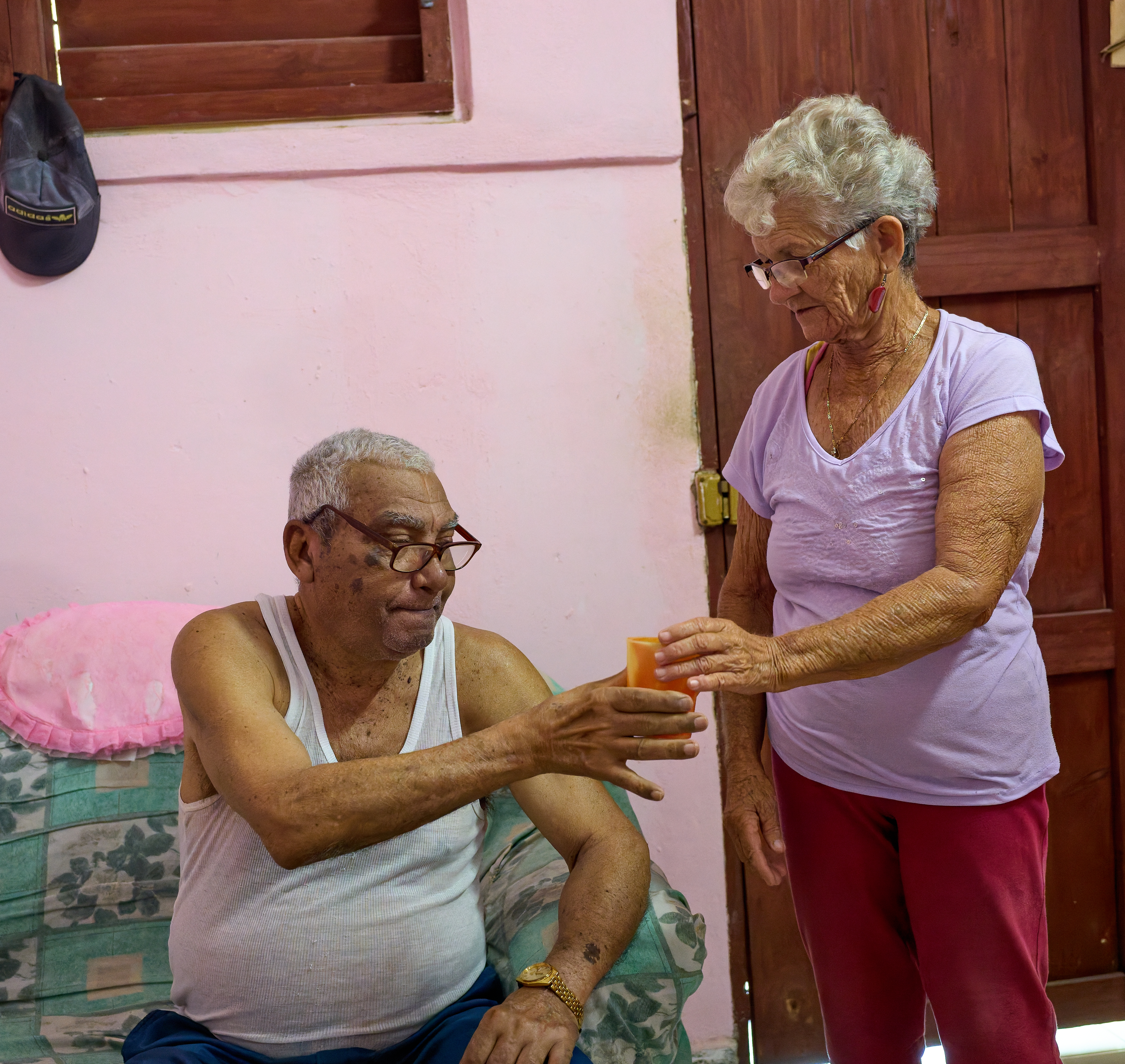
The stairway to their second-floor apartment is a barrier sufficient to keep the husband homebound. Diabetes and neurological damage (due to lack of oxygen to the brain while in the hospital) have cost him mobility and muscle control in his legs and mouth. Diabetes medicines are difficult to get—but occasionally a neighbor gives them pills.
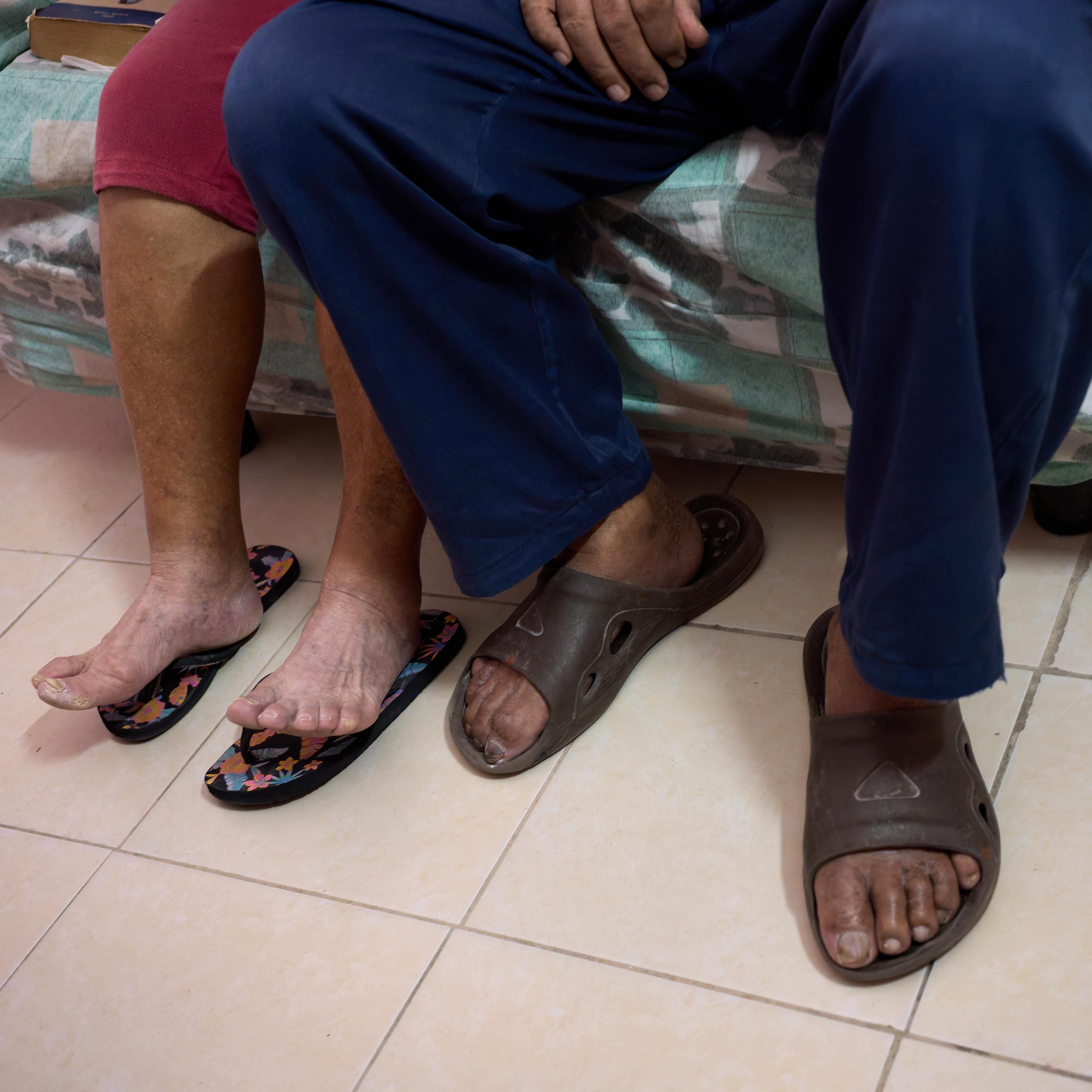
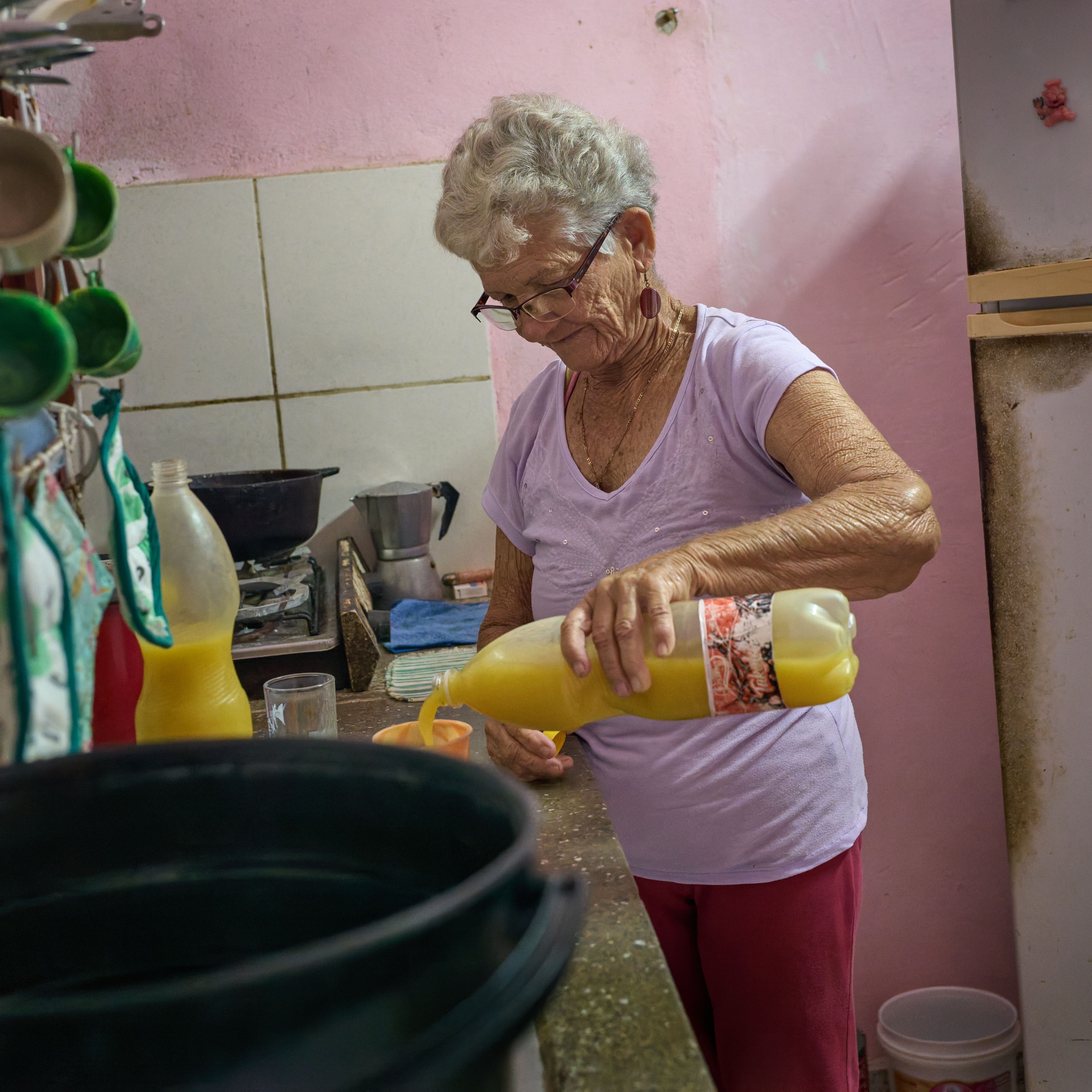
His wife is both partner and full-time caregiver, his nurse. She once injured her back lifting him at home—then had to do the same in the hospital, where for 14 days during the COVID-19 lockdown, they remained alone. No phone. No visitors. Just the two of them in an isolation ward, while the virus killed many.
⸻
Scarcity, made routine.
With no gas delivery for over six months, they cook every meal with a single electric pot. Their refrigerator is nearly empty. Their government-issued ration card allows just five pounds of rice per person per month—and not much else.
They receive 1,000 pesos (3 USD) monthly from the government. A pound of meat costs 100 pesos. Banks aren’t trusted, so they withdraw everything in cash immediately, adding it to the 3000 pesos total in the house, or about 8 USD.
They boil all their water and store it in reused plastic bottles that line the wall, as the water supply is limited and contaminated.
They feel they’ve been left behind because of their age. They once had government support, but with privatization, they can no longer afford basic needs. Everything is more expensive now.
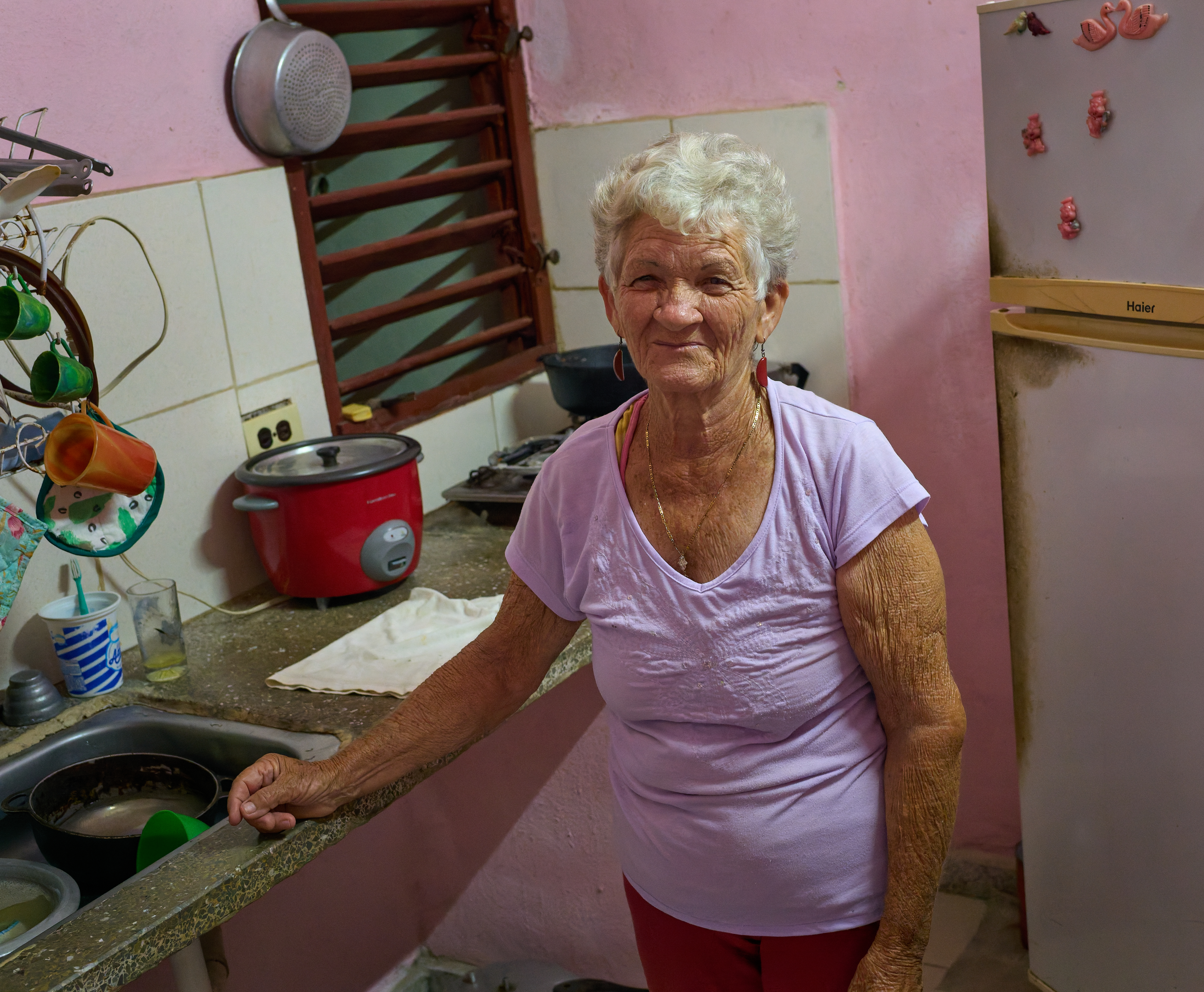
Groceries are a four-hour roundtrip by ferry and bus. A taxi would cost nearly a third of their income. So Caridad walks, waits, and hauls food home by hand.
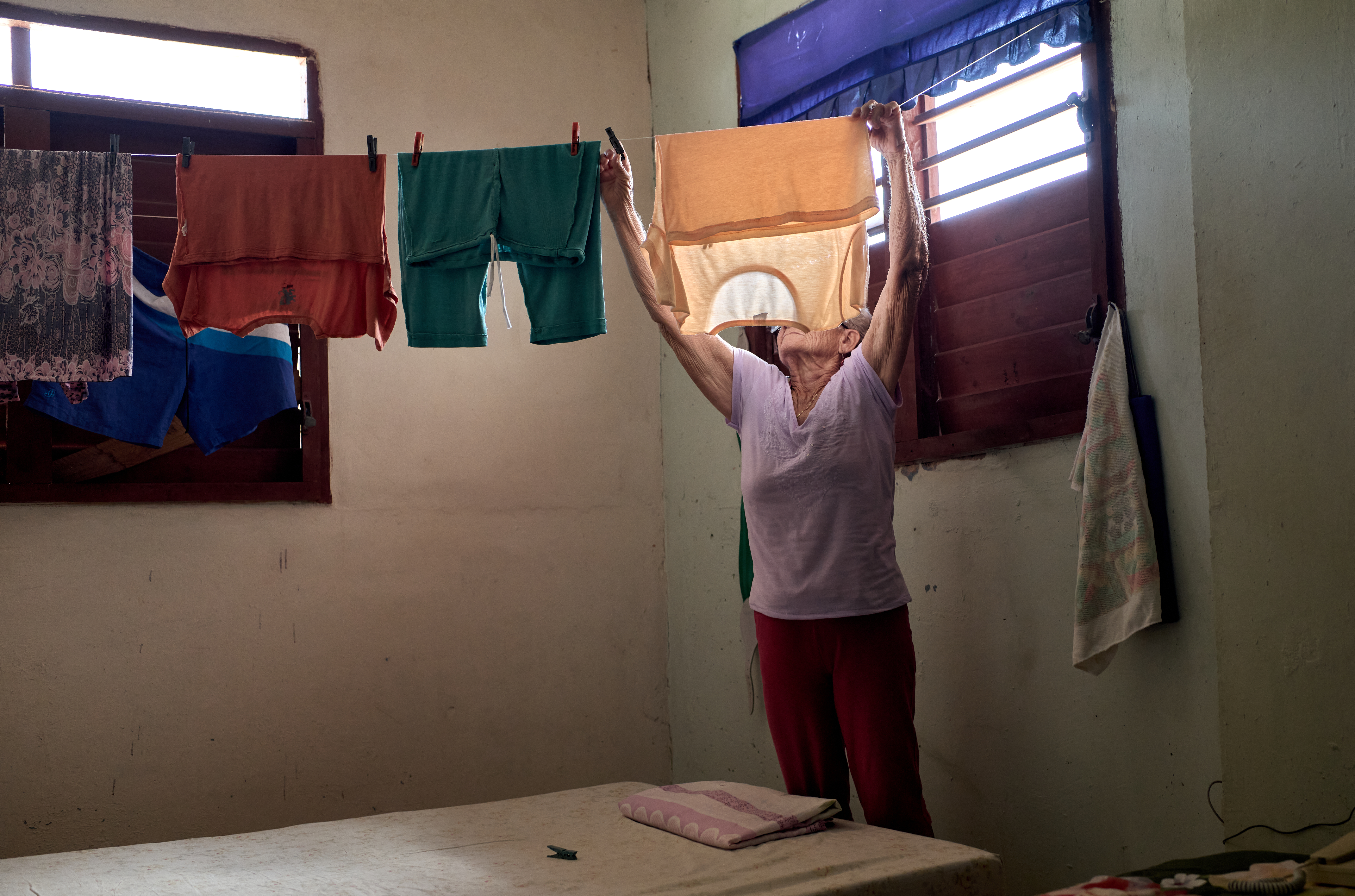
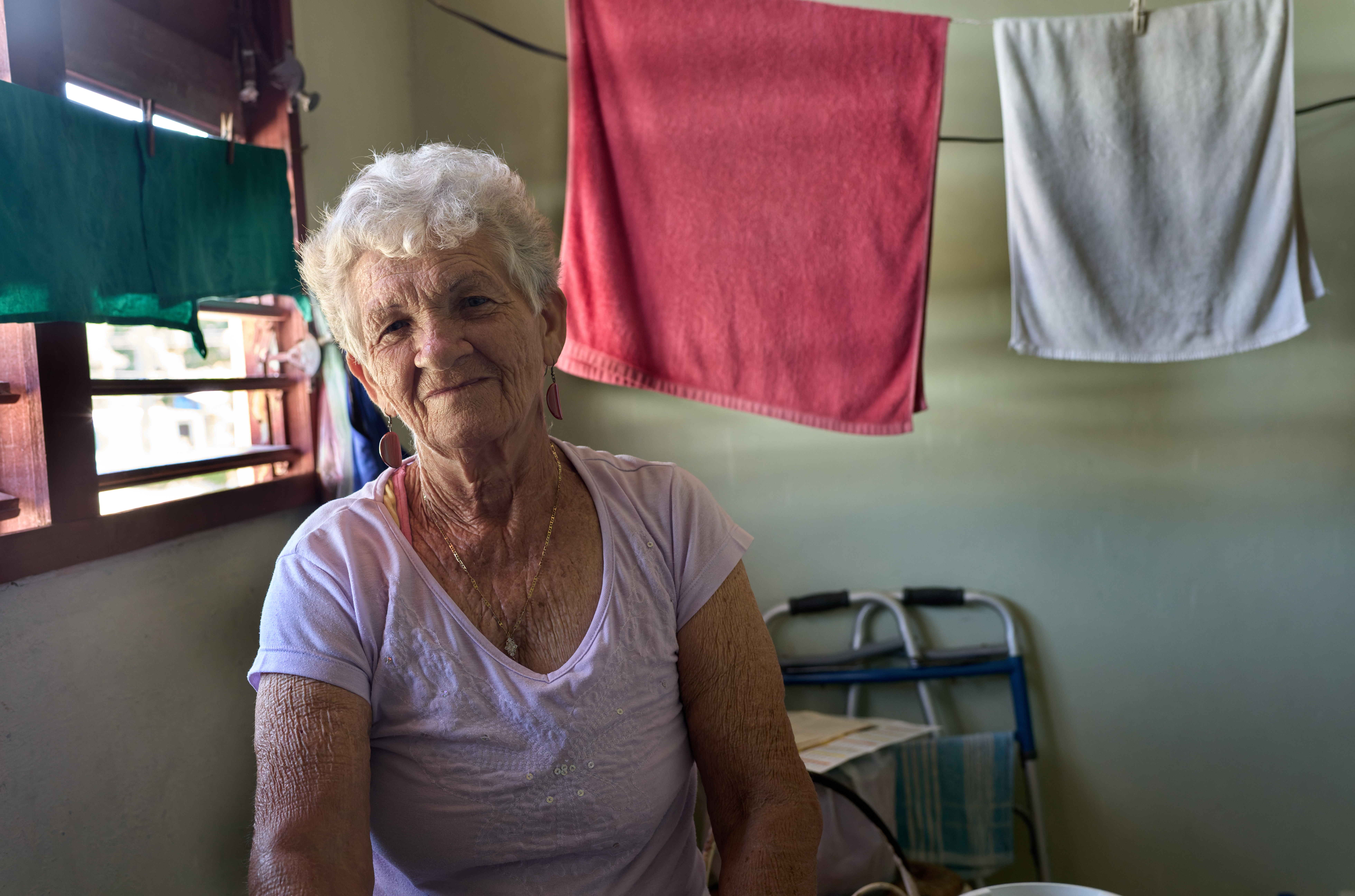
Inside the apartment, laundry hangs on clotheslines strung from wall to wall. The air is humid. Electricity is unstable. The only television signal comes from a rusted antenna and offers just a few government channels.
⸻
The Family They Haven’t Met
The couple hasn’t seen their son or daughter in more than five years. He trained as an architect but now works as a tour guide. She studied nursing but now sells clothes for a living. It is common that the professional vocations do not earn enough. It is curious that the kids have not seen their parents for all these years.
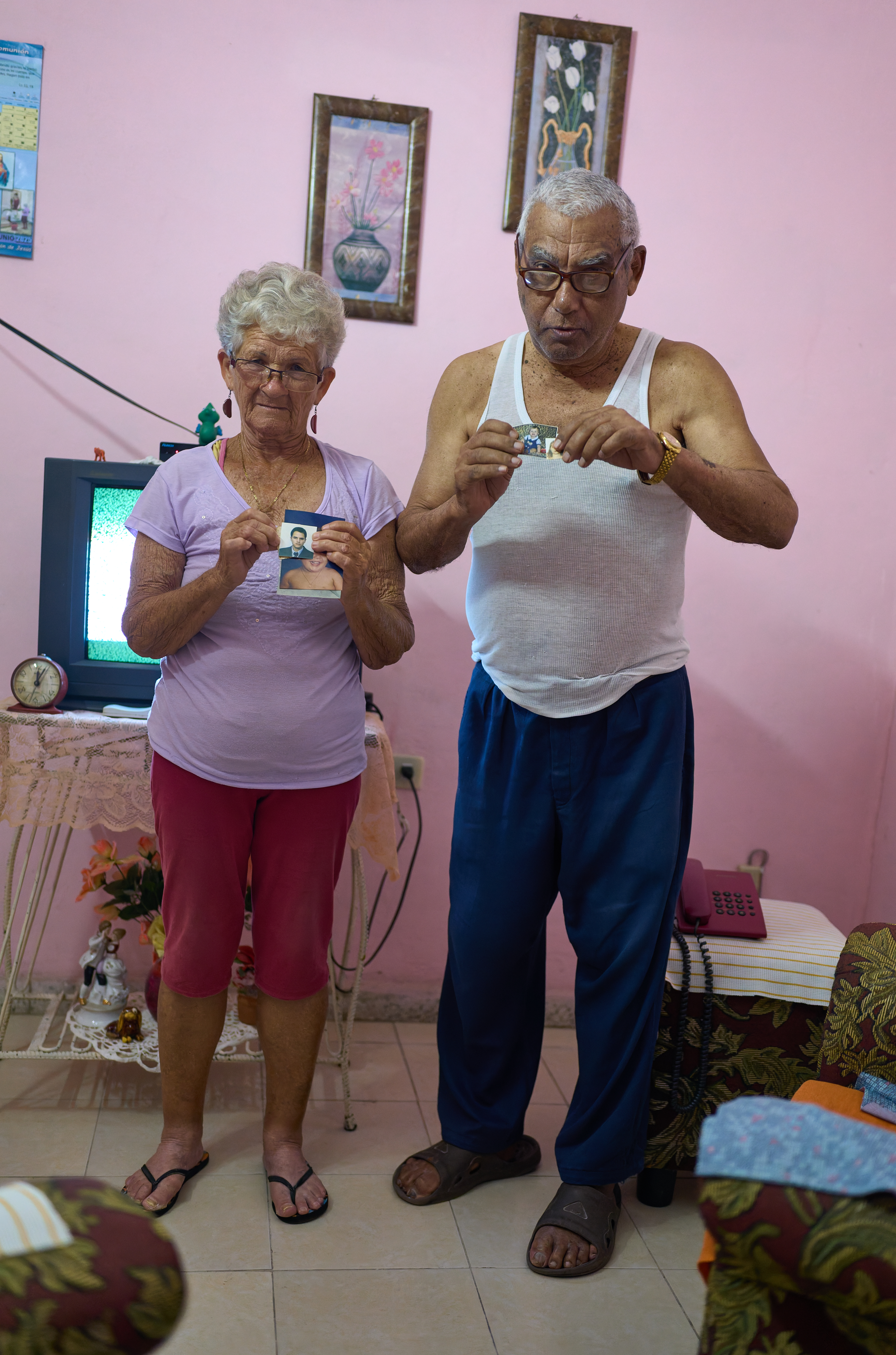
We’ve never met our grandson. He’s three now.
Still, Caridad beams when she talks about the past. She grew up in the countryside raising animals, making cheese and yogurt, and always having food.
”There was always food,” she says. “And candy.”
The couple met in 2000—she was 44—on a ferry across the harbor. This is their second marriage. She had lost her previous husband to cancer. Her husband had once served in Angola and had left a family behind there.
With Fidel in 1990, things were good with Russia. Things were still good with Fidel even without Russia when Russia collapsed. She says Fidel provided more. A stark contrast to the corruption of today’s Cuban government that has led to the widespread scarcity one can see everywhere.
⸻
What’s Left Behind
Now, the lights flicker. Water is boiled. Ration cards are stretched thin. And still, they do not blame the government—not even in private, I assume.
Caridad and her husband have lived through Cuba’s full arc: before the revolution, to the revolutionary promise, to systemic collapse. They remember when bread was cheap, cheese was homemade, and life under Fidel—especially with Soviet backing—felt secure and abundant. Caridad speaks of those days with a glow in her eyes. She recalls making cheese in the countryside, feeding animals, and always having candy. Her husband fought in Angola, built a life, and had children there—but left them behind when he was told to return. The cost of that decision was muted in our conversation; the reason for leaving them was not articulated.
What’s most striking is not just their hardship but their muted response to my questions. Their acceptance. Not questioning. There isn’t the emotion I would have expected.
I have a theory: In interviewing the younger generation, they may feel there is nothing to lose. For them, it’s always been like this—scarcity, control, broken systems. They’ve grown up amid decay and are quicker to rebel. But the old? The old remember what was. They’ve seen it all slowly taken away. Is that why they’re quieter—because they’re scared, or just numb? Or maybe they cannot adapt given their history.
They live in a reality defined by absence—no gas, little medication, difficult access to food. Even basic bread is now a luxury, distant, and expensive. They keep cash at home, because they don’t trust banks. Their television only plays state programming, transmitted through a rusting antenna outside the kitchen window. Their apartment is a microcosm of the national problem: bare shelves, flickering light, boiling water stored in plastic bottles, and drying clothes strung from wall to wall.
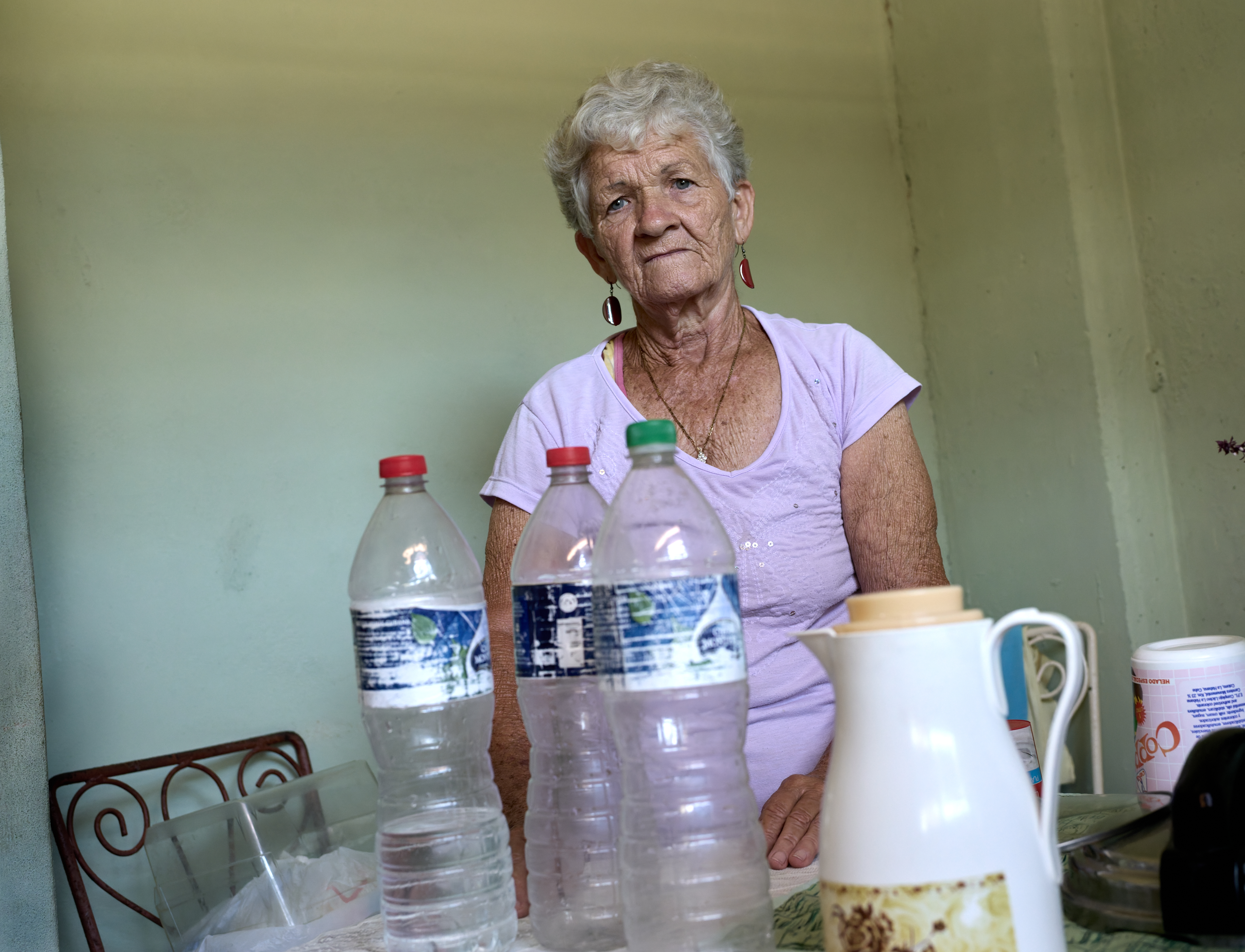
And yet, there’s no anger. No bitterness. Her faith seems to carry her. Above the television hangs a church calendar. It’s more than decoration. It’s structure. It’s belief. He, on the other hand, places trust in the government news. Not out of ignorance, but out of conditioning. For decades, he’s heard only one version of reality—and it’s become the only one that feels safe to believe. Unlike with the younger generations I have talked to, the internet, the antidote to the propaganda, is foreign.
I wonder how much the U.S. embargo contributes to all of this. They can’t get medications. Food is scarce. And even the rise of private businesses—the pymes—hasn’t helped them. If anything, it’s made life harder. Prices have gone up, and they’ve been left behind. The market moved on without them.
Their endurance doesn’t feel like hope. It feels like resignation—but strangely, it’s a resignation that is unconscious, like the boiling frog.

 Documentary Photography and Stories
Leave a reply to Two Cubas: One Survives, the Other Exploits – Documentary Photography and Stories Cancel reply