
In a nation where the state hoards billions, ordinary Cubans rebuild dignity with their hands.
This is one story in a series of stories about Cuba. More is available here.

I met people living like this across Havana, surviving in buildings so decayed they seem to be collapsing in slow motion. They live without running water, surrounded by cracked walls and patched wires, their lives propped up by faith, ingenuity, and what’s left of community. Meanwhile, the state’s military conglomerate, GAESA, hoards an estimated $18 billion in offshore reserves, more than many Latin American nations. Its books are sealed, its profits untaxed, and its control absolute. 1
Yet somehow, amid this corrosion, people continue to build. In workshops tucked behind faded doorways, I found barbers, shoemakers, and seamstresses, Cuba’s new pymes (small and medium-sized private businesses), carving out small spaces of autonomy in an economy designed to strip them of it.
The Barber in the Stairwell
In the stairwell outside an apartment in Havana, a barber has carved out a life.
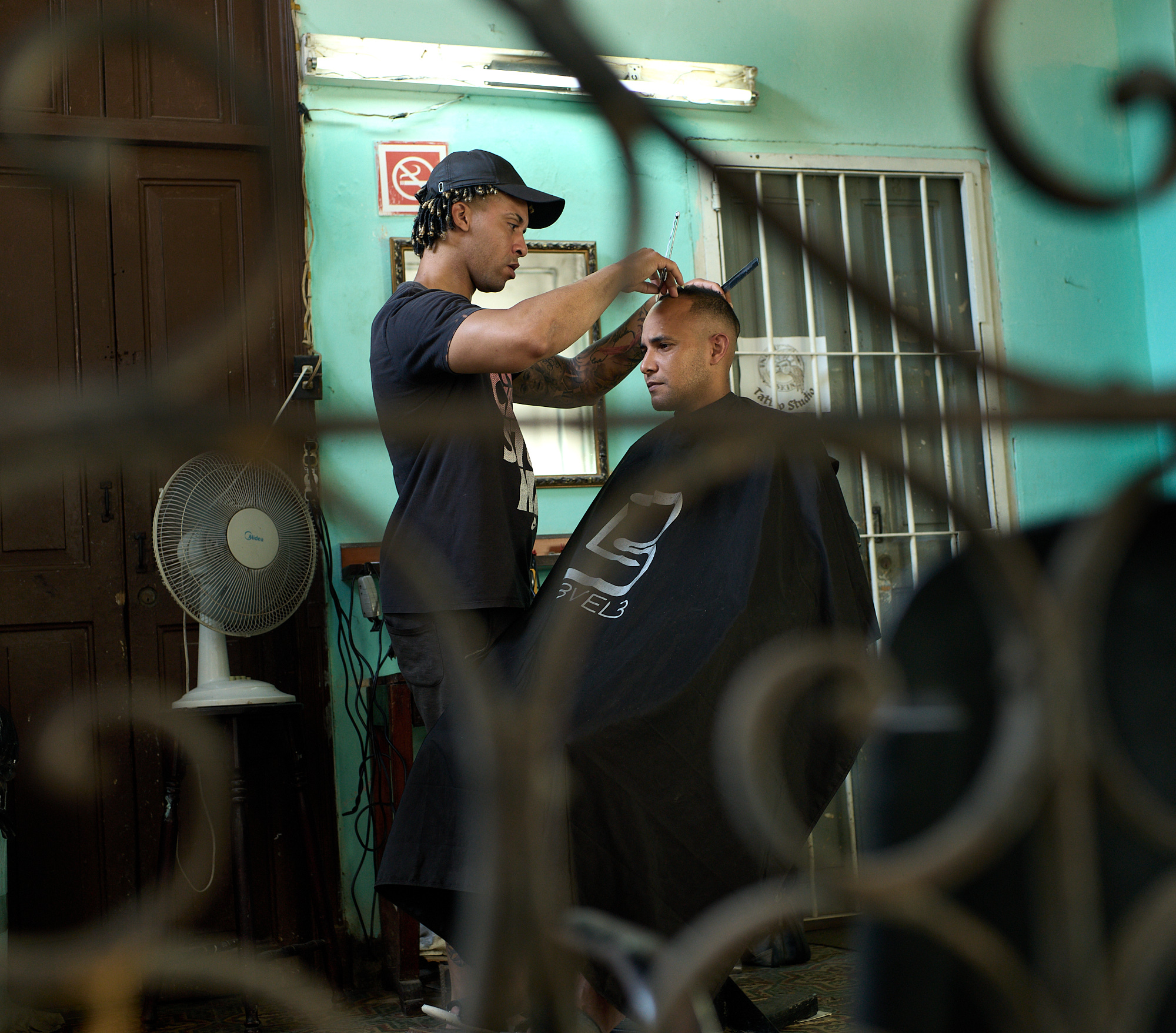
His shop is a custom-made chair (like many items in Cuba), a mirror, and his hands—hands that have been cutting hair for 13 years, starting with only scissors because the cost of clippers was unreachable. He charges 500 pesos per cut. It’s not glamorous, but it’s his.
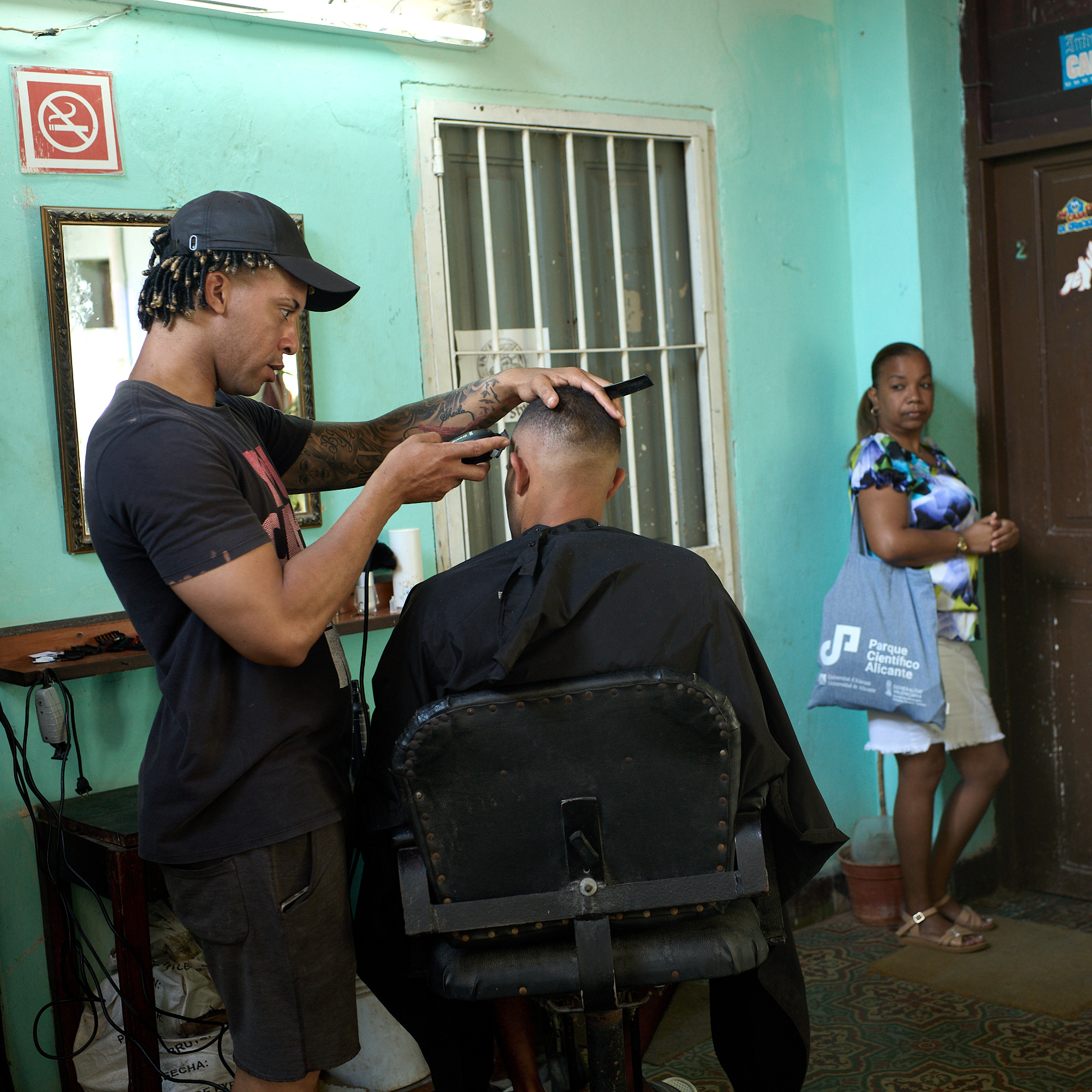
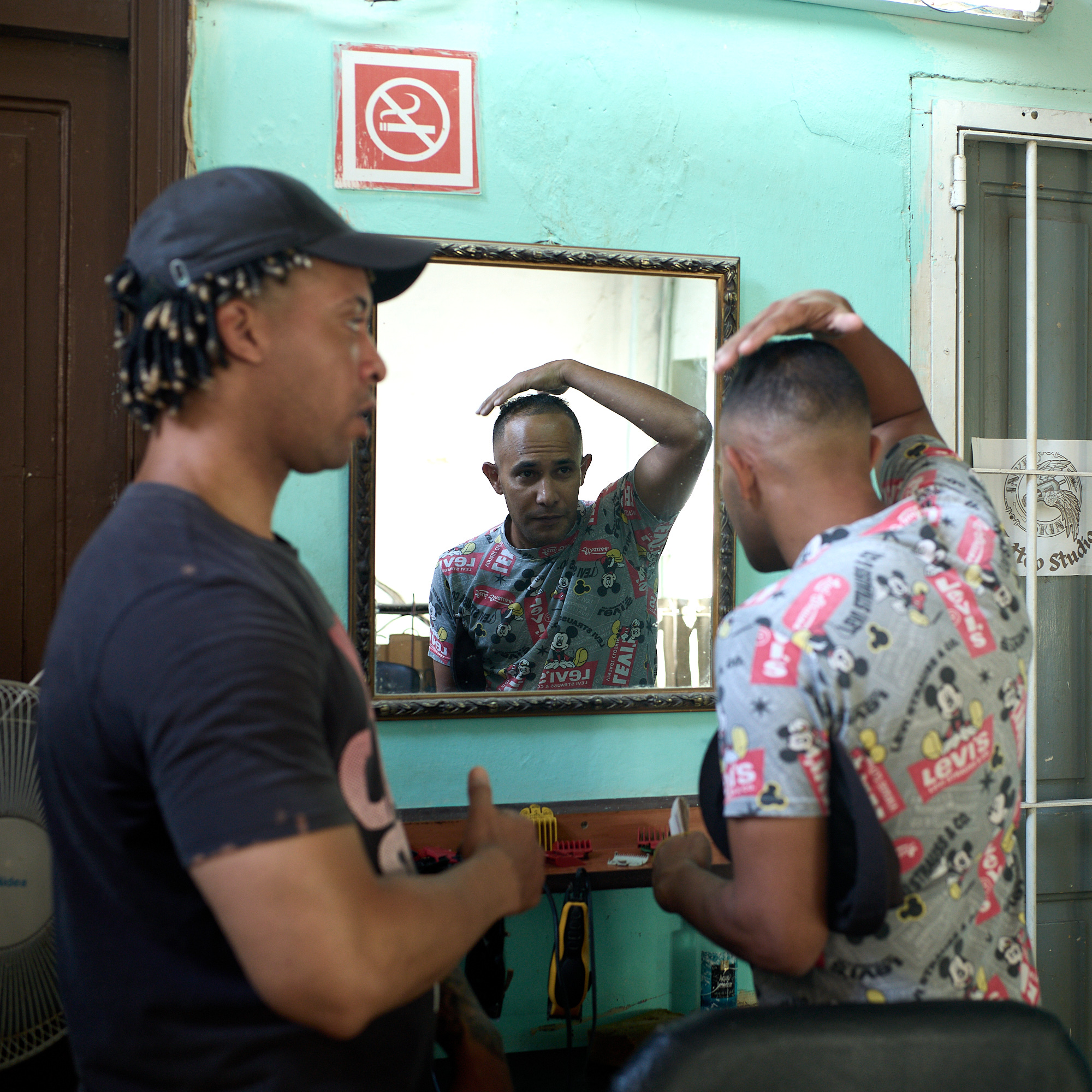
He’s a baseball player, too, still young in the face, with that mix of energy and calm that comes from doing something well. He keeps his tools clean and arranged in a small case, speaks gently but directly, and smiles with a kind of soft pride when a customer nods in the mirror. He loves sharp lines, especially the razor-clean edge along the hairline. That’s his signature.
”Young and old want to move. And it was better before Castro died. Leadership is now more selfish.”
His mentor now owns a shop in Florida, charging $80 per cut, has four chairs and “cuts important people’s hair”. He dreams of leaving, too, but recent U.S. politics have made that harder. He says it was easier during Obama when his mentor moved. Now? “It’s almost impossible,” he shrugs.

Still, this is success. No boss, no state paycheck. Just skill, consistency, and pride. This barber is surviving, and even thriving, within Cuba’s fragile gig economy. His setup is entirely makeshift. He basically leaves his apartment with his kit and walks 5 feet (1.52 m) to where he has set up a mirror and the makeshift barbershop. The chair is stored outside, pulled near his door at the end of the day.
This is a good example of the resilience and creativity people have to develop their own business in this gig economy. It’s also a good example of how a person who loves barbering his figure out a way to be a barber with this makeshift set up and also provides for his family.
Shoes Made from Scarcity
In Santa Clara, one of Cuba’s oldest shoe factories survives on ingenuity, patched machines, and faith in work itself.
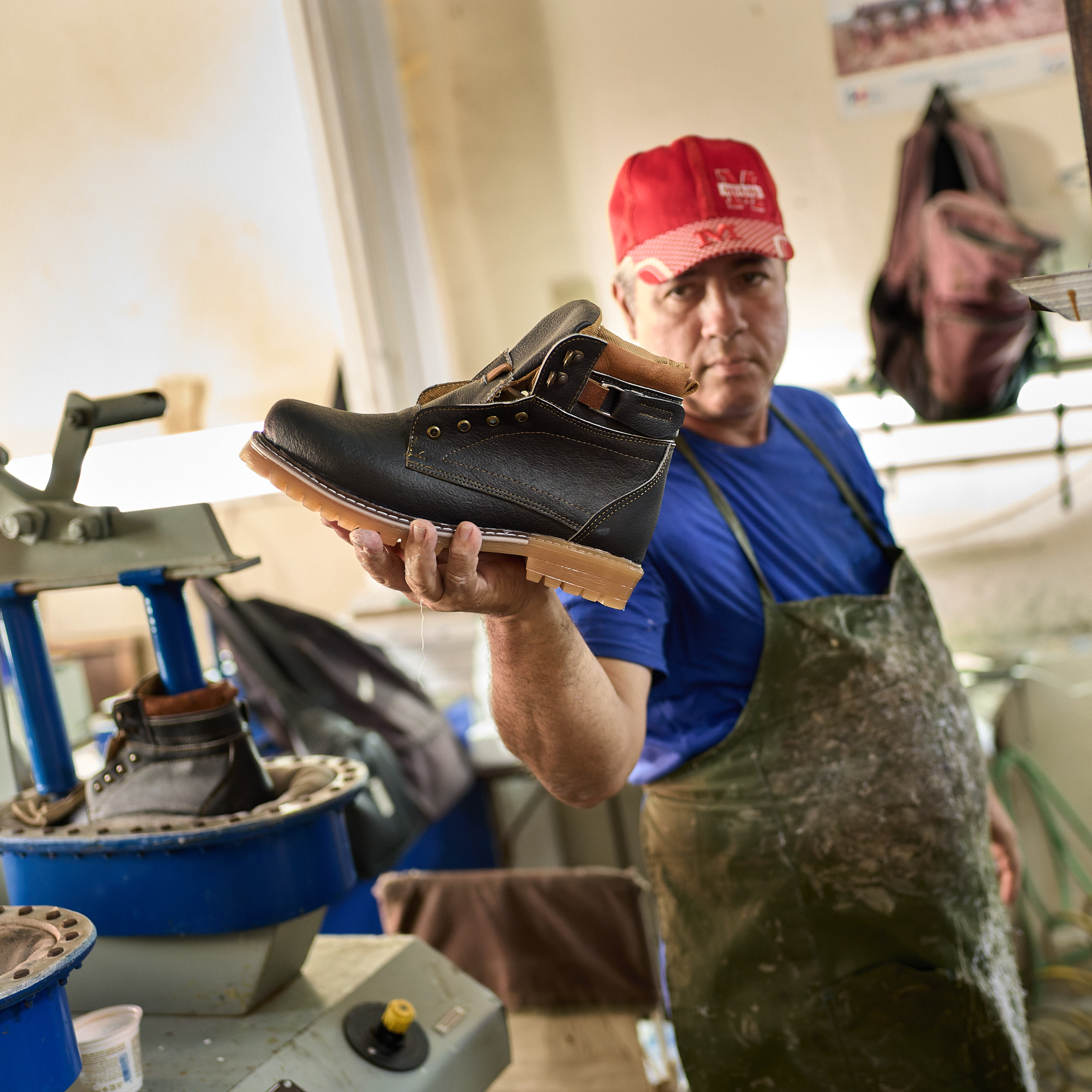
Over in Santa Clara, a small shoe factory produces footwear with parts sourced from Colombia, Mexico, and wherever else they can as the US is recently not available. One machine dates to 1966. Another was made in Russia. There’s also a Chinese model. The workshop employs about 45 people across three factories.
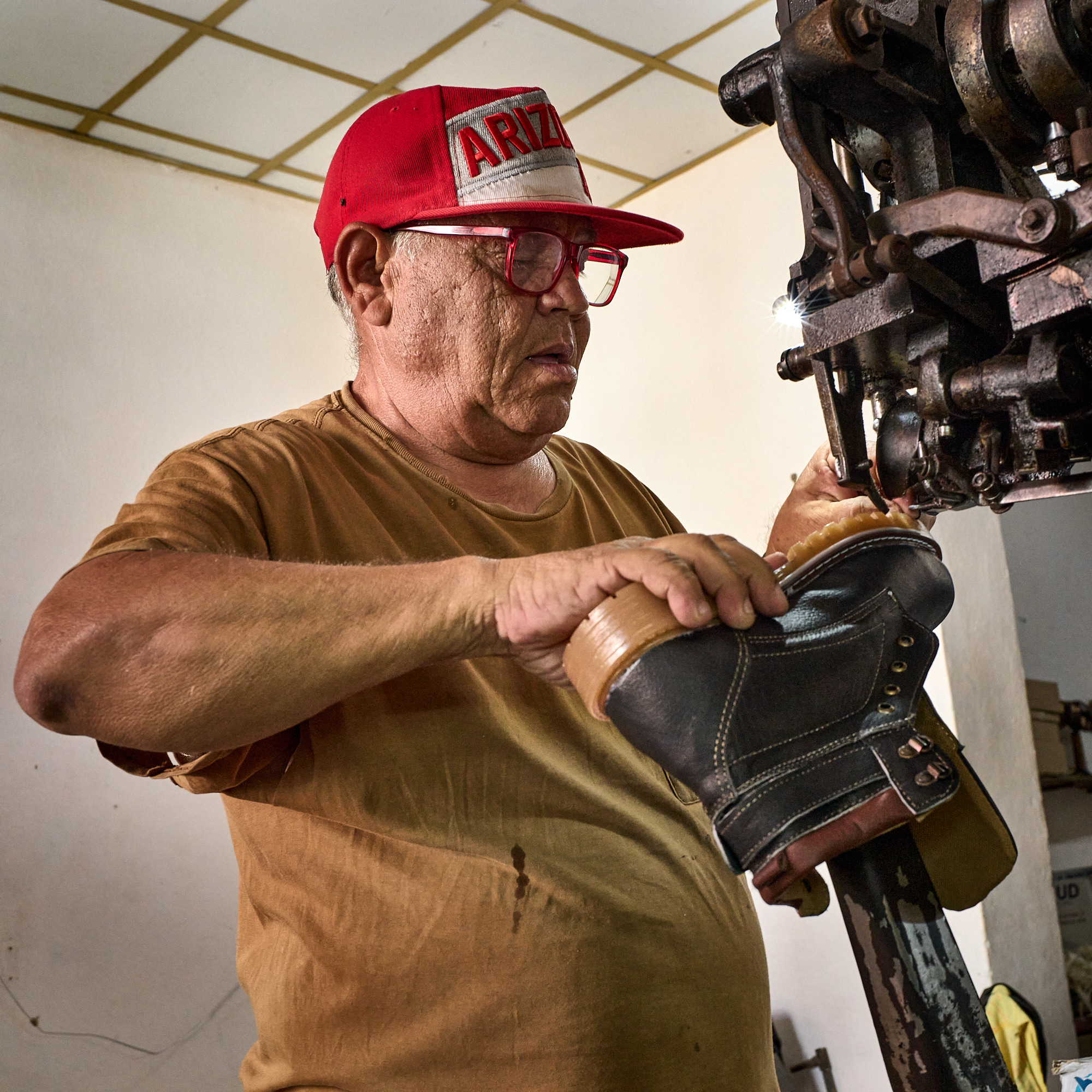
One worker knows every machine by heart, and he keeps this mix of machines running smoothly. He’s worked there nearly his entire life. He doesn’t just know the process, he feels it. You can see it in the way he leans into the machine, the rhythm of his hands. “This is my place,” he says simply. He has his cobbler business on the side, officially permitted by the government. “I have the papers!” He states. There, he makes custom sports shoes, working weekends in a back room of his home. But it’s this factory where his sense of purpose is anchored.
“Cevazú — Es una gran familia.” “It is a great family.”
There’s pride in these rooms. One man cradles a finished shoe like a sculptor studying a bust. Another, seated at a machine, lifts his head and grins mid-process.
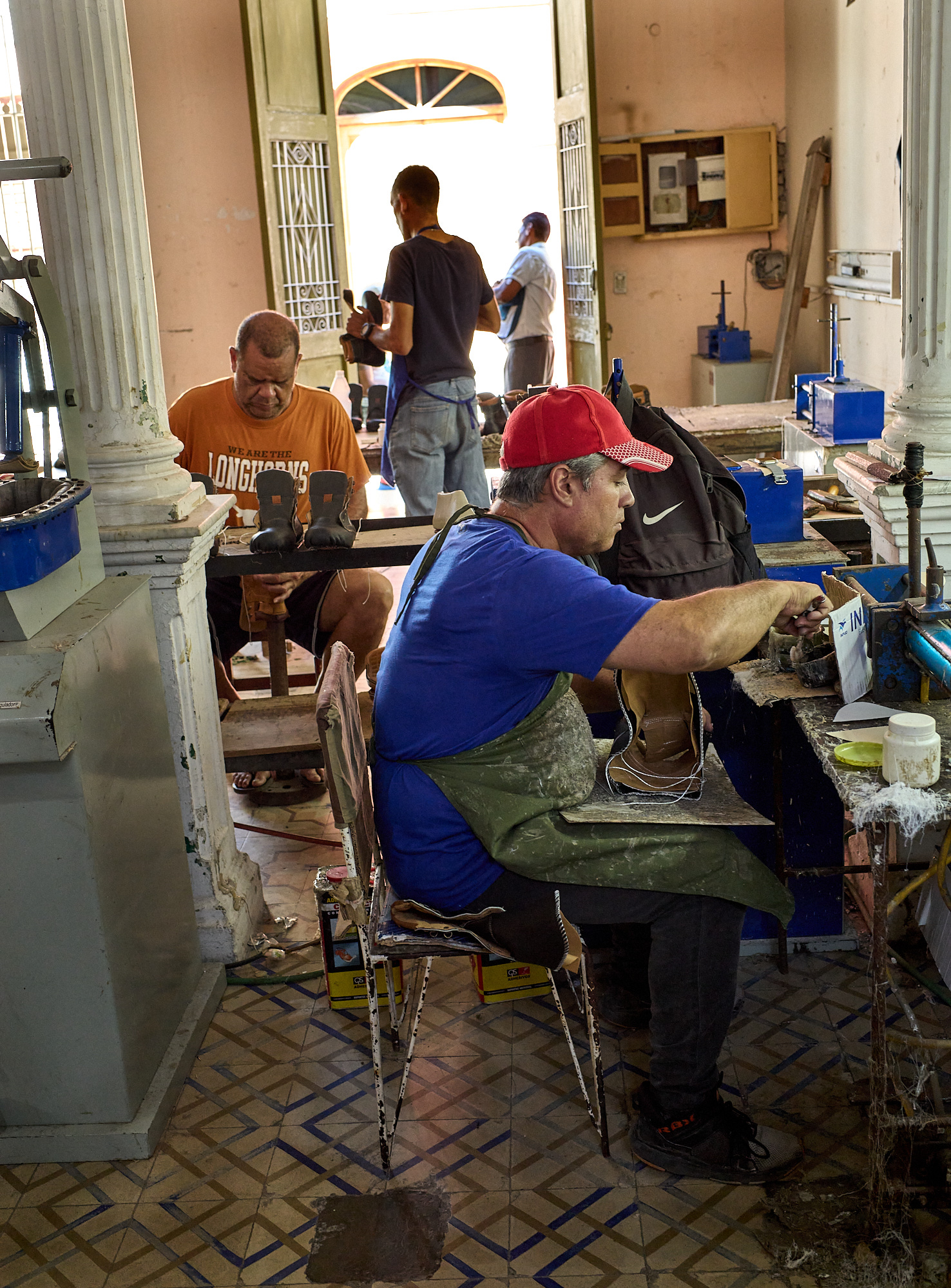
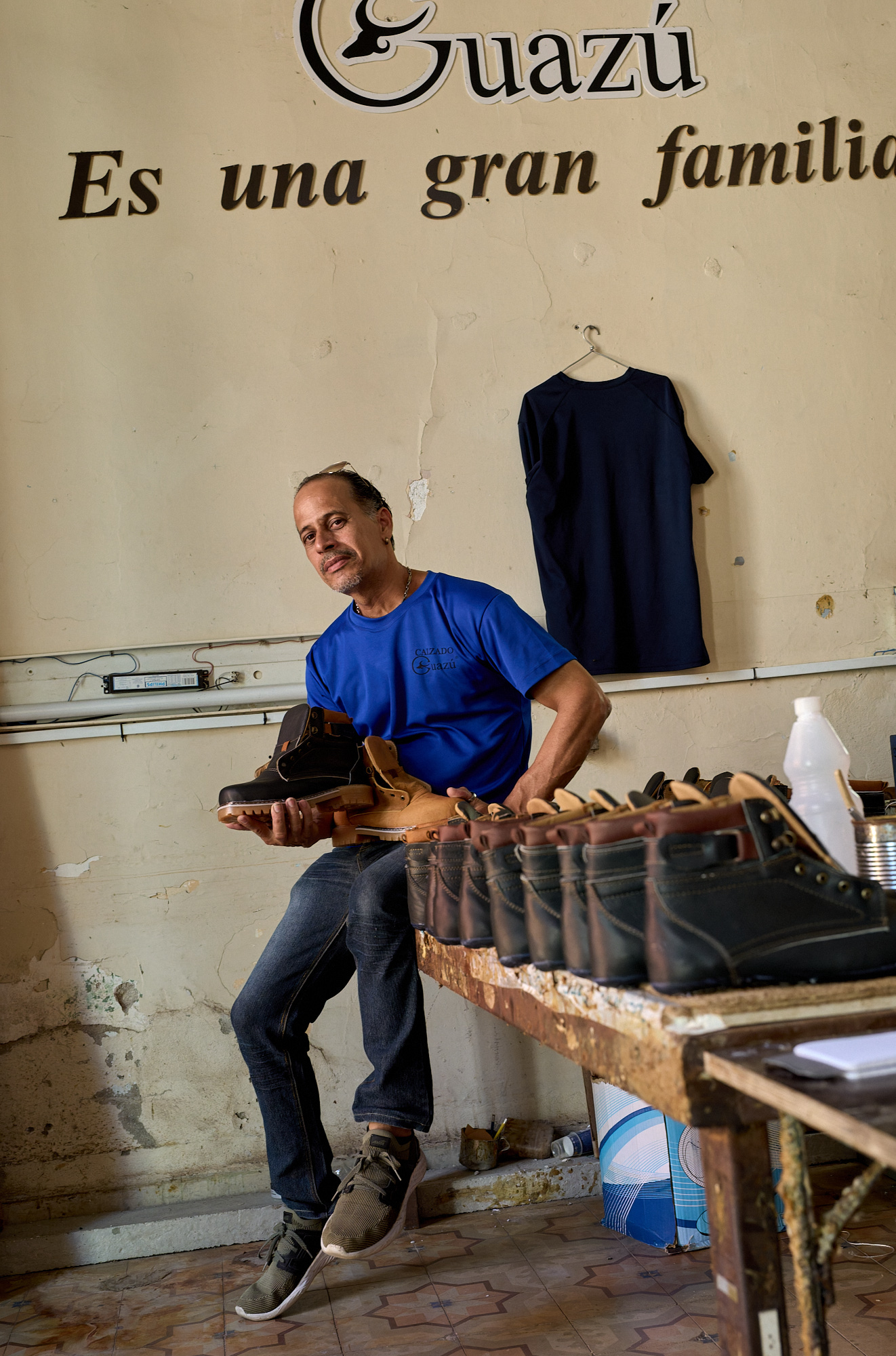
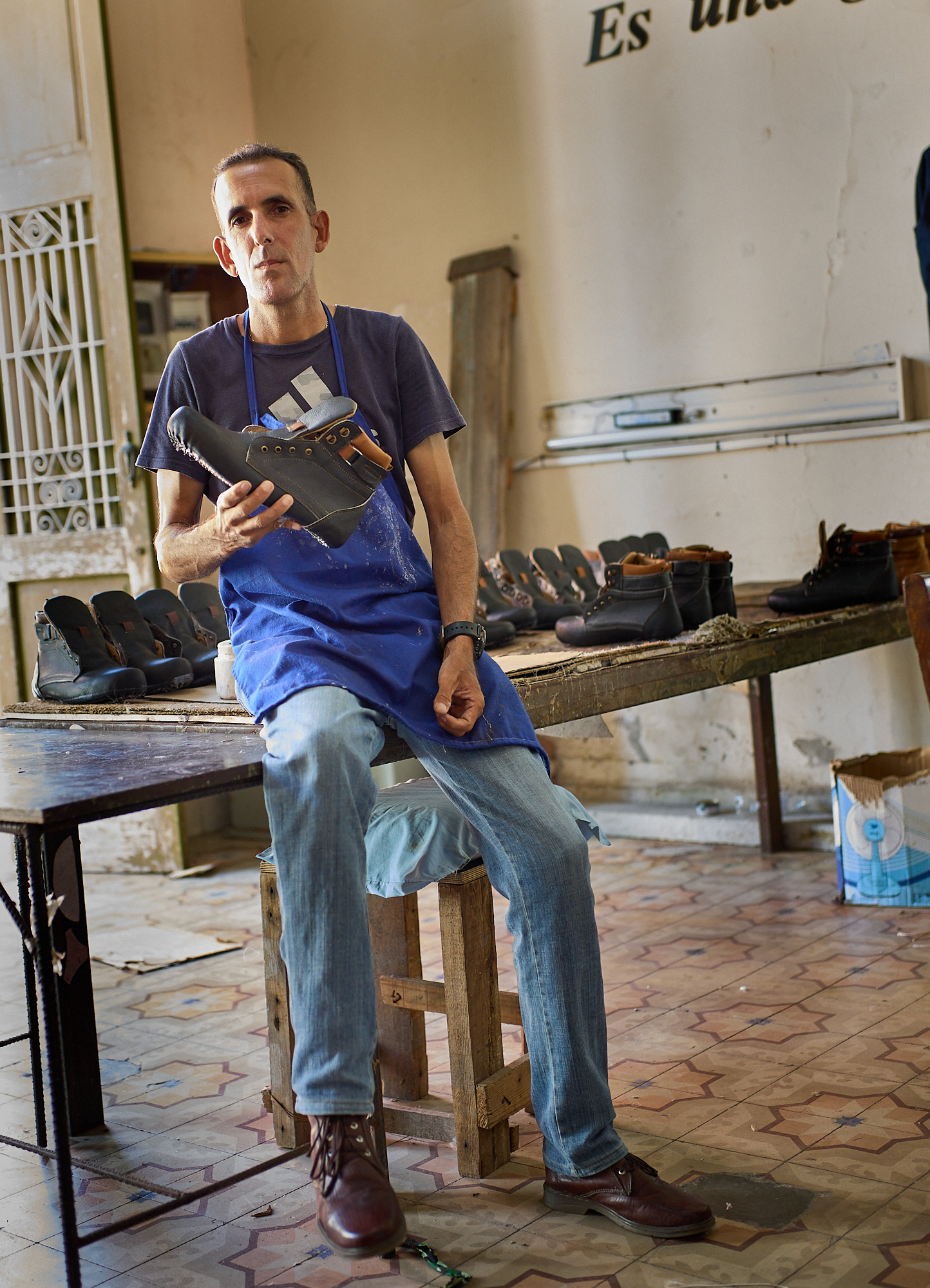
They once made baseball gloves, but abandoned that when material shortages made it unsustainable. Now, they make various types of shoes—functional, everyday products with value. Despite the resource limitations, this pyme has blended state contracts with private sales, adapting to stay alive. It’s a working hybrid of state-collaboration and entrepreneurial resilience.
A Pattern of Progress
Where the government left behind an old uniform shop, Naomi built something entirely her own.
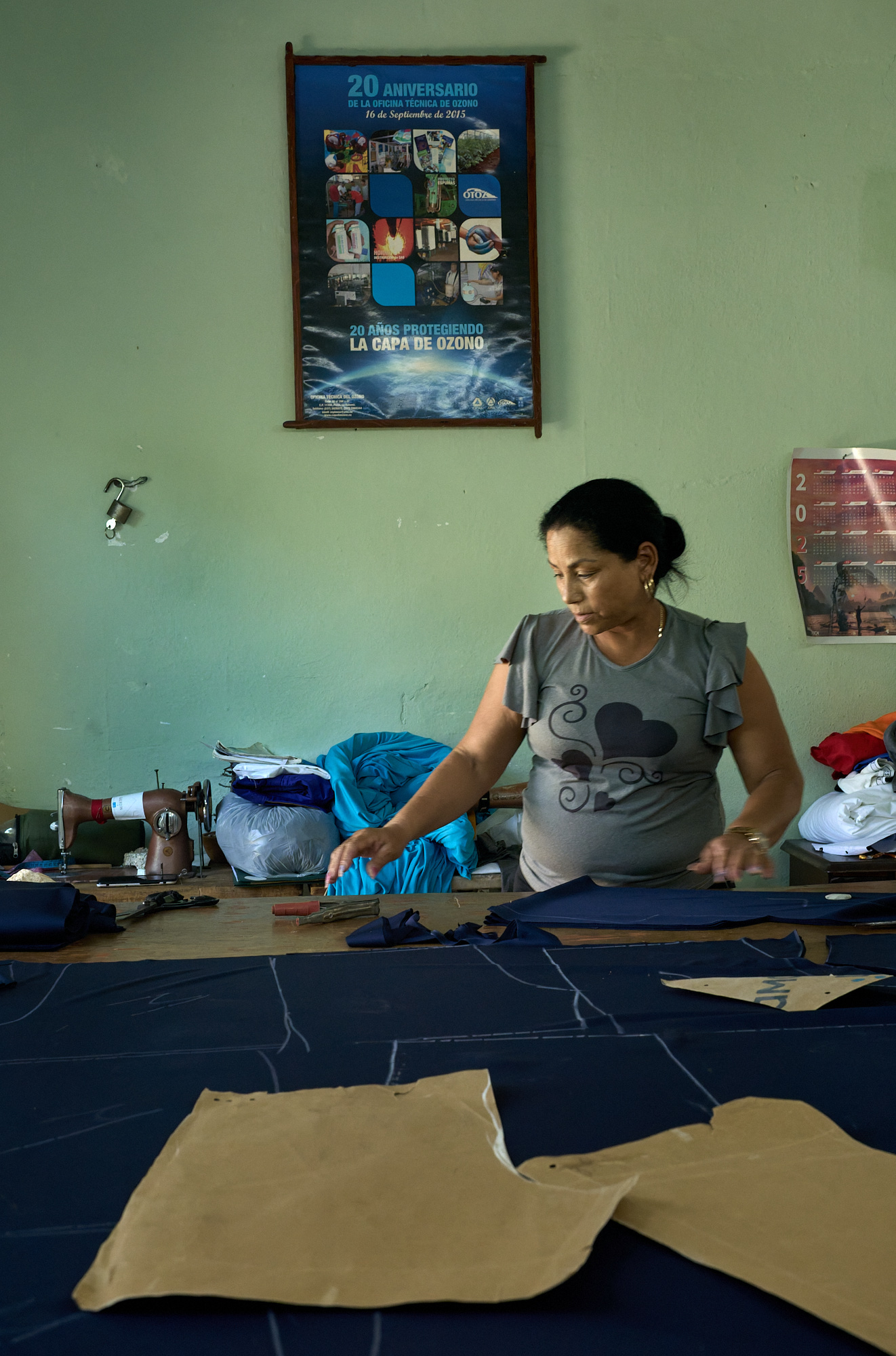
Naomi once worked in this 32-year-old government-run clothing shop. A year ago, she bought the business herself, kept the original patterns on the shelf, and transformed it into something new. Today, she leads a team of seamstresses crafting school uniforms, volleyball kits, and carnival costumes. Since the transition to private ownership, incomes have jumped from 2,000 CUP under the state to between 6,000 and 10,000 CUP now. Naomi still rents the same space, but now leverages her rare skill in pattern cutting as a competitive edge.
Naomi is small-framed but steady, moving through the workshop with calm authority. She doesn’t bark instructions, she just leads, and everyone seems to follow. You can see the respect in the way others glance toward her before making decisions. In the back room, where sunlight filters in through an old louvered window, she lays fabric across a worn table and begins to trace.
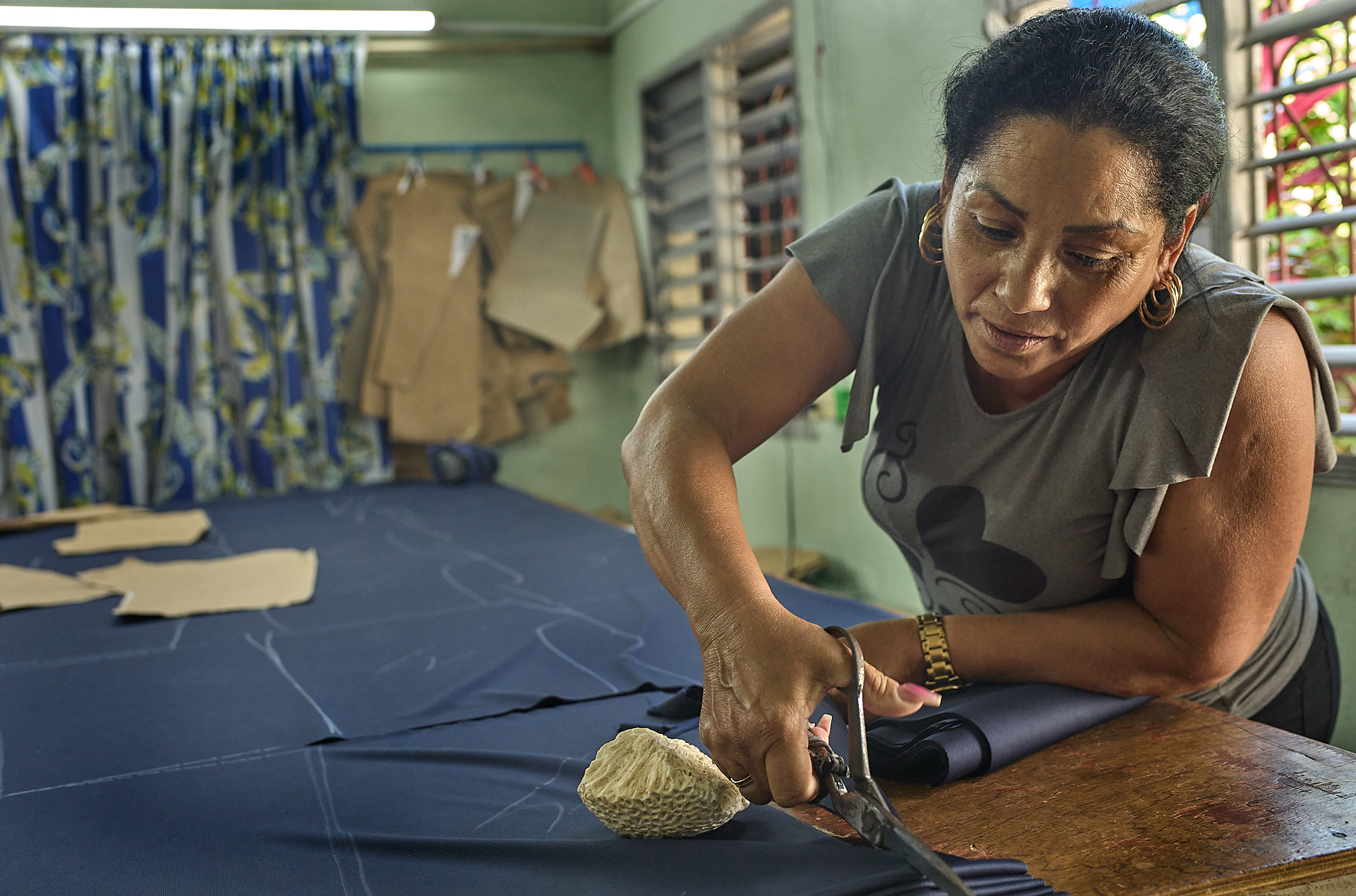
During frequent blackouts, Naomi doesn’t shut down, she adapts. She’s been converting 220V machines to 110V so they can run off solar panels during power outages. The solution is ingenious and entirely her own. Marketing? Virtually none. But the joy is visible, especially when Naomi cuts fabric—a moment of focus that reads as a proud skill that is critical to the business.
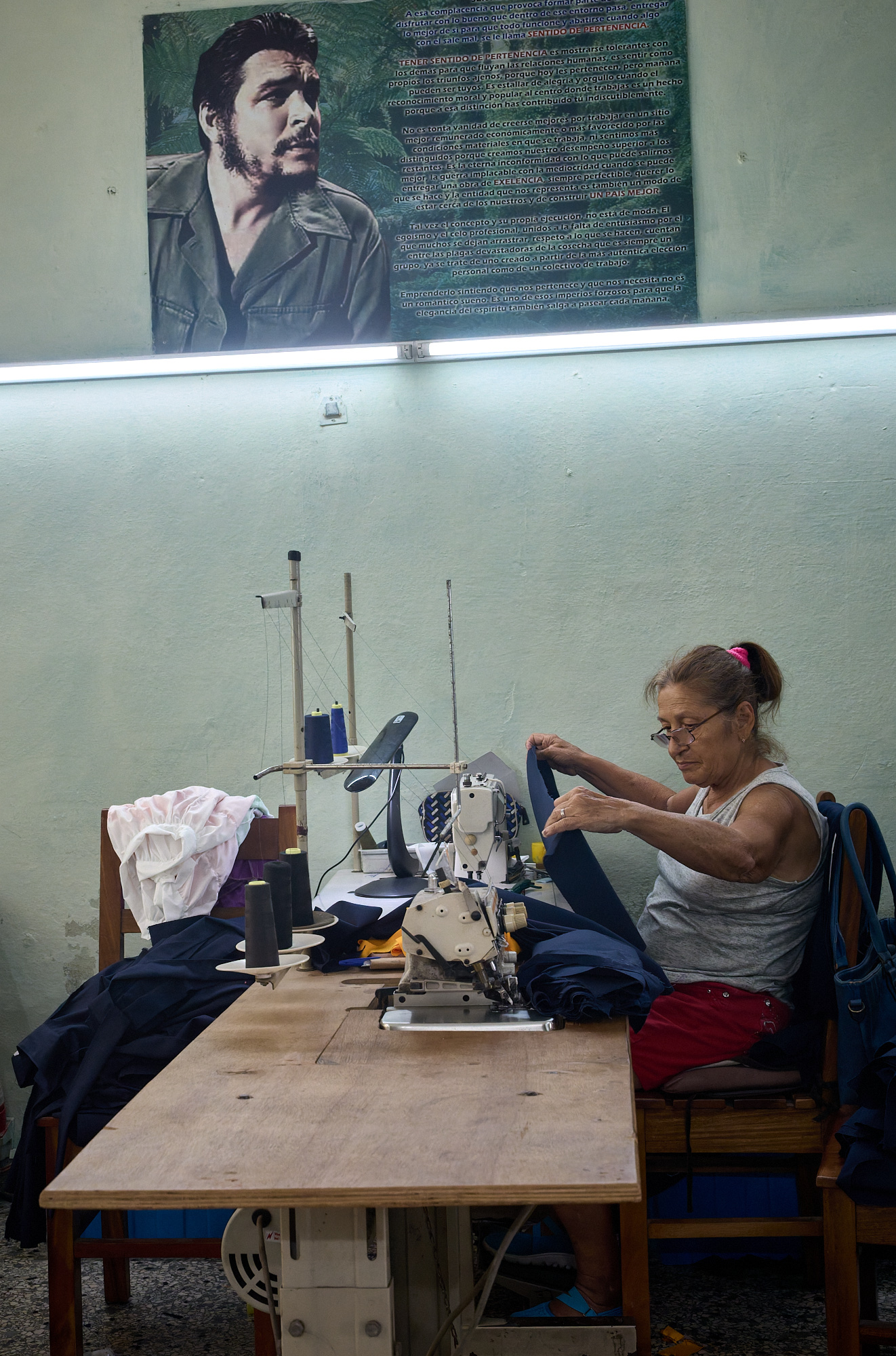
Posters of revolutionary heroes still hang on the walls, a quiet nod to the past. Maybe out of nostalgia. Perhaps out of hope. But there’s no doubt: this is Naomi’s business now. It runs on her energy, not the state’s.
It is interesting that they have old posters related to the old revolutionary heroes up on the walls, part of the government’s decor. They’ve just left them up because “it doesn’t bother them”. Perhaps because the core message still resonates.
The seamstresses work with joy. The vibe is communal, proud, productive. They laugh, share scissors, and pass fabric back and forth with the rhythm of a team. The government might have abandoned the space, but Naomi gave it a second life.
MLC Stores: The Other Side of Reform
I had heard about this system in my interviews, first from Dori, in Inside Cuba’s Broken Safety Net (Havana, 2025), and later from Ileana Yarza in The Revolutionist: A Conversation with Ileana Yarza (Havana, 2025). Both women described how the government quietly marks up goods and resells them through state-controlled supply chains, feeding off the very scarcity it creates. At the time, I understood the mechanics, but not the emotion behind it.
That changed in Guanabacoa. Just three blocks from where I was waiting for my final interview in May 2025, I randomly walked into two stores that could not have been more different. This was not part of my plan.
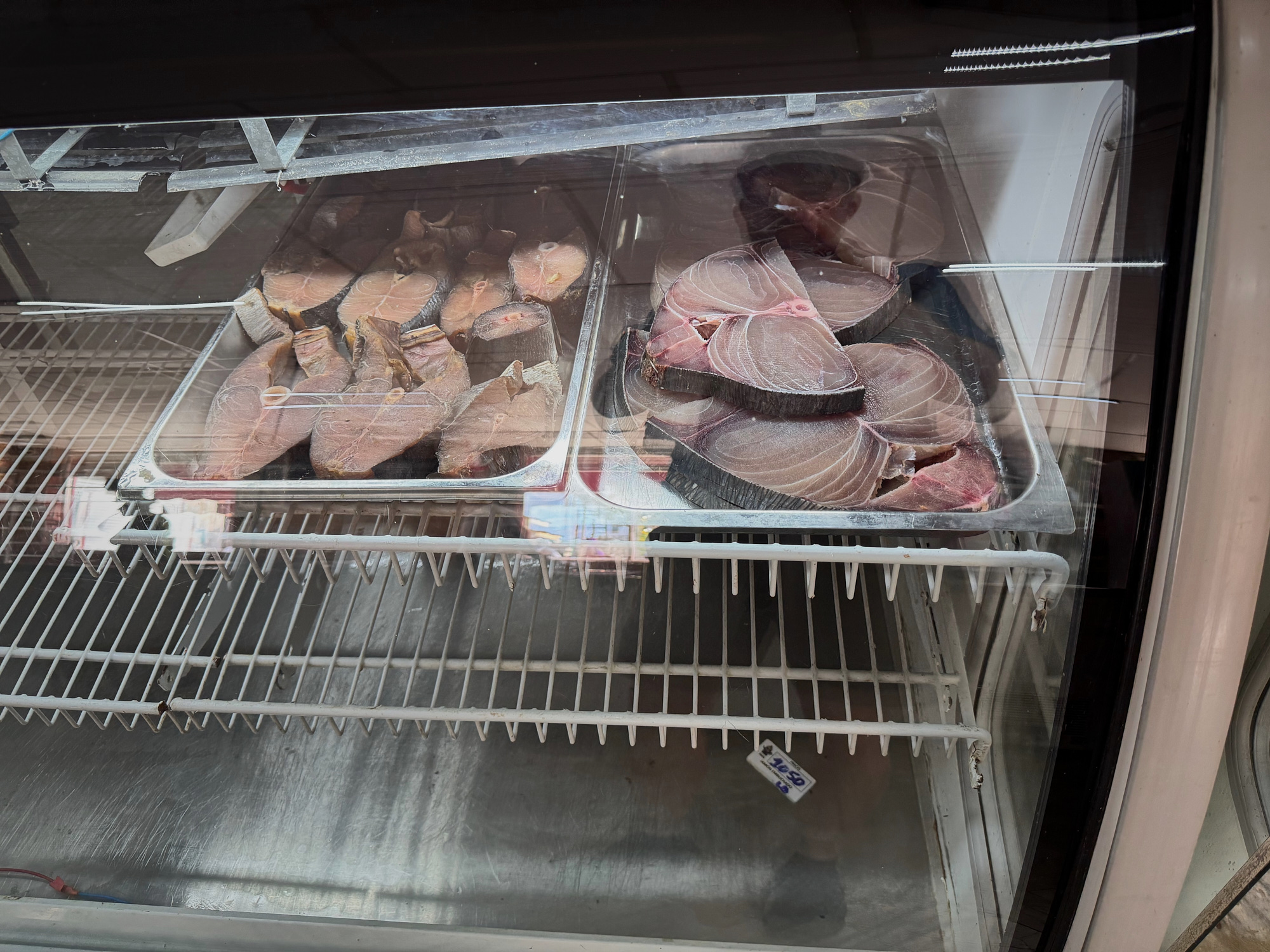
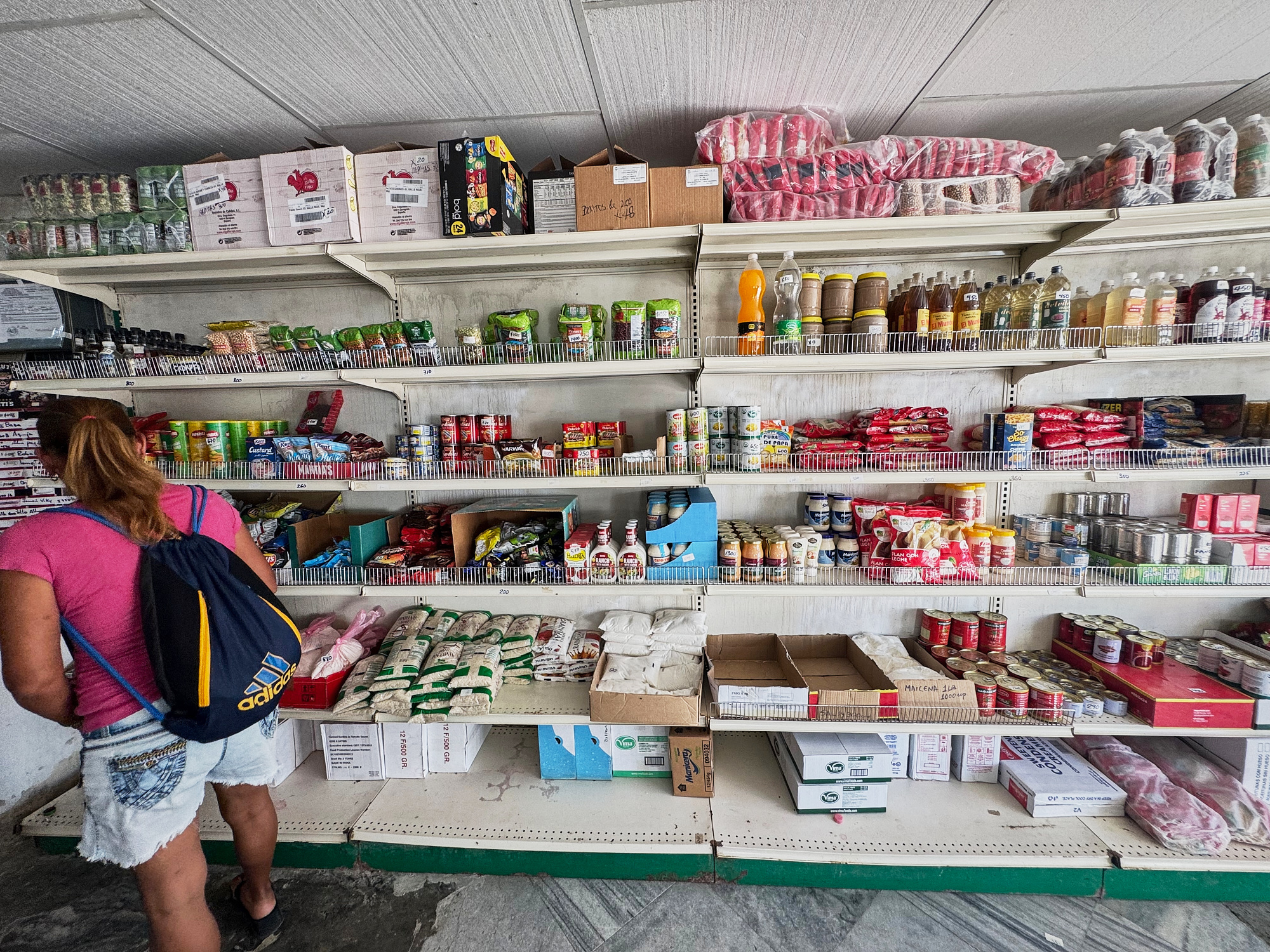
The first was a dim, nearly empty CUP-only shop. The air was heavy and sour with the smell of spoiled meat—fish I could see had turned brown in the case, as it was warm to the touch. Only basic items stocked the shelves as a handful of customers stood inside, silent, scanning the aisles as if searching for something that no longer existed. Their movements were slow, resigned, people who already knew they wouldn’t find what they needed.
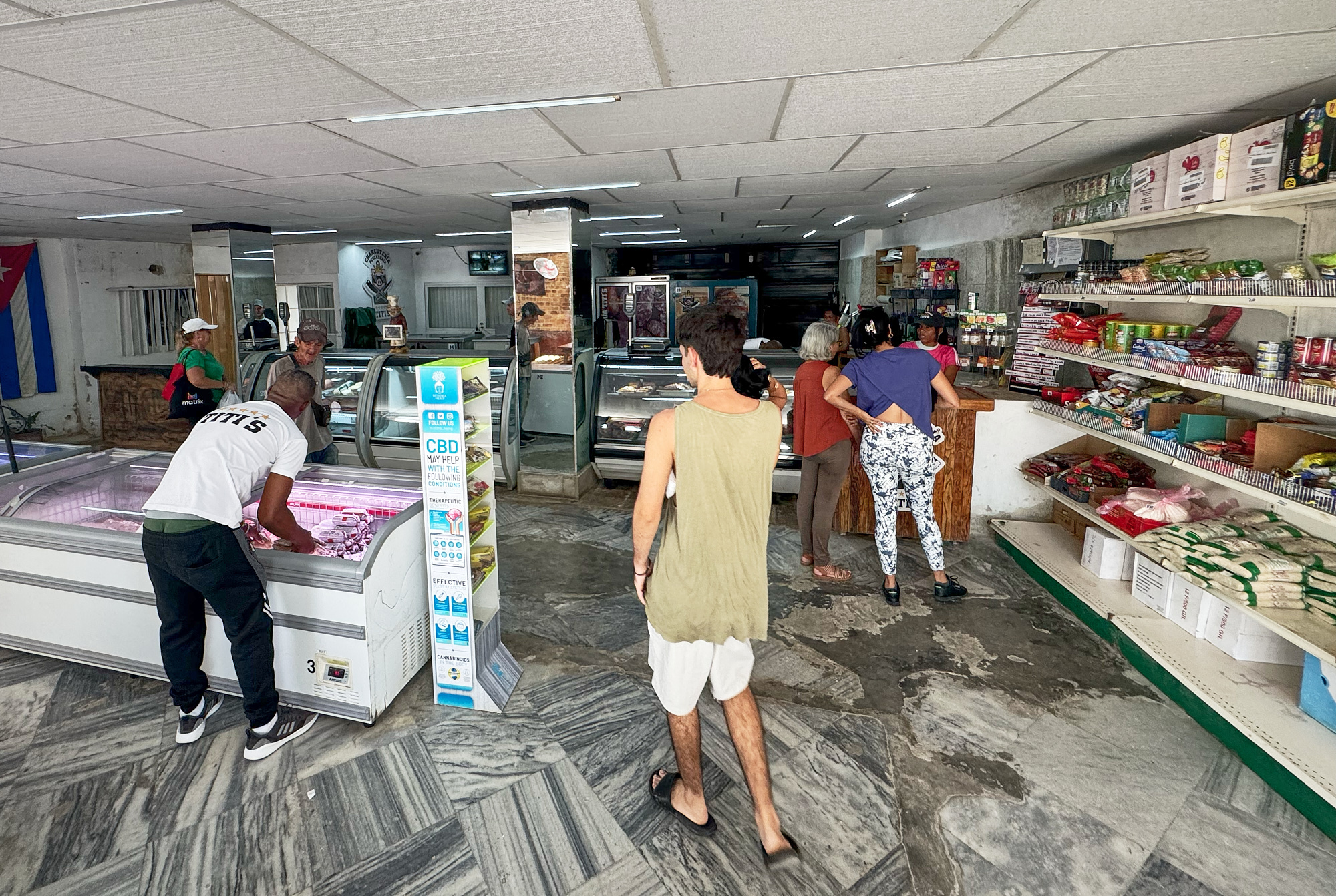

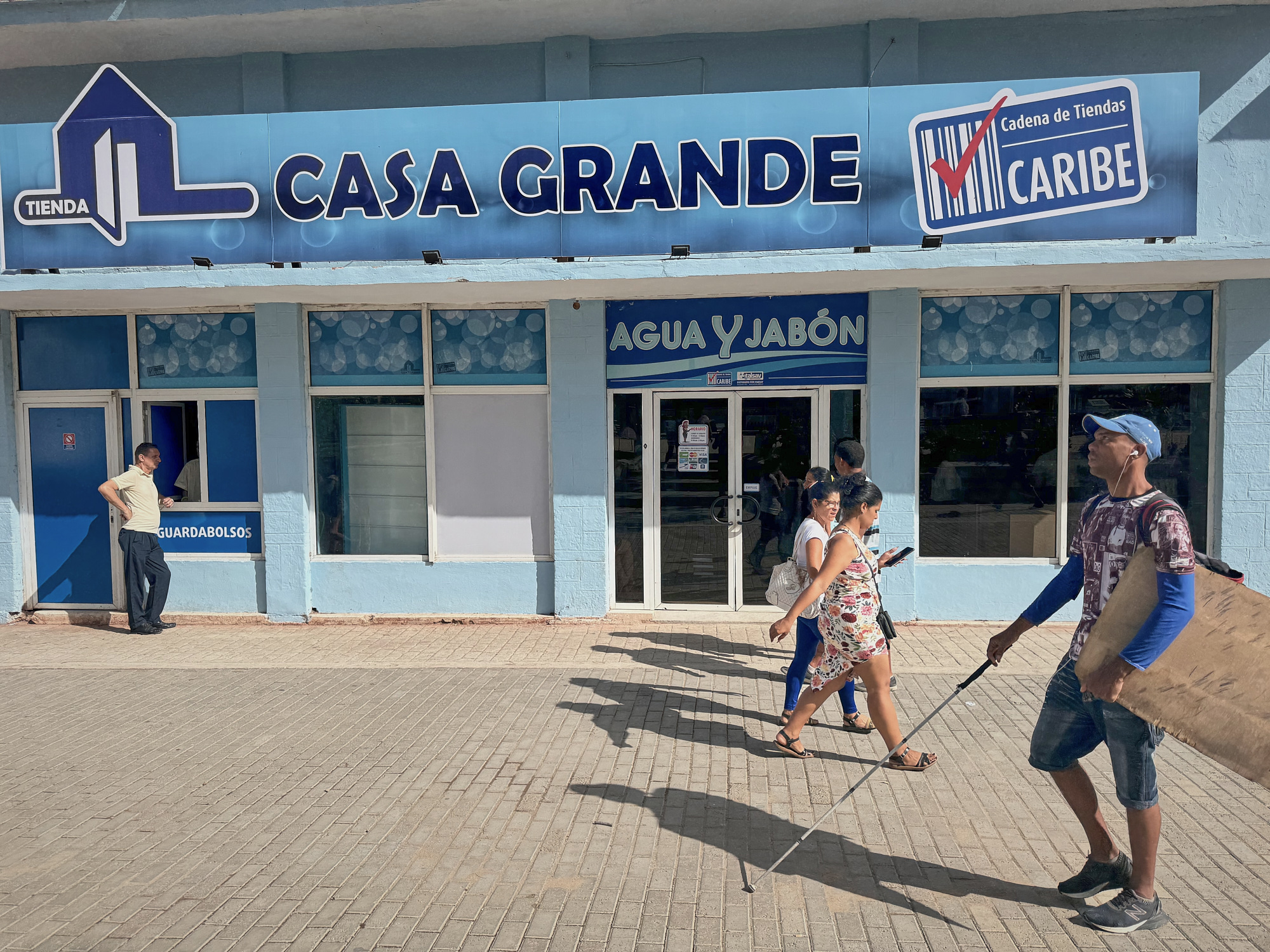
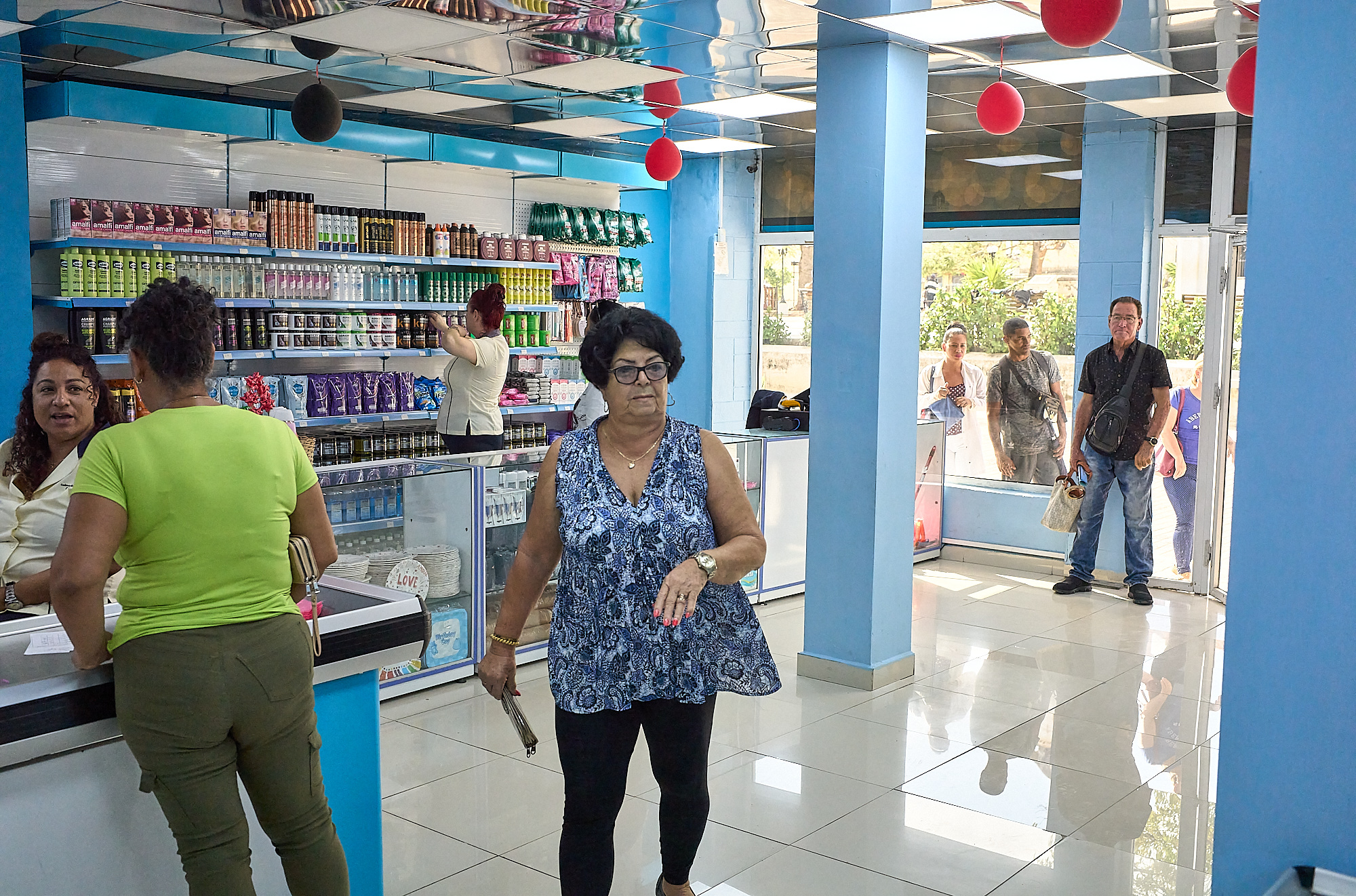

Across the street stood Casa Grande, an MLC store, and stepping inside felt like crossing a border. It was bright, clean, and orderly, almost cheerful. Fluorescent lights glared against glossy tile floors with a mirrored ceiling and balloons—this could have been a department store in the States. Shelves overflowed with imported products with prices all in US dollars: Dove shampoo for $4.20 where the retired couple in After the Revolution: Growing Old in Cuba stuggle to survive on the 1,000 pesos (3 USD) monthly from the government. People moved briskly through the aisles. The energy was light, even joyful. An echo of plenty in a country of shortage.
In Casa Grande, a bottle of Dove shampoo costs $4.20—more than the retired couple in After the Revolution: Growing Old in Cuba receives in a month. It’s a small luxury that reminds them how far they’ve been left behind.
Seeing those two stores side by side, the stagnant air of the CUP shop and the fluorescent abundance of Casa Grande, I finally understood what Dori and Ileana had meant. The inequality wasn’t theoretical. It was visceral. It struck home.
MLC stores were introduced as a stopgap during economic free fall.2 After COVID-19 gutted tourism and U.S. sanctions cut deeper, the Cuban peso (CUP) spiraled into near worthlessness. The state couldn’t afford to stock regular stores, so it invented a dual economy: dollar-backed MLC stores for the few with access to foreign currency, and empty CUP stores for everyone else.
The government knows what it’s doing. Essentials like shampoo, cooking oil, and canned food can occasionally be found on the street. Sold from makeshift stalls or plastic tables in grey-market areas like Galiano Street near the Church of Our Lady of Monserrate in Centro Habana, these goods almost always originate from MLC stores.3 The same bottle of Dove shampoo that sells for MLC in Casa Grande reappears a few days later on the sidewalk, marked up again in pesos. This forces families to either rely on relatives abroad to send dollars or turn to the black market to convert CUP to MLC at massive loss. It’s a form of economic control wrapped in scarcity: “You want stability? Pay in dollars.”
What’s more disturbing is who controls it. Behind the MLCs sits GAESA (Grupo de Administración Empresarial S.A.), a military-run conglomerate that manages much of Cuba’s dollar-generating economy.4
GAESA’s gross profits in 2023 are equivalent to around 40% of Cuba’s official GDP figure reported that year. This contradicts the government’s narrative that the island’s spiraling poverty and scarcity result exclusively from the decades-old U.S. embargo.
According to leaked financial records, GAESA once held up to $18 billion in hard currency, more than the foreign reserves of several Latin American nations. Yet, GAESA pays almost no taxes. Its profits are untraceable, its books unaudited—even the Ministry of Economy is denied access. Meanwhile, ordinary Cubans scrape by on a crumbling peso economy.
Stitching It All Together
The barber in Havana, the shoemaker in Santa Clara, the seamstress working from a narrow back room, none of them talk about resistance. They talk about making it work. About finding enough materials to work another day, about keeping the lights on through the next blackout, about putting food on the table. They know the system is corrupt, even if they can’t name GAESA or trace the billions, but they feel its weight every day in broken streets, leaking roofs, and the endless decay around them.
They’re not resisting the system as heroes. They’re surviving it—without clean water, with failing schools, and with more strength than the state ever gave them.
The tragedy is that their labor holds the country together while the state siphons its wealth away. GAESA, the military conglomerate that controls much of Cuba’s economy, hoards billions offshore while infrastructure collapses at home. You can see it plainly everywhere: extended power outages, highways chewed open by neglect, buildings shedding their balconies one by one. Many neighborhoods go days without clean water. Schools crumble, short on supplies and teachers alike. This isn’t just the legacy of an embargo, it’s the cost of greed, selfishness, and a government feeding on its own people, robbing their future.
Pymes won’t fix that. But they reveal something truer: people still trying, quietly, to improve their lives in a country that gives them so little. There’s no heroism in it, only endurance. And maybe that’s the most honest form of hope left in Cuba today.
Footnotes
- Miami Herald, “Five takeaways from Herald investigation of Cuban military’s secret dollar cache,” Aug. 2025. ↩
- See Havana Times, “Cuban Gov. Opens Mega Wholesale Store Selling in US Dollars,” and Cuba Study Group, “The (Temporary?) Role of MLC in the Cuban Economy.” ↩
- MLC (Moneda Libremente Convertible) is a digital, dollar-denominated currency used in government-run stores. It’s tied to the U.S. dollar but only accessible through bank cards funded with actual foreign currency (USD, euros, etc.). For most Cubans, this means either relying on remittances from relatives abroad or turning to the informal exchange market, where CUP-to-MLC conversions happen at highly unfavorable rates. Goods sold in MLC stores often reappear within days in Havana’s street markets—particularly along Galiano Street near the Church of Our Lady of Monserrate—resold in pesos at steep markups. These items, diverted from the official retail system, form a shadow economy that bridges the state-run and black-market supply chains. ↩
- Miami Herald, “Five takeaways from Herald investigation of Cuban military’s secret dollar cache,” Aug. 2025. ↩
 Documentary Photography and Stories
Leave a comment