
This is a long form article—I did this to justify the significance of this interview. This is one story in a series of stories about Cuba.
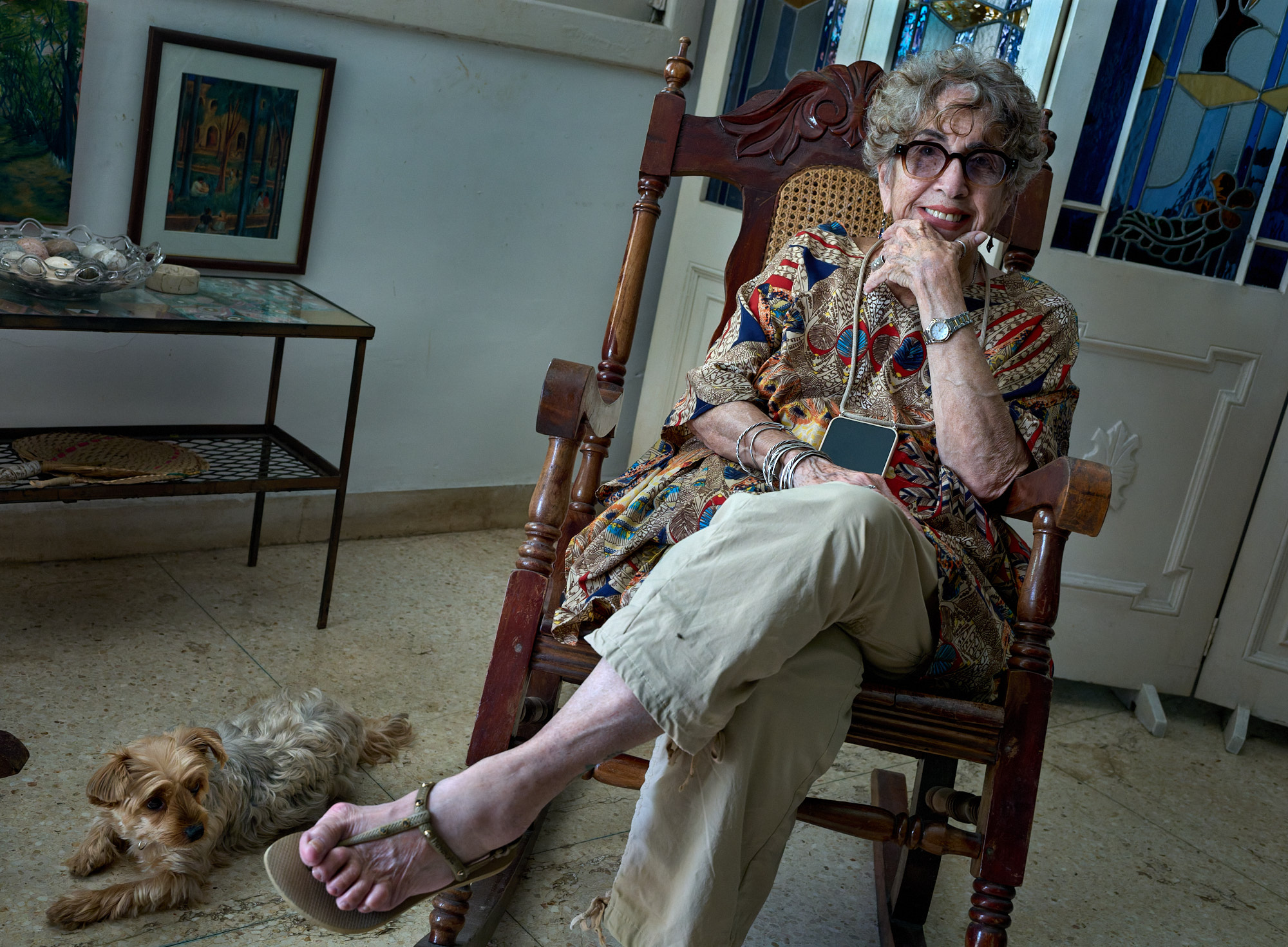
I sat with Ileana Yarza in her Havana home, the walls layered with history. An economist, a lifelong revolutionary, a woman who wrote letters to presidents and outlived empires, she carried the contradictions of Cuba within her own life. From the glamour and corruption of pre-revolution Havana to the upheaval of 1959 and the long shadow of the U.S. embargo, her voice bore the weight of someone who had lived it all from the inside. Our conversation is recorded here in the order it unfolded, moving across history and memory, and touching on hope, disappointment, pride, and resignation.
And as I write this, the island is again in darkness. Another nationwide blackout—one of several this year—underscores the human cost of politics and policy.1 Cuba’s fragile grid is the culmination of a longer story: Decades of corruption2, embargo, sanctions, and isolation layered atop aging infrastructure and economic collapse.
What Iliana described in memory below is visible today in real time. Her history is not just the past, it explains the blackouts, the shortages, the struggle to endure today.
Jump to a Section
- Obama’s Visit and Media Frenzy: Letters, coffee invitations, and the media storm that made Ileana “go viral.”
- America’s Shadow Over Cuba: From the Monroe Doctrine to Trump’s sanctions, the long arc of control.
- The Revolution’s Promises and Fault Lines
- Cuba in the World’s Crosshairs: From Trump to Ukraine, how global power struggles shape daily Cuban life.
- The hope of the revolution
- Her Legacy, Her Testimony: Final reflections on struggle, survival, and the dream of Spain.
Obama’s Visit and Media Frenzy: Letters, coffee invitations, and the media storm that made Ileana “go viral.”
She began with Barack Obama. Her voice carried the ache of expectation and letdown. “I really believed that he would be able to do something,” she told me. But her conclusion was blunt: “He couldn’t do anything. And that, that was very frustrating.” For someone who had once placed genuine faith in a U.S. leader, the disappointment was sharp.
That faith wasn’t abstract. After seeing him debate Hillary Clinton, she chose Obama and began writing him letters. She even invited him to her home: “In that last letter,3 I invited him to drop by here and have a coffee.” When Obama replied, she lit up with pride: “You will see that it’s the first official letter between United States and Cuba over 60 years.” 4 A small act, but for her, it symbolized a breach in six decades of silence.

Some stories are best told in her words, and this was one of them. Ileana leaned forward, her eyes flashing with both humor and disbelief as she recalled what happened just before Obama’s visit to Havana in 2016.
“Three days before Obama arrived, I got a phone call. ‘This is the American Embassy.’ I asked, ‘What can I do for you?’ They said, ‘We need to talk to you.’ I asked when. They replied, ‘Open the door because we are here.’ That’s how Americans behave!” she said, shaking her head and laughing.
They searched her home top to bottom. “Which I found correct,” she admitted. “They didn’t know. It was just a private house. They had to be sure.” She even joked with them about the coffee: “better bring your own, I told them, I don’t want him to get a stomachache and blame me.”
But it wasn’t Obama. Not yet.
“The day before his arrival, my doorbell rang like crazy in the morning. I opened it and found a whole crowd of American media shouting, ‘Hey lady, open the door!’ I had no idea why they were there. Obama had written me a letter, but I hadn’t received it yet.”
The journalists demanded to see the letter, to photograph it, to interview her. “I said, ‘I don’t know what you’re talking about!’ One of them said, ‘Lady, you’ve gone viral.’ For me, viral meant a virus!” she laughed. “I thought it was something bad.”
Then came the proof: reporters waving photocopies of Obama’s letter to her. “They had it all,” she said, still incredulous. “But I hadn’t even seen it.”
The media refused to leave. “They told me, ‘We’re not leaving until the letter arrives.’ And I said, ‘Well, there’s plenty of space here.’ Ten minutes later, an official car from the Ministry of Communications pulled up. Out came a plain yellow envelope, covered in stamps. That was how I finally received Obama’s letter: Hand-delivered, under the eyes of the press.”
America’s Shadow Over Cuba: From the Monroe Doctrine to Trump’s sanctions, the long arc of control.
From there, her perspective widened. With an economist’s clarity, she described Trump’s sanctions as devastating. “The United States needs to have us crushed under their feet.” She tied them to a longer history, the Monroe Doctrine,5 and how U.S. dominance in the region has endured for centuries.
She admired Fidel for how he handled the Missile Crisis, yet confessed she trusts no global powerfully. “I don’t trust America… I have perhaps a little more faith in… Russia” because of its wartime sacrifices. Ordinary Cubans, she said, always bore the brunt of the great powers’ games.
Havana Before the Revolution: Mafia casinos, private schools, and a country on the brink.
She carried me back to pre-revolution Cuba, a place of both wealth and corruption. She spoke of Meyer Lansky and Al Capone, of a Havana nearly turned into Las Vegas. Her family lived comfortably: American schools, travel, beach clubs, four maids at home. Her father, an Argentinian businessman, had immigrated to Cuba in 1890, purchased a hotel, and thrived in Havana’s open market while holding anti-American convictions. A contradiction that mirrored the nation itself.
After the Revolution, her language skills carried her abroad as an economic advisor. She traveled widely, but her anger at U.S. politics sharpened. “We call them the Cuban American Political Mafia,” she said of Miami politicians. “They are strangling Cuba like you strangle a person.”
Her contempt crossed party lines, though Trump earned her harshest words: a “psychopath.” U.S. policy toward Cuba, she argued, had never truly changed, regardless of who held office.
A Life Beyond Havana: From Vietnam to Johns Hopkins, Ileana’s global voice for Cuba.
Ileana’s authority came not from books but from lived experience. She began simply:
“I have seen results of war in Vietnam. I went as part of the second delegation that went to Vietnam.6 We had close things with Vietnam, economic, political. I worked for the government of Cuba as a financial advisor since 1968, until my retirement in 1995.”

Her career took her far beyond Havana. “I have been to Korea, North Korea. I’ve been to Laos, Cambodia, Vietnam. I’ve been to Europe, I’ve been to Latin America.” Later, she added: “I lectured at Johns Hopkins University after I retired.7 I have visited more states in the United States than many Americans — New York, Washington, Ohio, Florida, Wisconsin, Texas, New Jersey. More than a third or half.”
For decades, her official roles and her language skills (she spoke English and French) made her a Cuban voice in international negotiations. “Since the 1990s, I have been receiving tourist visas to the United States,” she explained. “I traveled there many times. But now, due to Mr. Trump, I would have to go and spend a week or two, pay a lot of money, and maybe still get no answer.” 8Her judgment was blunt, reflecting on more than just the visas: “He is a monster. He is a psychopath.”
The Mafia in Cuba
Her childhood memories painted a vivid picture of pre-revolutionary Havana.
She was born in 1940, August 19. World War II was ending. She was young, but did she live in the heyday of Cuba back then? “It wasn’t! It was prosperous for middle-class people. Yes, I am middle class. I went to a private American school [in Cuba], very expensive.”
Then her tone shifted. “I saw Meyer Lansky in 1957. Cuba was in the hands of the American Mafia. Al Capone had a house here. Lansky owned many hotels, a lot of property. Let me tell you, many Americans do not know: Las Vegas was going to be here. The program by the American Mafia led by Meyer Lansky was to make Cuba, a place, as my father said, my father was not a communist, an island beautiful with lots of nice beach places and beaches…for drugs, prostitution, gambling.”
An oasis of money and sin.
“Exactly. Exactly.”
Miami’s “Political Mafia”: How exile politics still strangle the island.
“Now [Trump] has named the first representative for Cuba’s relationship with the United States to our enemy in Miami: Marco Rubio,” Ileana said, her voice firm. “A Cuban-born. Yes. That’s how we call them: The Cuban American Political Mafia in Miami.”

She did not hesitate to describe their influence. “They want to invade Cuba. They try to do it with financial measures, forget about the embargo. They are strangling a country [like] strangling a person. And not only Rubio, but all of them. For sixty-two years they have lived out of the American taxpayers, making stupidities against Cuba. They haven’t been able to change anything, but still, the politicians go to them. They have their houses on the beach, they own this, and they own that. And who is paying for that? Republicans and Democrats.”
”We are a small island, ninety miles away, and they don’t forgive us because we chose our own way.”
For her, the conclusion was inescapable. “So when you know that, as I know that, as the people here know that, then you realize who is against Cuba. Not the Democrats. Not the Republicans. It is the United States government. We are a small island, ninety miles away, and they don’t forgive us because we chose our own way. Before the revolution, half this island was owned by the United States. That is history.” 9
Her anger deepened as she recalled the violence. “How many terrorist attacks has this Cuban American Mafia done in Cuba? Bombs killings kidnappings. But you don’t have that in American press. But then we know it because, this is an island and somebody [knows about it], ‘he was my first cousin’, ‘he was married to my own’ …… and you know what happened?”
People disappear.
“Exactly. Or killed by bombs in a hotel.“ 10
She leaned forward. “Americans only know what they are told. My family in America, they believe Fox News. They watch Fox, they don’t watch anything else. That’s what people believe.” 11
Her frustration was clear. In her view, much of the country is fed a single narrative, one that shapes voting patterns and hardens divisions. She had seen it firsthand in her own relatives, who embraced Trump’s politics because Fox was their only source of information. “They don’t watch anything else,” she said. By contrast, when she traveled to the United States she sought multiple perspectives: CNN, Spanish-language news, the BBC. The difference, she warned, was profound: without varied sources, belief calcifies into certainty.
Life in Cuba, Past and Present
On the street, the embargo doesn’t always feel real. People I spoke with in Cuba shrugged it off: I buy chicken, it says, “Made in America.” Other things say the same. I don’t think the embargo affects me at all. Their view was that sanctions had little bearing on daily life.12
Ileana, an economist, could not have disagreed more. “When you have tied hands, you make concessions, and the Cuban government, which I don’t support that much anymore because I think they should have done things better” she said. Sanctions and restrictions, she argued, forced the Cuban government to open space for pymes,13 new small and medium-sized private businesses. Many were backed by Cubans in Florida, who bought goods in dollars and sold them back on the island at steep prices.14
“The government allows them, they are feeding some people, but the majority of the people have no access to the ‘pymes’.”
Ileana leaned forward, intent on making me understand. “Pymes,” she said, repeating the word with emphasis. “Private, private, private—new private companies. You see, it’s a small capital. They survive, they make a little. But when the majority has nothing, they have something.”
I asked if the U.S. was allowing that. She nodded. “Yes. The U.S. is allowing that. But only for the people they authorize, not that everybody can do that. It’s concessions, political concessions. It’s all dirty politics.”
Her voice sharpened. “Some people who live in Florida come here and make a lot of money. They buy in dollars, they sell in dollars. And the rest of us? We pay the price.” She paused, then added flatly: “But it’s high price. Blackmail. It’s overwhelming.”
Then she drew the line clearly. “Who has dollars here? Almost nobody.”
And those are the rules. The U.S. allows a handful of well-connected Cubans to profit, while the general population is left out.
Prices in many shops are pegged to hard currency through Cuba’s MLC (moneda libremente convertible) system, which deepens the gap between those with foreign currency and those without.15
Her life told the story. Her monthly retirement is 1,620 pesos—worth very little in practice, depending on whether one uses the official rate or the far-stronger black market rate (recently around 400 CUP per USD).16 A pound of pork can cost 1,000 pesos. An egg can be 100.
“With 1620 pesos, what can I buy? Right now, I have 500 pesos. That’s all the cash. I can’t buy four eggs because it costs a hundred pesos each. That’s the way it is.”
At one point, she leaned in with disarming candor: “I’d like you to buy something you like. I’ll give you a good price—because I need money. Just to buy food.”
For her, this was not an accident but the design of U.S. policy. “…and that’s what, the American government, they want us to, they, they want us to pull onto our knees and say, ‘sorry, we. Forgive, I, I never ment…..’ “
Would the people of Cuba rise up? “It’s coming. This [has] happened throughout the history of many places. Even here, probably because the scarcity and the way society is working is bad, is bad.”
Still, she did not spare Havana. The Cuban government, she said, could have done a better job. But her verdict was firm: “I blame number one, responsible United States because of the embargo and the, economic sanctions. And I know I’m talking about, ’cause you know that the world moves through economy. You know, the economy moves everything at home.”
Her defiance was personal as well as political. “I ordered my life to the best of my homeland. Not that I was against the United States, but I was for my homeland.” She recalled how Marco Rubio and others had framed it: You’re either with us or against us. “I’m not going to be pro-America and against my country,” she said simply.
Even as she recounted hardship, she laughed at small memories.
“I’ve been very close to America. Even my first kiss I got it from American roommate, schooling.”
Her first kiss at thirteen years old, she told me, had been with an American classmate in a private school in Havana. “I had plenty of food. I had a wonderful life. My mother had four maids. We belonged to beach clubs.”

Her father, an Argentine businessman, had come to Cuba in the 1890s with his father and brother and bought a hotel. Havana in those years was a free market, open to outsiders. “Everything was welcome.” Cuba was spared much of the Second World War, investment flowed, and the largest enterprises were often controlled by U.S. interests and a few millionaires; yet behind the prosperity stood dictatorship.17
“Cuba’s government was a tyranny, a military tyranny. We were taken power by cup de ta, and he killed the other people. He even fed them to sharks.”
For Ileana, the Revolution could only be understood against the backdrop of dictatorship. “Cuba’s government was a tyranny,” she said, recalling how power was seized through coups in the 1950s. Opponents were killed, sometimes even “fed to sharks.” Democracy, she insisted, had never existed on the island.
She traced it further back. Cuba won independence from Spain in 1902, but she argued that the United States “Stole the winning of our battle against our colonizer and took hold of the country. Then they fostered elections, and then they put in a Cuban [who was] a multimillionaire….,” negotiating away the gains of Cuban fighters and installing leaders who served American interests.18 Elections followed, but real power shifted through one coup after another.19
”We never had democracy in Cuba. In America, we had democracy. We never had, our governments were chosen, and this is history.”
That is why, in her view, the Revolution was necessary. “This was a revolution for the people,” she told me. And when I asked what was revolutionary about it, her answer came quickly: “Everything changed. The right to education. The right to public health. The right [for women] to have the same salary. The right for women not to be dependent on men. The right to divorce. The right to abortion.” Cuba’s post-revolutionary policies did, in fact, guarantee universal education and health care in law, and it became one of the earliest countries in the Americas to liberalize abortion (mid-1960s), providing the procedure free of charge in public hospitals.20
I echoed her words back—“So liberal?”
“Liberal,” she agreed.
“Liberal.”
“Very liberal,” she said firmly.
Before the Revolution, she reminded me, Cuba’s thinking had been far more conservative. Whatever its contradictions, the Revolution had reshaped the nation.
Cuban Abortion Rights and Healthcare
The Revolution’s Promises and Fault Lines
Abortion, Vaccines, and the New Morality
Her memory of pre-Revolution medicine was blunt: Care existed if you had the money and the right hotel concierge. “American women would come Friday morning,” Iliana told me. “Everything arranged in private clinics… get an abortion, go to a hotel, and leave Sunday morning.” Meanwhile, Cuban women without means risked their lives in secret procedures at home.
“You see? It was forbidden. And so many Cuban ladies died because then people perform private abortion at their houses with no conditions. And that’s something that Revolution said: ‘No more!’ “
The Revolution drew a hard line. “Every lady has a right to get an abortion at our hospitals,” she said. It wasn’t just a change in policy; it re-drew the moral map so that healthcare, from reproductive services to mass vaccination, became a public promise. Polio, once a private expense, turned into a national campaign; by 1962, “all kids were vaccinated,” Iliana said with quiet pride.21
“And Racism…..”
From Segregated Clubs to Revolutionary Equality
Before the Revolution, Havana’s glittering hotels and private clinics masked a harsher truth on its streets. “….. It was terrible,” Iliana said. “Black men or black women couldn’t walk through this street if they were not wearing a maid uniform.” Police stopped them with, “Hey, you are a negro, where are you going?” Behind the casino glamour and imported luxuries, racism was the daily order, modern in appearance, brutally exclusionary in practice.22
After 1959, those formal barriers fell. Private clubs and segregated schools were abolished, and the state declared racial equality a revolutionary achievement. Many Afro-Cubans gained access to education, healthcare, and public spaces denied to them before.23 But while the Revolution dismantled segregation on paper, social prejudice and inequality never fully disappeared, and open discussion of racism often carried political risks.24
What Cuba Gained, What Cuba Lost
These examples of social betterment from the Revolution weighed her life on two scales: personal loss against collective gain.
“I got a lot of social that did not benefit me… but it benefited the country. That’s why I chose my homeland.”
I floated an observation about generational drift in the United States of how the older generation often seems detached from the welfare of the young, leaving billionaires to tilt the balance of wealth. She agreed, but what mattered to her was the turn she saw now: A widening awareness, a movement of people beginning to care for the country as a whole, unselfishly. “Exactly,” she said. And she widened the lens. “It’s happening in Spain. It’s happening in the United States. It’s happening here.” 25
“People feel they have no commitments to their parents or grandparents. They have to fight for their own life and their kids.”
In her view, that pressure doesn’t weaken solidarity; it redirects it — toward children and country. She framed it not as a uniquely Cuban experience but part of a broader, global shift. What struck me was the scope of her perspective: from inside a country so cut off, she still spoke with the breadth of someone shaped by the Revolution and seasoned by global experience. Even in her isolation, that worldview persisted.
Cuba in the World’s Crosshairs: From Trump to Ukraine, how global power struggles shape daily Cuban life.
Trump, Democracy, and a Coming Third World War?
This led us into Trump, whose demonstrable selfishness and loyalty to the wealthy is contrasted with the broader needs of the country. There was hope, I suggested, that voters might reject Trumpism decisively, burying it for a generation.
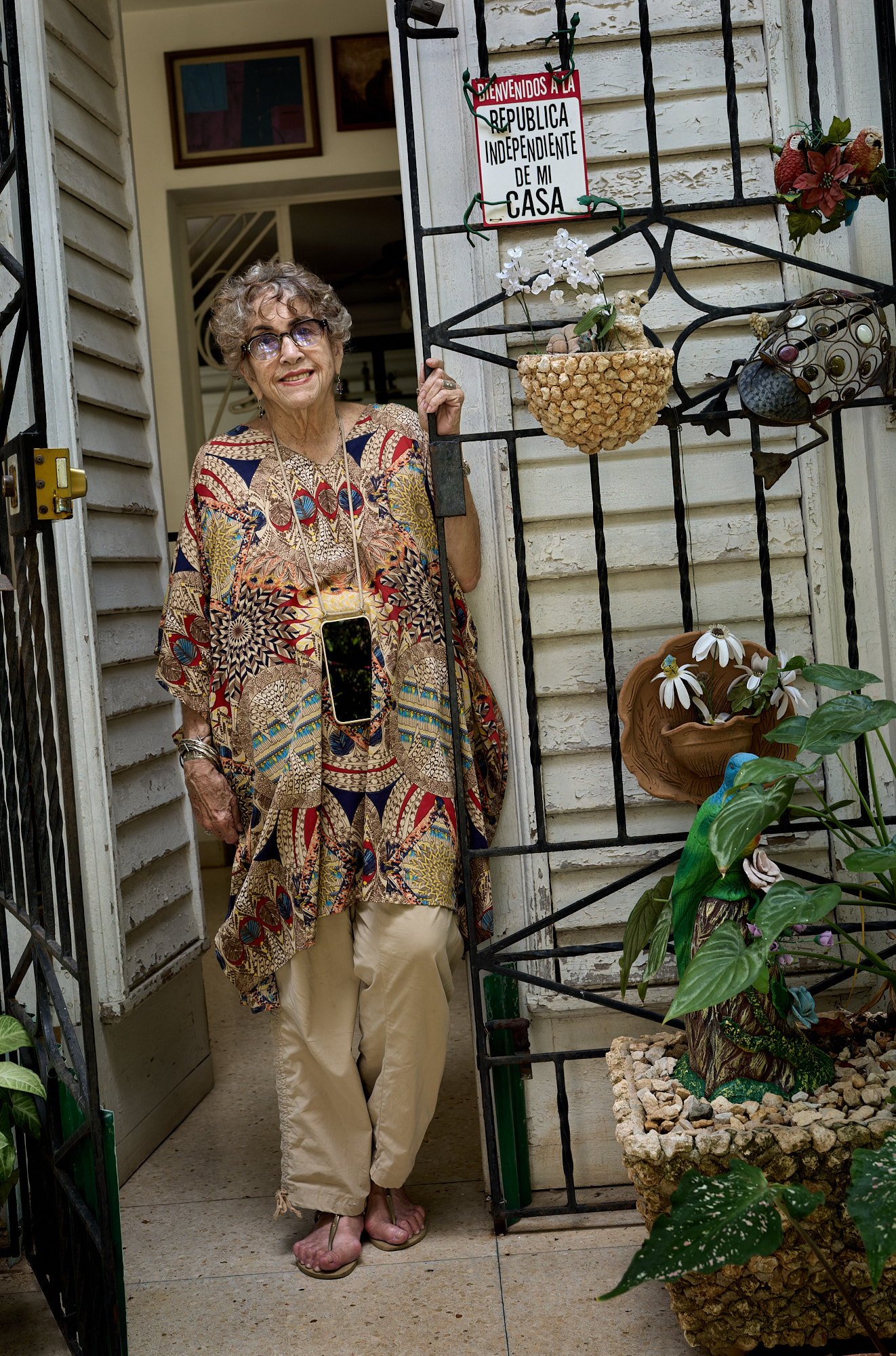
But that hope felt thin. Too many, she believed, failed to see the erosion of democratic ideals. Even within her own family, she saw it, relatives proudly wearing third-term Trump shirts, seemingly blind to the meaning of policies like the treatment of migrants without due process.26
She lowered her voice then, glancing toward the open rooms of her house, as though worried a neighbor might overhear. “[I’m] saying something probably too loud. Trump is fostering a third world war,” she said carefully. “I don’t know if he’s playing with that as a toy.”
She widened the frame to Europe: “They are willing the hatred and the fear against Russia and China.” She had been to Russia “many times” and described a different mood there, not aggression, but exhaustion.
“They don’t want war. They had a terrible war 80 years ago… they don’t want NATO on their borders.”
Her point wasn’t allegiance to Moscow or Beijing, but a warning about forgetting history, about how quickly fear can be weaponized when memory fails.
Ukraine, Russia, and the Spiral of History
This then leads to the Ukraine war. Ukraine, she told me, has always had a “very convulsive history.” To understand the present, she insisted, you have to go back. Poland, Russia, Ukraine with shifting borders, shifting alliances, a cycle of friendship and betrayal.
“Ukraine and Poland, all that. Russia—we were friends, we were not friends,” she said, summing up centuries of turmoil. She recalled the fascist movements that had once taken root in Ukraine, with leaders who “killed a lot of people.” 27 In her view, today’s war could not be separated from that past.
Her conclusion was blunt: Ukraine’s current president was “being used by the United States…used in order to fight Russia.” In her eyes, he was “stupid” for playing along because in the end, “Russia and the United States will never change.” 28
Her prediction was grim: Ukraine would be carved up because history had shown the same pattern “again and again.” Cycles of conflict, partitions, betrayals. The spiral she saw in history, she applied here.
“One thing is a fact,” she said firmly. “Fascism is not good.” That line she delivered without hesitation. But she bristled when outsiders lumped ideologies together. “Don’t talk to me about communist. Russia’s not communist [now, as it was], years ago. Russia is capitalist, but they’re very nationalistic because they had a war. They lost 80 million people.” 29
Her numbers were off, but the point was clear: memory of the Second World War still anchors Russia’s national identity. “China is communist. North Korea is communist. But they want to put them all in the [same] bag. Not true. It’s not true.” 30
”When you have a doubt of what’s going on, go back to history, Nothing’s new. History is like a spiral.”
What troubled her most was the failure to look back. “We have to fear that. That’s a bad guy. People don’t go back to history.” Then she smiled almost sheepishly, softening the warning. “I’m a history lover. I’m a lover of Latin American history, even American history, which I know well.”
Free Schools, Empty Futures
The conversation then shifted to internal Cuba.
Her ledger of the Revolution carries both ink colors. “They were good for the majority… but not good for people like the middle class and millionaires. They lost properties. My father lost his business… because Fidel eliminated all private property,” a move she called “a big mistake.” Ileana added that Fidel himself “admitted it in his last days,” a recollection that reflects her proximity and experience, even if no official record captures the phrase so directly.31
”Fidel eliminated all private property. In early sixties, which was a big mistake. He admitted it in his last days”
The country moved forward in terms of people’s rights. And quality of life. Everything was free. Today, even University education is free. But young people don’t want to go: Free university in a broken labor market. “Young people don’t want to go,” she said. Nurses who don’t nurse, architects guiding tours.32“The economy has collapsed.” Still, she counsels patience: “Whatever this thing is won’t last… You better get an education.”
Tourism, Sanctions, and Bridges That Collapse
This lead to tourism. “Fidel opened the door to American tourism. But now American tourism cannot come, they are forbidden.” The irony wasn’t lost on her. Cuba had not closed its doors; Washington had. “Why are you forbidden to go to Cuba if Cuba has not forbidden your entrance?
”It’s your country that says no. Why? They don’t want American people to see, learn, hear.”
She recalled being invited to lecture in Ohio, where a wealthy man told her bluntly that she must have been sent by Raul Castro. She laughed at the suggestion. “Nobody sent me. I’m trying to establish a bridge…to just link bridge between the United States and Cuba.”
The hope of the revolution
May Day: Forced or Faithful?
I asked about the May Day parade, where I had witnessed crowds filling the streets. She bristled at the suggestion it was forced. “You don’t force people to go unless you have guns and stuff. Many felt pressure from their workplaces … but people were very happy to be there.”

What mattered to her was the faith. “They are happy to support the revolution and trust that things will change, and we will not fall into North America’s mouth.” These were not teenagers but adults in their thirties and forties, people with jobs, still choosing hope.
“I’m just a Cuban patriot,” she said.
Her patriotism did not blind her to what was happening beyond Cuba. “The ultra-right power is taking over,” she warned. I mentioned billionaires and wealth gaps back home; she cut to the root. “Hate. It’s obvious everywhere — in America, in Europe. And they don’t care about people’s education, people’s health care. They just don’t care.”
It’s easy to sell hate and fear for a vote, “Easy,” she said.
Her critique stretched across the hemisphere. “But then when you talk to Latin American people, they ask you, why do America has seven military bases in Columbia?? Why five more elsewhere? Why one at Guantánamo?” The list was rehearsed, the indignation sharp.33
Then she turned to migration. She had followed stories of how U.S. authorities had sent detainees to El Salvador, bypassing domestic courts, a loophole. Send them abroad and ignore U.S. law.
Her outrage was immediate. “They are paying this guy a lot of money to have those people … but they’re being used for labor.” She described landowners profiting off detainees sent to work fields under the guise of imprisonment.
“Free labor,” she said flatly. “It’s all business. It’s all money.” 34
Fidel, Raul, and the Weight of Betrayal
Fidel’s name still hung heavy in the room. I asked about him, and her answer split neatly between admiration and disillusion. “Fidel died in 2016. Yes. His brother took over. And of course, he’s not Fidel. He’s not a great political man. He just doesn’t know how to handle this country.”
In her telling, Fidel had been many things: A leftist, a patriot, a leader who spoke with moral conviction. “At the time, the language was communist. We were all saying we are communist. I remember my father said, ‘Where did you learn to be a communist?’ I said, ‘Oh, I am a communist?’ He said, ‘Yes, you’re a communist? Okay. You know what? I don’t know how I learned it!’” For her, the label never mattered as much as the intent. “A patriot. You want to call that communist? That’s okay. Why? Because we are not pro-American.”
That binary, pro-American or communist, was the straitjacket of the era. But Fidel, she insisted, had an internal compass. “Many objectives, many purposes…but a good moral foundation.” His brother Raul, she felt, lacked that entirely. “Very bad. Bad family. Nepotism. Corruption.”
I suggested maybe Fidel’s communism had been more ideological than political. She didn’t hesitate: “Patriots who wanted Cuba for Cubans.” 35
Her critique of Raul sharpened as she moved into the present. “Many of Fidel’s children became millionaires…as Raul’s children too. They became owners of businesses.” Nepotism and enrichment had taken hold, where once there was at least the pretense of equality. “In Fidel’s time, you would never hear people say, ‘I don’t like my government.’ Now you hear it everywhere.”
Even the fixer who accompanied me weighed in, recalling how elders described Fidel’s Cuba as “amazing,” while his generation faced a bleaker horizon. Young people were leaving. Birth rates were collapsing. “Why aren’t women giving birth? No food. No money to buy baby things.” The island, Ileana said, had become “a jail to the young people. Because it’s an island. It has no frontiers.” 36
“Why aren’t women giving birth? No food. No money to buy baby things. Because everybody’s scared. Everybody is, and there are people here being hungry. Hungry.”
Delinquency had grown too — a catchall in her phrasing for kids skipping school, drifting away from education, falling into scarcity’s pull. Obligatory schooling still existed on paper, she said, but without opportunity beyond it, what future did it promise?37
For her, the story of Fidel was also the story of Cuba’s shift from revolutionary ideals to today’s erosion. “I love my country, but not the Cuban government,” I’d heard that from others as well. She agreed: under Fidel, people never said that. Under Raul, it had become the common.
Her Legacy, Her Testimony: Final reflections on struggle, survival, and the dream of Spain.
The Letter from Obama
Her history touched politics at odd angles. She had written the Smithsonian, trying to sell a letter from Barack Obama, one she saw as “a piece of history.” But it was also survival. “I have three boys. If I die today, who’s going to take it? I need to sell it. A collector’s piece.”
Selling objects was part of the present, but what she wanted most was help to record her story. “I need help,” she said more than once. She had traveled to Washington, even tried to meet Obama. What she hoped for was simple: a student, a scholarship, a computer, someone to sit and listen while she dictated a life. “If you ask a question, it opens up what happened. I was there. People don’t go back to history. I want to write a history of my life in Cuba.”
She knew time was short. “I’m already losing memory.”
It wasn’t as if she lacked the option to leave. Years ago, Johns Hopkins had offered her the chance to stay in the United States as a teacher. Her family lived there. She could have claimed residency. But she refused. “Why do I want American residence? I have mine.”
Dreaming of Spain, Tired of Survival
When I asked her about the future—five, ten years ahead—her answer was half a sigh. “I don’t think I’m very happy to reach ninety years old. I don’t want to see a third world war.”
Her anchor now was family, and the pull of Majorca, Spain. Her son had secured her citizenship there, hoping she would move. “Because he wants me to live with him for the best of my life,” she explained. She admitted she missed him deeply. “My two boys here are not the same. They have their lives. I was very close to my youngest son. When I’m there, I don’t have to take care of anything. Just go walking. Sit in the park. Visit France.”
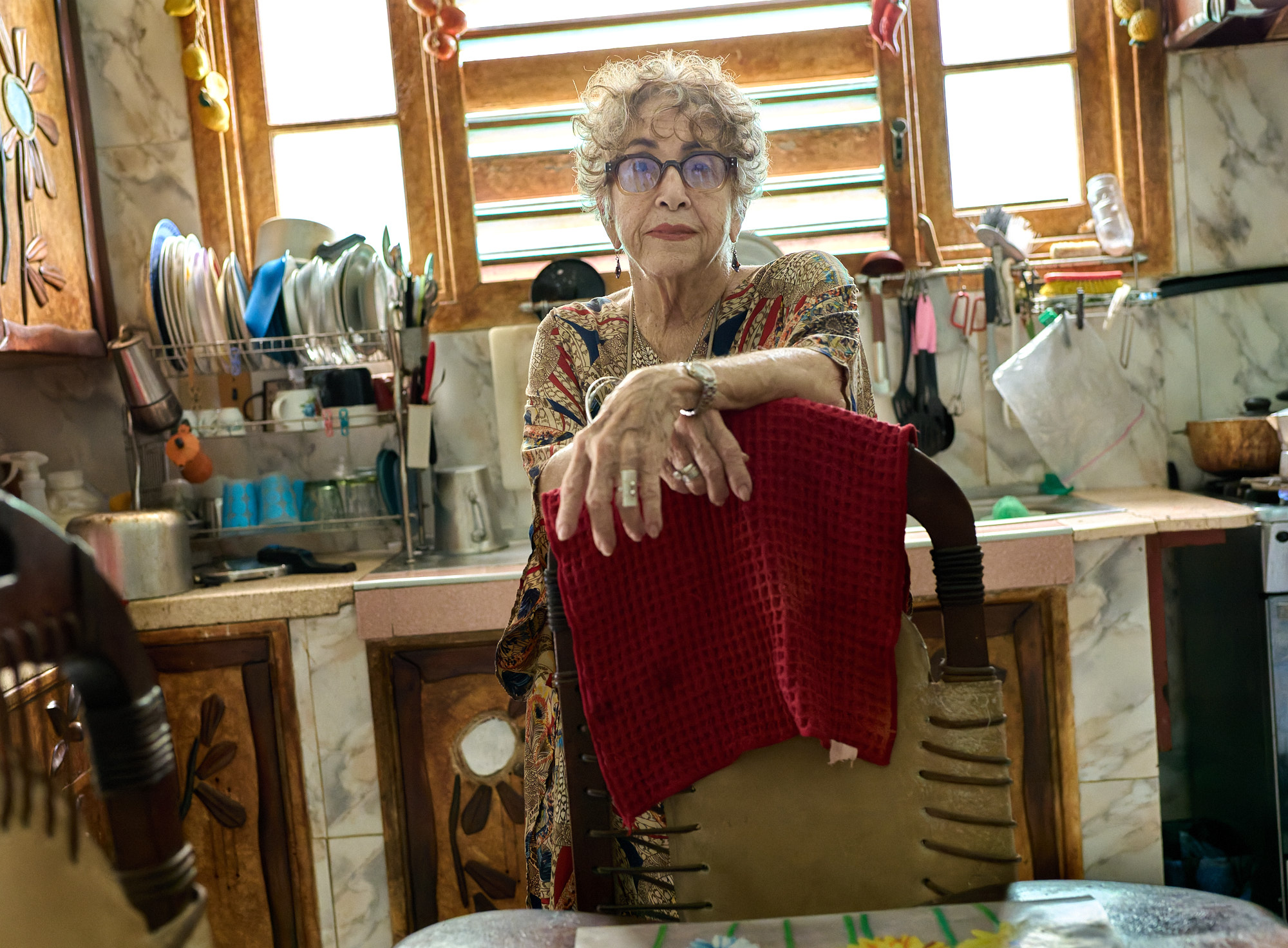
The contrast was sharp. In Havana, she still had her house, her pets, her garden. But even that was slipping. A fall had reminded her of her limits. Repairs went undone, “the bathroom, the kitchen water”, while she tried to sell both her house and pieces of art. Years earlier, she had refused an American couple’s offer of $700,000 to turn her house into a bed-and-breakfast. Now she was ready to let go.
“I don’t want to take care of anything. I want to be taken care of.”
What she imagined in Spain was protection, not politics. “A safe haven? No. Protected with my son. I don’t want to take care of the house. I’m tired.”
She still had helpers. A young man who cleaned and cooked in exchange for rent. But her voice tightened when I asked if that was enough. “No. I need my sons a lot.”
Her sone living in Majorca, Spain led to the great diving there and her past life as a diver. “I was very good in diving here,” she told me, recalling the days before the revolution when she was part of a swimming and diving team. Even that memory folded back into the present, a marker of vitality once had and the exhaustion now felt.
She carried her family in layers: children, grandchildren, and now great-grandchildren. “So Tom, I’ve done enough,” she told me, not with defeat but with the quiet assurance of someone who had lived a long, full life.
What she longed for most was not money, not power, but testimony. “I have had a good life and so many experiences … I would like somebody to help me write a testimony.” She was clear it wasn’t about ambition. “Do I want to make money and become a leader? I don’t. I would like money to buy something, to move to Spain. But I want to leave my experience written down.”
She turned to me almost directly. “Why don’t you get involved in that project?” she asked, inviting me to help with a memoir or oral history. It was the last gesture of trust in a conversation full of them.
A Light in the Dark
After our conversation wound down, I kept thinking about how much of Cuba’s history seemed to converge in Iliana’s living room. From revolutions and reforms to shortages and exile, her voice carried both the intimacy of lived experience and the sweep of political history.
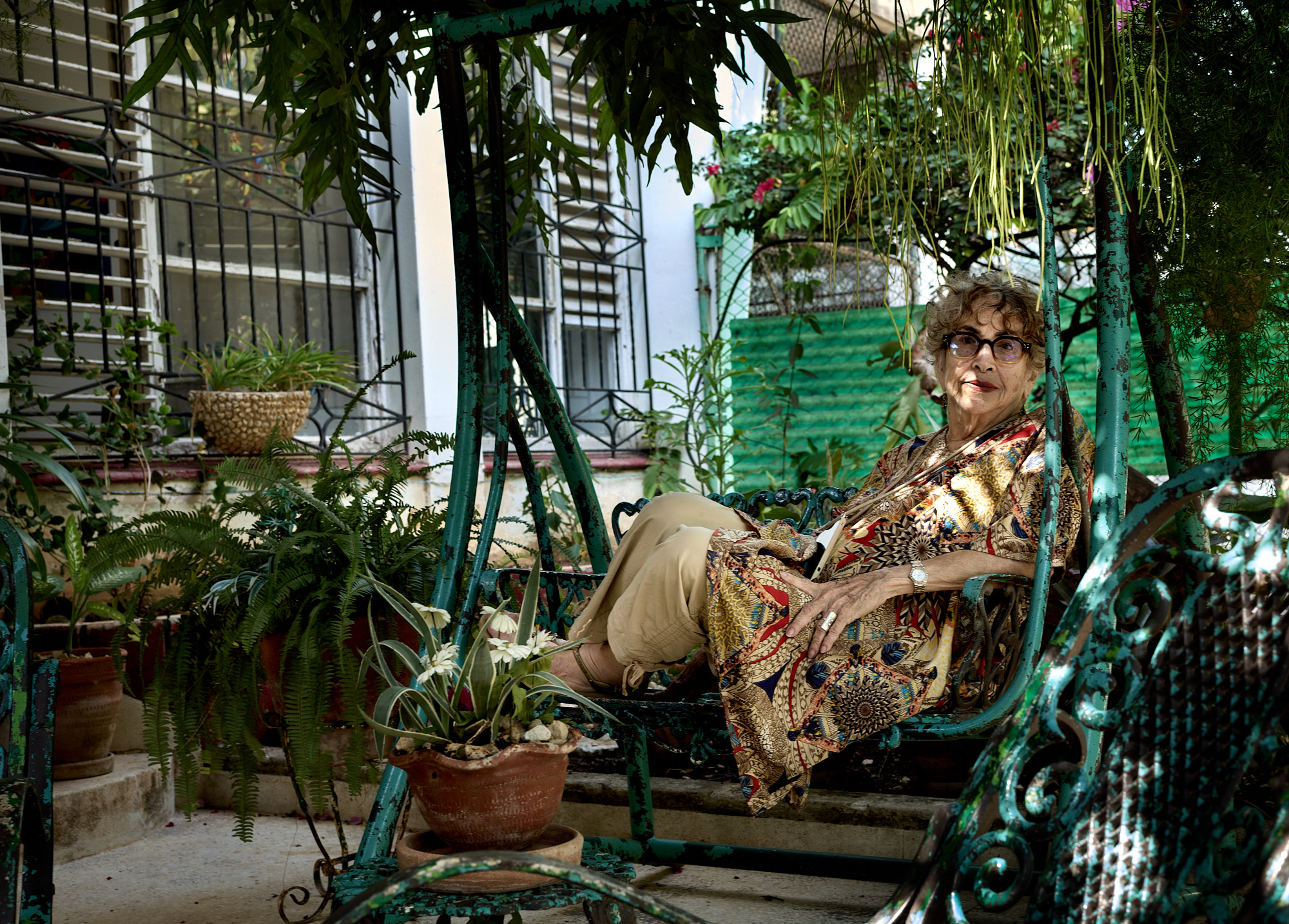
She told me she had “done enough,” yet still wanted her story written—not for glory, but as testimony. In her reflections, the Revolution was never just an ideology, it was a life ledger: gains for the many, losses for the few, promises kept and broken. She had seen Cuba open to the world and then close in on itself. She had seen hope harden into resignation.
Today’s blackouts are not just an inconvenience; they are the visible crack in a century-long struggle between Cuba’s aspirations and its constraints—embargoes, authoritarianism, scarcity. The lights go out, and history presses in.
Iliana’s words, layered with pride and critique, are a reminder that what endures are not governments or slogans but people. People who remember, who resist, who carry both love of homeland and longing for change. Her testimony is both archive and warning, a light in the dark.
Footnotes
- Cuba has suffered at least four nationwide blackouts in less than a year, most recently on September 10, 2025 when failure at the Antonio Guiteras thermal power plant triggered a collapse of the national grid. These crises stem from an energy system crippled by aging infrastructure, fuel shortages, and lack of spare parts. Cuban Corruption and U.S. sanctions exacerbate the challenge, limiting access to foreign credit, essential equipment, and external fuel; making even routine maintenance difficult. The result: a brittle grid where a single plant failure can plunge the island into darkness. ↩
- Where is Cuba’s money? Secret records show the military has massive cash hoard
By Nora Gamez Torres August 6, 2025 5:30 AM, Miami Herald
Read more at: https://www.miamiherald.com/news/nation-world/world/americas/cuba/article311488962.html#storylink=cpy
https://www.miamiherald.com/news/nation-world/world/americas/cuba/article311488962.html ↩
- Please, please, do visit me. Give this 76 year old Cuban lady the gift of meeting you personally. I think there are not many Cubans so eager as I to meet you in person not as an important American personality but as a charming president whose open smile wins hearts.
Please understand I very much look forward to it.
I would also love for you to come with your wonderful, lovely wife.
God bless you son, also bless your family.
WASHINGTON
March 14, 2016
Mrs. Ileana R. Yarza
Havana
Cuba ↩
- Dear Ileana:
Thank you for your kind words. I appreciate your support over the years, and I hope this note—which will reach you by way of the first direct mail flight between the United States and Cuba in over 50 years—serves as a reminder of a bright new chapter in the relationship between our two nations.
I am looking forward to visiting Havana to foster this relationship and highlight our shared values—and, hopefully, I will have time to enjoy a cup of Cuban coffee.
Sincerely,
(signature)
Barack Obama ↩
- When Ileana talks about the Monroe Doctrine, she’s drawing a direct line from 1823 to today. The doctrine was originally framed as a U.S. pledge to keep European powers out of the Americas — but in practice, it gave Washington cover to dominate the region itself. In her view, the embargo, sanctions, and decades of pressure on Cuba are not just about communism. They are the modern face of the same doctrine: the United States asserting its right to keep Cuba, only 90 miles away, under its control. ↩
- Cuba maintained strong ties with Vietnam after the U.S. war, offering technical, economic, and political support. Cuban delegations frequently visited during the 1970s–80s to build solidarity among socialist nations. ↩
- Ileana’s claim of lecturing at Johns Hopkins reflects Cuba’s use of academics and professionals as cultural ambassadors during periods of thaw. U.S.–Cuba exchange was limited but did take place, particularly in the 1990s when universities hosted Cuban speakers. ↩
- Under the Trump administration, the U.S. dramatically reduced consular services in Havana (2017 onward), forcing Cubans to apply for visas through third countries like Guyana. This policy effectively restricted travel, drawing criticism from human rights groups and Cuban families alike. ↩
- U.S. ownership in Cuba: Before the 1959 revolution, U.S. corporations and individuals controlled large portions of Cuba’s economy, including about 40% of sugar production and most utilities. ↩
- Exile terrorism against Cuba: Anti-Castro exile groups carried out violent campaigns, including the 1976 bombing of Cubana Flight 455 (73 killed) and the 1997 Havana hotel bombings (one tourist killed). These attacks were documented internationally but received limited coverage in U.S. media. ↩
- Fox News viewership: Surveys consistently show Fox News as the most-watched cable news network among conservatives. Research has found strong links between Fox viewership and Republican political alignment. ↩
- Why “Made in USA” food still appears in Cuba: Since 2000, the U.S. has allowed sales of certain foods and medical goods to Cuba under the Trade Sanctions Reform and Export Enhancement Act (TSRA). U.S. poultry has been a major export line to Cuba, and total U.S. goods exports to Cuba reached $585.2M in 2024. ↩
- Cuba’s private SMEs (pymes) were created in August 2021 by Decree-Law 46/2021, later updated by additional rules in 2024. ↩
- In May 2024, the U.S. Treasury (OFAC) authorized independent Cuban private-sector entrepreneurs to open and remotely use U.S. bank accounts, part of a package to support the private sector (while excluding government officials). ↩
- The Cuban government created MLC stores to pull in U.S. dollars—not to serve the average Cuban. By pricing essentials like shampoo in USD while paying wages in worthless pesos, they’ve built a system that excludes most of the population. Families are forced to rely on remittances or black-market dollars just to buy basic goods, while the state funnels that hard currency into its own coffers to fund imports or prop up failing systems. ↩
- Cuba’s informal exchange rate has diverged sharply from the official rate; in Aug 2025 the peso traded around 400 CUP per USD on the street, underscoring the erosion of purchasing power and the unequal access created by dollarization. ↩
- The Platt Amendment (1901/1903) tied Cuban independence to U.S. oversight, granting Washington the right to intervene in Cuban affairs and shaping the early republic’s dependence (see Louis A. Pérez Jr., Cuba: Between Reform and Revolution, 5th ed., Oxford University Press, 2014). U.S. companies came to dominate Cuban sugar, utilities, and infrastructure through the first half of the 20th century (see Ada Ferrer, Cuba: An American History, Scribner, 2021). This uneven prosperity coincided with cycles of political instability, culminating in Fulgencio Batista’s 1952 coup, which installed a military dictatorship that lasted until 1959 (see Hugh Thomas, Cuba: The Pursuit of Freedom, Harper & Row, 1971). ↩
- Cuba formally gained independence in 1902, but under the Platt Amendment (1901–1934), the U.S. reserved the right to intervene in Cuban affairs and imposed conditions that limited Cuban sovereignty. ↩
- In 1952, Fulgencio Batista staged a coup and established a military dictatorship. This came after decades of unstable governments, periodic U.S. intervention, and repeated coups throughout the early republic. ↩
- Education and health care became universal in post-revolution policy; abortion was liberalized in 1965 and provided free in public hospitals, making Cuba one of the earliest countries in the Americas to do so. ↩
- Elective abortion has been legally available in Cuba for decades and provided free within the public health system. Similarly, Cuba’s nationwide polio vaccination began in 1962; subsequent annual campaigns virtually eliminated the disease (see PAHO, Public Health in the Americas, 2002). The same philosophy guided Cuba’s COVID-19 response: the state prioritized universal immunization, developed its own vaccines (Abdala, Soberana 02, Soberana Plus), and by late 2021 achieved one of the world’s highest vaccination rates, with over 90% of the population fully vaccinated (see World Health Organization and Reuters reporting, 2021–22). ↩
- Racial segregation and color bars were widely documented in pre-1959 Cuba, including club and neighborhood restrictions, despite formal constitutional equality. ↩
- The Revolutionary government outlawed discrimination in employment, housing, and education, integrating Afro-Cubans into universities, state jobs, and cultural life. ↩
- Scholars note that while Fidel Castro declared racism “solved” in the 1960s, prejudice persisted informally, and discussion of racial inequality was often silenced until more recent decades. ↩
- Youth-led movements have increasingly emphasized collective responsibility over individual gain. In Spain, the Indignados (2011) and subsequent grassroots coalitions reshaped political discourse around inequality and democracy. In the U.S., surveys show Gen Z and Millennials rank climate change, healthcare, and wealth inequality as top concerns, with majority support for policies framed as public goods (Pew Research Center, U.S. Politics & Policy, 2021). In Cuba, despite economic hardship, recent scholarship notes generational debates over solidarity and national responsibility (see Katrin Hansing, Generational Change in Cuba, Inter-American Dialogue, 2022). ↩
- U.S. administrations have long struggled with deportation and detention policy. Under George W. Bush, post-9/11 security measures hardened enforcement and increased removals (DHS creation, Secure Communities) . The Obama administration earned the label “deporter-in-chief” for record numbers, though later years narrowed priorities to recent arrivals and criminal cases . The Biden administration ended some of Trump’s harshest measures, but in 2023 resumed deportation flights directly to Venezuela under a deal with Nicolás Maduro — criticized by Human Rights Watch and others for returning people to repression without adequate asylum review .
Trump’s approach stands out as uniquely punitive. His 2018 “zero tolerance” policy separated thousands of children from their parents ; the “Migrant Protection Protocols” (Remain in Mexico) forced asylum seekers into dangerous encampments ; and his “safe third country” agreements sent migrants to El Salvador, Guatemala, and Honduras — countries with high violence and limited asylum systems . In El Salvador, deportees risked confinement in President Nayib Bukele’s CECOT mega-prison, opened in 2023, one of the largest in the world and notorious for mass incarceration and alleged human rights abuses .
Domestically, Trump also backed high-security detention centers. Florida’s Dade-Collier site, nicknamed “Alligator Alcatraz,” drew reports of detainees living in cages under sweltering heat, toilets that failed and flooded, and people resorting to drinking directly from toilets when taps failed . Legal advocates and human rights groups have described it as inhumane, while Trump openly praised the facility as a model of toughness . Together, these measures illustrate a severity that went far beyond the enforcement practices of other administrations.
⸻
Sources (for your footnote citations)
1. U.S. DHS formation & Bush-era removals — Migration Policy Institute (2003–2008 data).
2. Obama deportations — Pew Research Center, 2014 (“deporter-in-chief” label widely reported).
3. Biden Venezuela flights — AP News, Oct 2023; Human Rights Watch reports.
4. Trump family separations — ACLU & DOJ Inspector General reports (2018).
5. “Remain in Mexico” encampments — Human Rights First documentation (2019–2020).
6. Trump “safe third country” deals — Congressional Research Service, 2020.
7. El Salvador CECOT prison — BBC, Feb 2023; HRW critiques.
8. Dade-Collier / “Alligator Alcatraz” — Miami Herald, July 2025; Reuters reporting.
9. Trump praise of Florida facility — AP/Reuters, July 2025 coverage of campaign visit. ↩
- During World War II, factions of the Ukrainian nationalist movement, particularly the Organization of Ukrainian Nationalists (OUN) and its armed wing, the UPA, collaborated at times with Nazi Germany and were implicated in massacres of Jews and Poles. This history remains a flashpoint in narratives about Ukraine’s identity and politics. ↩
- Since the Cold War, U.S.–Russia rivalry has shaped global geopolitics, with Ukraine often caught in between. U.S. support for Ukraine, especially after the 2014 annexation of Crimea and the 2022 full-scale invasion, is seen by critics like Ileana as instrumentalizing Ukraine in a larger power struggle rather than supporting its sovereignty. ↩
- The Soviet Union, founded after the 1917 Bolshevik Revolution, institutionalized communism under Lenin and Stalin. For decades, the USSR operated as a one-party state with centralized economic planning and political repression. By the late 1980s, Mikhail Gorbachev’s reforms of glasnost (openness) and perestroika (restructuring) attempted to modernize but accelerated collapse. In 1991 the Soviet Union dissolved, and Russia transitioned to a capitalist system marked by oligarchic control and state influence. Today Russia is authoritarian and nationalist rather than communist.
During World War II, the Soviet Union lost approximately 27 million people, a staggering figure that continues to shape Russian politics and nationalism. Ileana’s “80 million” reflects exaggeration but underscores the depth of remembered trauma. ↩
- Russia today is widely classified as an authoritarian capitalist state, not communist. By contrast, China retains a single-party communist system with market reforms, and North Korea remains a closed, dynastic communist regime. Critics often conflate these models, but as Ileana insisted, the differences matter. ↩
- Fidel Castro’s early 1960s policies abolished most private property: large estates, foreign-run factories, even small urban businesses were absorbed by the state. On March 13, 1968, his Revolutionary Offensive seized tens of thousands of small private enterprises (bars, shops, workshops), justified as necessary to “uproot capitalism” (Baldomero Vázquez Soto, “The Day Fidel Castro Eliminated Private Businesses,” Translating Cuba, 2012).
In later years, particularly during the Rectification Process (mid-1980s to early 1990s), Castro and Cuban officials acknowledged economic hardships, inefficiencies, and negative effects of over-centralization and excessive nationalization (“Propiedad de todos, socialismo de nadie,” Revista de la Universidad de México, 2017).
While there is no solid documentation of Castro explicitly stating in his final years that “eliminating all private property was a mistake,” Ileana’s recollection deserves weight: as someone who lived inside the system and worked for decades as an economist, she carried insights and conversations that rarely entered the public record. ↩
- Cuba’s universal education system, from primary through university, has remained tuition-free since the early 1960s. UNESCO reports confirm the island’s high literacy and school enrollment rates. Yet structural economic decline — worsened by the loss of Soviet subsidies in the 1990s and compounded by U.S. sanctions — has left graduates underemployed. A 2023 Reuters report documented professionals such as doctors and engineers leaving their fields for tourism or migration, reflecting exactly the trend Ileana described.
In my blog post After the Revolution: Growing Old in Cuba, I noted the same pattern. One couple I interviewed hadn’t seen their son or daughter in more than five years. He trained as an architect but now works as a tour guide. She studied nursing but now sells clothes. Their story reflects how professional vocations often do not earn enough to sustain a family — and how the fracture between education and livelihood fuels distance, frustration, and emigration. ↩
- The United States has maintained a naval base at Guantánamo Bay, Cuba since 1903, under lease agreements established by the Platt Amendment of 1901–1903 (see Louis A. Pérez, Cuba and the United States: Ties of Singular Intimacy, 2003).
In Colombia, a 2009 Defense Cooperation Agreement allowed U.S. military access to seven Colombian bases (including Palanquero, Malambo, Tolemaida, Larandia, Apiay, Cartagena, and Málaga) for counter-narcotics and counterinsurgency missions; permanent stationing was blocked by Colombia’s Constitutional Court in 2010, but access and joint operations continued (Congressional Research Service, Colombia: Background and U.S. Relations, updated 2023).
Beyond Colombia, the U.S. operates or has access to a network of forward operating locations and cooperative security sites across Latin America and the Caribbean, such as Soto Cano Air Base in Honduras, Comalapa Air Base in El Salvador, and facilities in Curaçao and Aruba (U.S. Department of Defense, Base Structure Report, 2021).
This extensive network has been criticized across the region, not only as evidence of Washington’s enduring military footprint but also as a reminder of historical interventionism. Ileana’s indignation echoed this perspective: while Americans may take U.S. bases abroad as routine, Latin Americans often see them as symbols of dependency and control. The contrast underscores one of her recurring points in our conversation: That Americans “only know what they are told,” while people in the region live with the consequences. ↩
- Critics of U.S. outsourcing of detention have raised similar concerns: that sending migrants abroad allows governments to sidestep U.S. legal protections and creates conditions for exploitation. While specific cases vary, human rights reports document the risks of forced labor and abuse in such arrangements. ↩
- Fidel’s ideology is still debated — was it true communism, Cuban nationalism, or a blend of both? Historians note his early embrace of Marxism-Leninism was less about abstract theory and more about carving independence from U.S. dominance. ↩
- Cuba’s demographic trends reflect a severe crisis for its younger generations. The island now has one of the lowest fertility rates in Latin America: in 2023 the rate was 1.45 children per woman, well below the replacement level of 2.1 (United Nations World Population Prospects, 2022 revision). Economic pressures also drive migration: since 2021, more than 500,000 Cubans — nearly 5% of the island’s population — have left, the largest exodus since the Mariel boatlift of 1980 (U.S. Customs and Border Protection, 2023). Combined with food and supply shortages, these trends fuel a sense of stasis. International media like The Washington Post and Reuters have described Cuba as “a prison without walls” for its youth, where opportunity is scarce and escape often means emigration. ↩
- Cuba maintains compulsory education through ninth grade, and official statistics still show high literacy and enrollment rates (UNESCO, Global Education Monitoring Report 2022). Yet these figures mask growing cracks: teacher shortages, declining attendance, and a surge of students abandoning advanced studies. A 2023 Reuters investigation found that widespread blackouts, food insecurity, and economic collapse have disrupted schooling, with young Cubans often choosing informal work, tourism hustles, or migration instead of classrooms. The Cuban Observatory of Quality Education has reported that “delincuencia juvenil” (youth delinquency) increasingly refers not to crime, but to disengagement from study and work—a reflection of a generation skeptical about the value of education in a collapsed labor market. ↩

 Documentary Photography and Stories
Leave a comment