
This is one story in a series of stories about Cuba. Images from this story are also available in my gallery.
The fight had run its course and the stronger bird was becoming apparent. Strangely, the crowd was becoming quiet—satisfied or resigned to the outcome. Finally, the outcome had become clear as a bird lay motionless on its back. The winning bird made it clear who the victor was.
Silence.
The expression of some overlooking the result was one of deep satisfaction—I was unsure if it stemmed from the money won or the brutality on display and the finality of the result. .
Silence.

—
Three months ago, cockfights in Viñales weren’t in the itinerary. Not officially. Back during the planning stages of my Cuba project, I’d floated the idea to my fixer’s agency. Maybe, they’d said. Possibly. Too dangerous, especially to photograph.
Nothing ever materialized—until I at Michel’s farmhouse, on the tobacco farm I had been documenting for the last two days. Several people were gathered; this seemed to be the village’s meeting place. Another farmer wandered over and casually mentioned that there’d be fights Tuesday night. Just like that, the door cracked open.
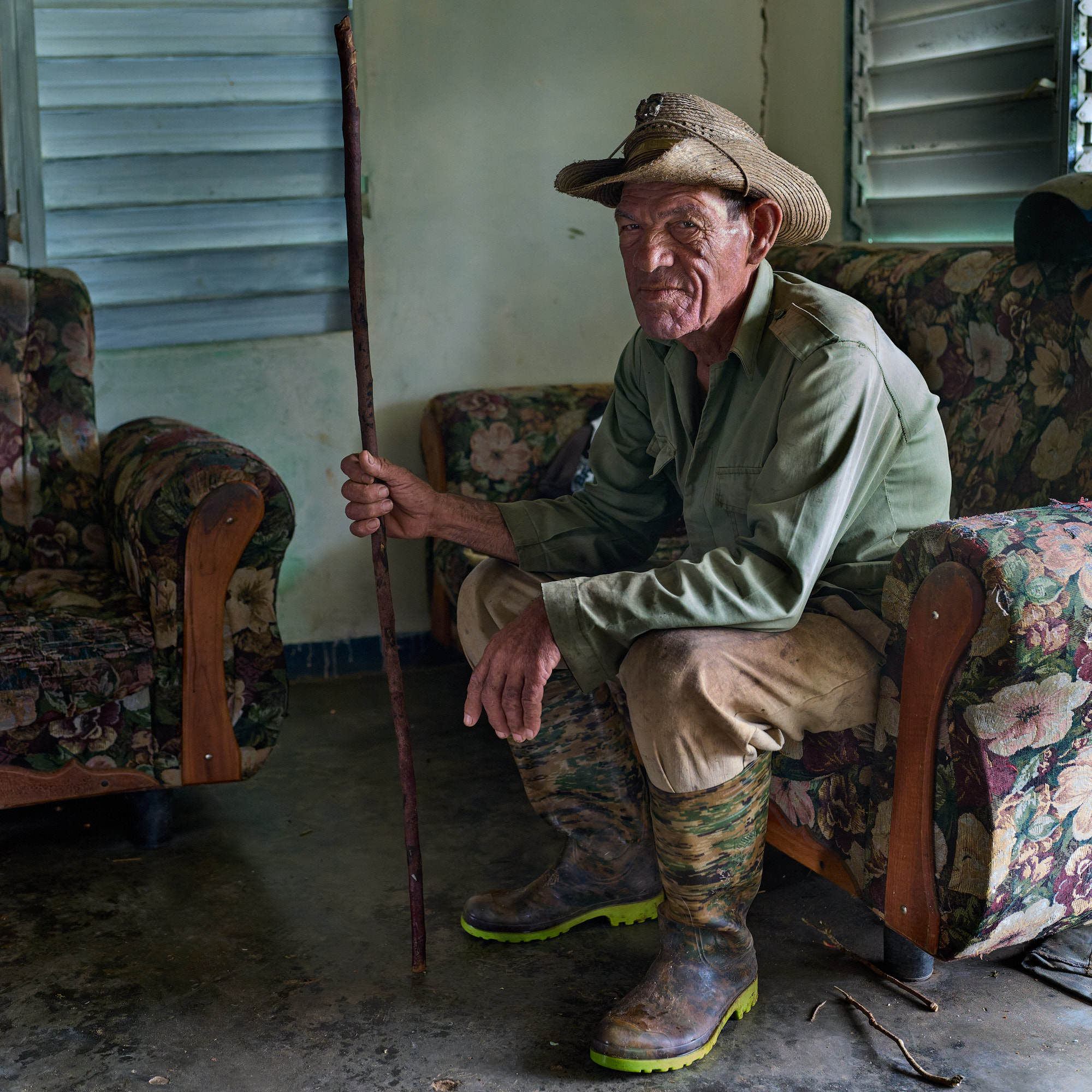
My fixer hesitated. “I don’t think we can attend. It’s not possible,” he said, nervously avoiding my eye. But I wasn’t asking permission. I asked him to translate: Can we come and take photographs? The farmer, with barely a shrug, said, “Yes.” As if—go ahead and try.
The gears turned fast after that.
There was just one glitch: our rental car was due back Tuesday in Havana. I had to verify—what were the penalties if we returned it a day late without notice? I combed through the printed contract in the glove compartment. A clerical error: it wasn’t due until Wednesday at 9:30 a.m. That gave us the perfect window. We’d attend the cockfights Tuesday night, drive the three hours back to Havana overnight, and return the car in the morning. Cuba’s system glitches were suddenly working in my favor.

That night, I drove toward the outskirts of Viñales with my fixer and Michel’s son, Michael. Known locally for his daredevil horseback racing, tonight he was our key to getting past the unspoken barriers of trust. I stood out—six-foot-three, white, carrying a camera. It would take finesse to blend in.
But finesse wasn’t what followed. At one point, my fixer asked me to pull over. He and Michael leapt out and disappeared. Ten minutes later, they returned, breathless. I asked what that was about. The fixer muttered, “He got a gun.” That was it. I’m still unsure what exactly happened.
It was a twenty-minute ride out of town. The final approach was rough. A steep shelf acted as a kind of threshold, leading to a rutted dirt road. I bottomed out the car hard. The muffler groaned. If I’d damaged the undercarriage, getting back to Havana might not be an option. We kept going.
We traveled deeper until the road narrowed to a single lane. It led to a small clearing, a makeshift parking lot with only two cars. It felt oddly quiet. We got out. I grabbed my gear. I had no idea what to expect next.
At the edge of the lot, a narrow path appeared—foot traffic only. We walked through, winding between dense trees until we hit a checkpoint. A man stood at a barricade. Michael approached him while we hung back. After a brief exchange, Michael motioned us forward. I didn’t understand the formality here, but I followed. We were in.

What I found was unexpected: an improvised arena, trees lashed together to support a sagging canopy of plastic tarps riddled with holes. Sunlight pierced through in shafts. A 40-foot ring was the centerpiece. Benches ringed the pit, themselves fenced off with more lashed saplings—pay-to-enter space. Behind the structure, women prepared food and drinks at makeshift stands.
It didn’t feel clandestine. It felt… festive. Like a small-town fair, even if the main event was blood sport.
Families were there. Kids. Elders. Women. It didn’t match the dangerous, underground vibe I’d been warned about. But I moved carefully. I couldn’t speak the language, but I could show respect.
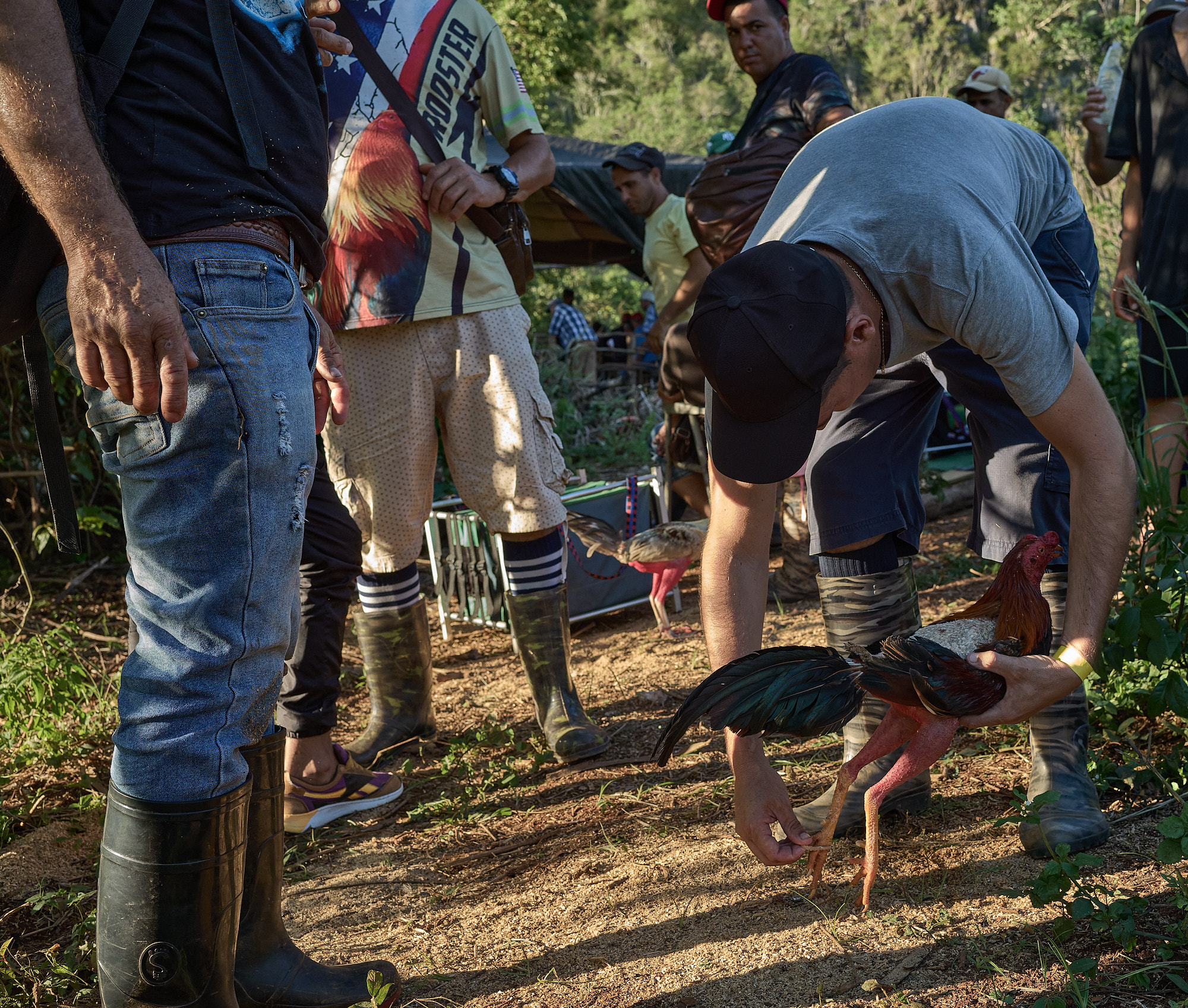
I began by kneeling to photograph a rooster. Then I gestured to its owner with my camera: You? Can I photograph you with it? A nod. Click. Trust—earned in small increments.


From there, I worked my way across the tent—slowly, patiently. Blending in. Pretending I was supposed to be there. Some people welcomed me with Cuban thumbs-ups. Others were hesitant.
A man approached. Calm voice, decent English.
“What are you using these pictures for?
If it’s personal use, it’s OK.”
I nodded, but was surprised. Others hadn’t asked. Why him? Maybe he’d been burned before.
Off to one side, a faded rug—like something pulled from a Cuban doorway—was laid over the dirt. One end propped up to form a gentle ramp forming the gaming floor for High-Low, a fast-paced dice game. Three dice, a single roll, and a rush of voices. Men huddled tight, pesos fanned between calloused fingers. The dice clattered, tumbled, then settled. This wasn’t a sideshow—it was financial prep for the fight. A quick chance to win money to place on the upcoming cockfights.


My fixer warned me. “Don’t take pictures of that,” he whispered.
I ignored him.
I gestured to the pit boss. A nod. Yes.
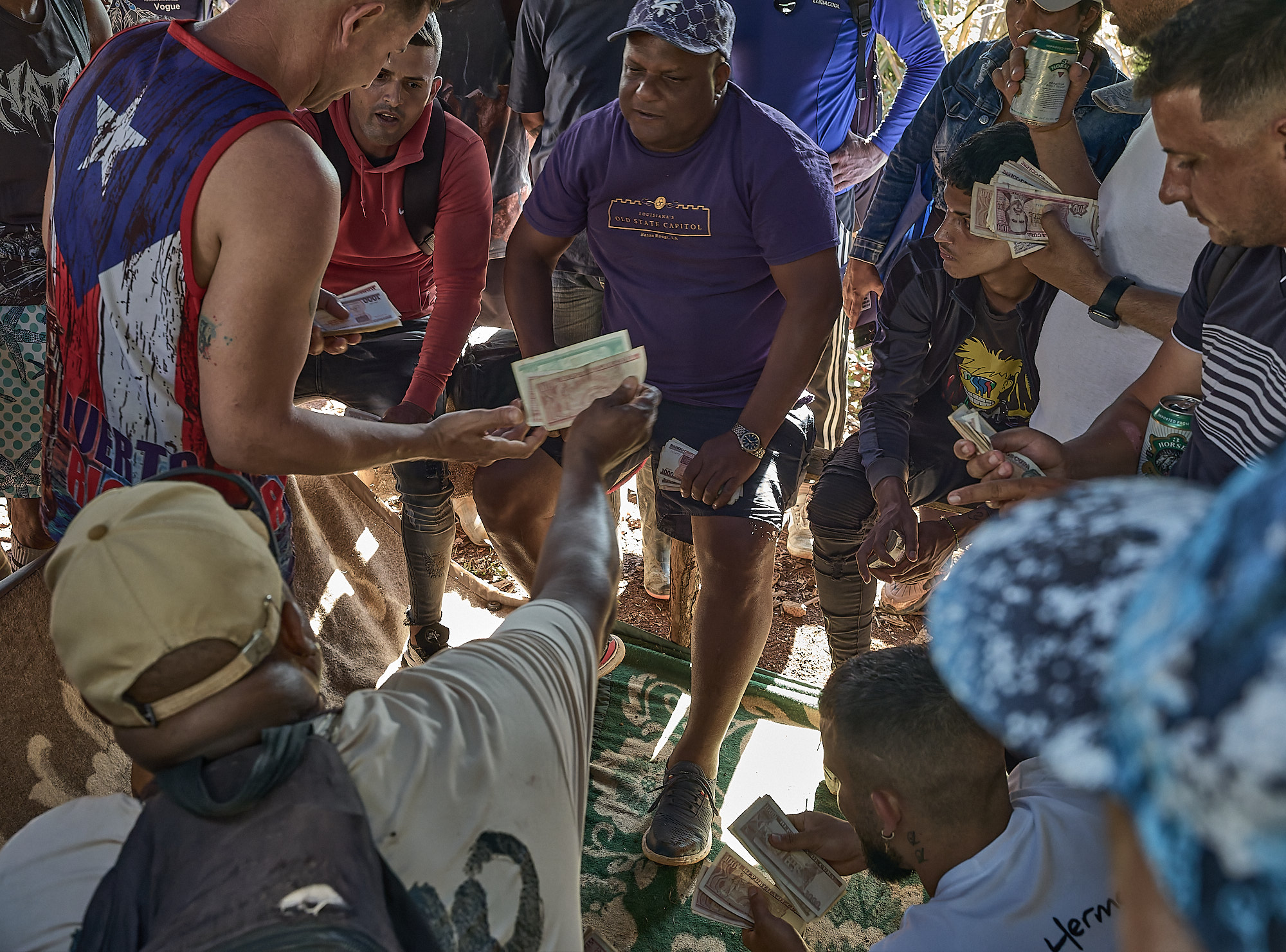
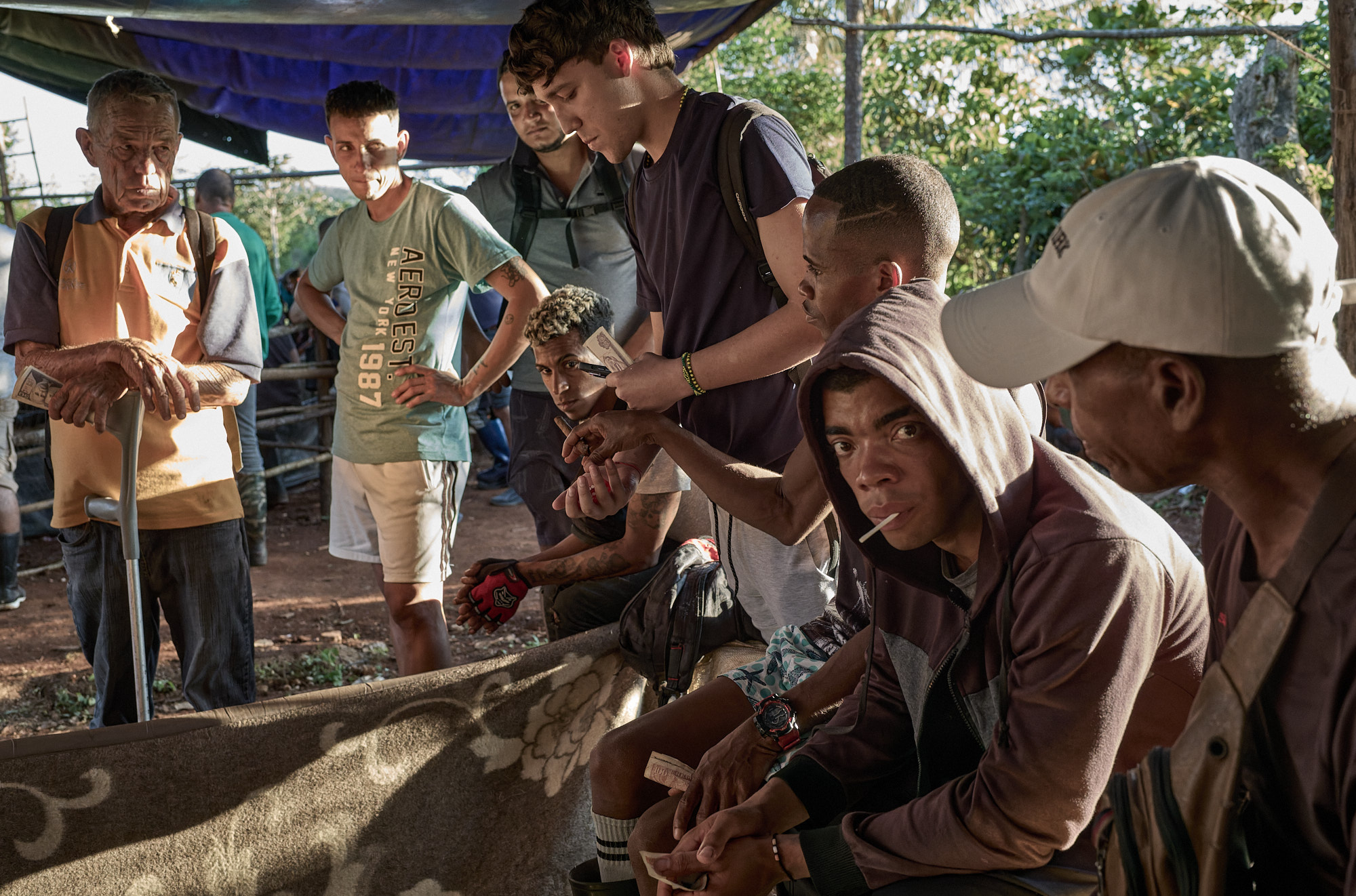
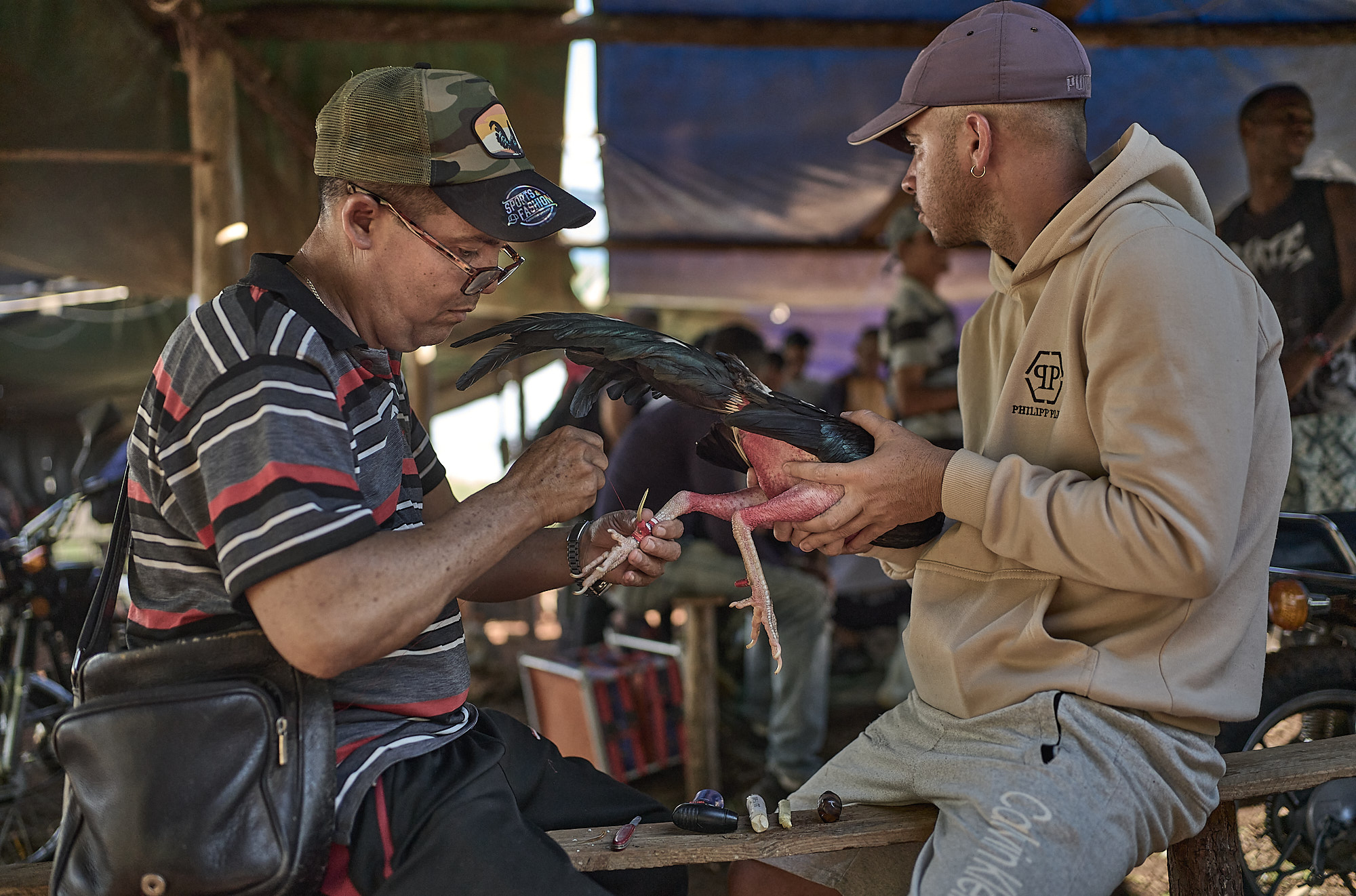
By the time the roosters were being fitted with their gaffs, I’d earned enough trust to photograph it. The gaff is a metal spike—tied and glued to the bird’s lower legs. It’s designed to puncture. To slash. To kill.
I noticed some people wearing wristbands and asked my fixer about them.
“That’s for the inner ring,” he said. “Ringside seats.”
I wanted in.
He guessed the cost. I said, “Don’t guess. Ask.”
Eventually, we got the answer: 5,000 pesos.
I only had 4,000.
So I stayed in the outer ring. From here I could study how the fight worked—how the birds were released, how the referee handled them, how the crowd erupted. It wasn’t just spectacle. It was investment. It was identity. And I knew I couldn’t fully grasp it from back here.

But I wanted closer. I wanted that shot: the intensity in people’s eyes, the shouting, the money waving through humid air. The emotions. The chaos. That wouldn’t come from the back.
I walked up to the gatekeeper and pointed to my camera, then to the inner ring. “If I pay, can I go in?”
He nodded yes—but clearly didn’t understand me.
I showed him the 4,000 CUP—short by 1,000. He shrugged. Let me in.
I slid onto a wooden bench next to a man I’d photographed earlier. I asked—awkwardly—if I could go all the way in.
“No,” he replied, like I was crazy. But I could not resist.

I waited.
Eventually, I inched down the bench. Found a small gap. I slid one foot into the ring.
No one stopped me.
Then the other foot.
Now I was crouched in the ring, camera raised, beside a man live-streaming the match. He glanced at me, puzzled.
Then ignored me.
I was in.
The match was chaos. Roosters collided in a blur of feathers, claws, and shrieks. But I didn’t just photograph the birds—I turned my lens to the people. Faces clenched in tension. Arms raised. Voices hoarse with yelling. Money exchanged mid-fight. This wasn’t just entertainment—it was ritual.
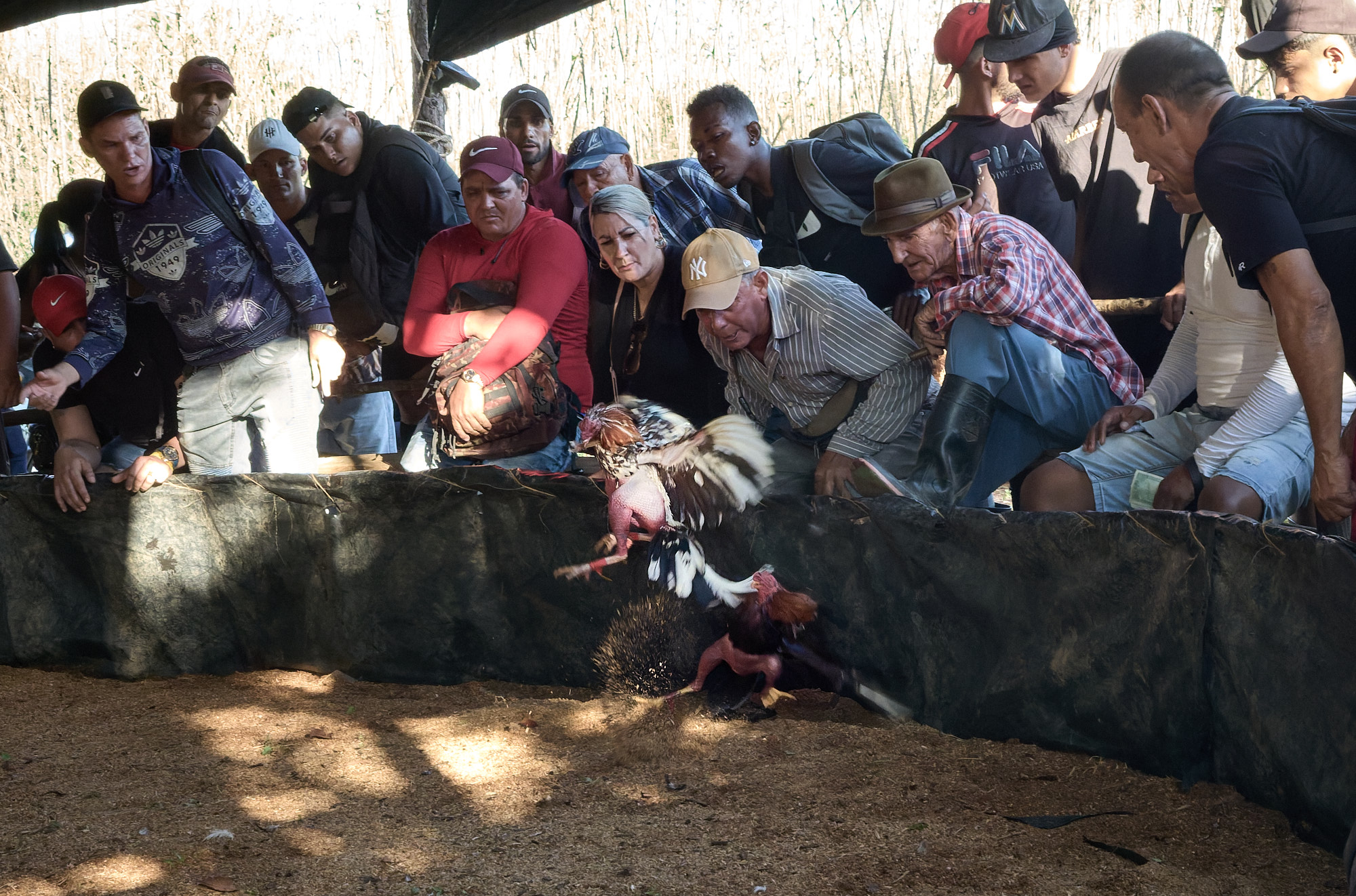
The fight had run its course and the stronger bird was becoming apparent. Strangely, the crowd was becoming quiet—satisfied or resigned to the outcome. Finally, the outcome had become clear as a bird lay motionless on its back. The winning bird made it clear who the victor was.
Silence.
The expression of some overlooking the result was one of deep satisfaction—I was unsure if it stemmed from the money won or the brutality on display and the finality of the result. .
Silence.
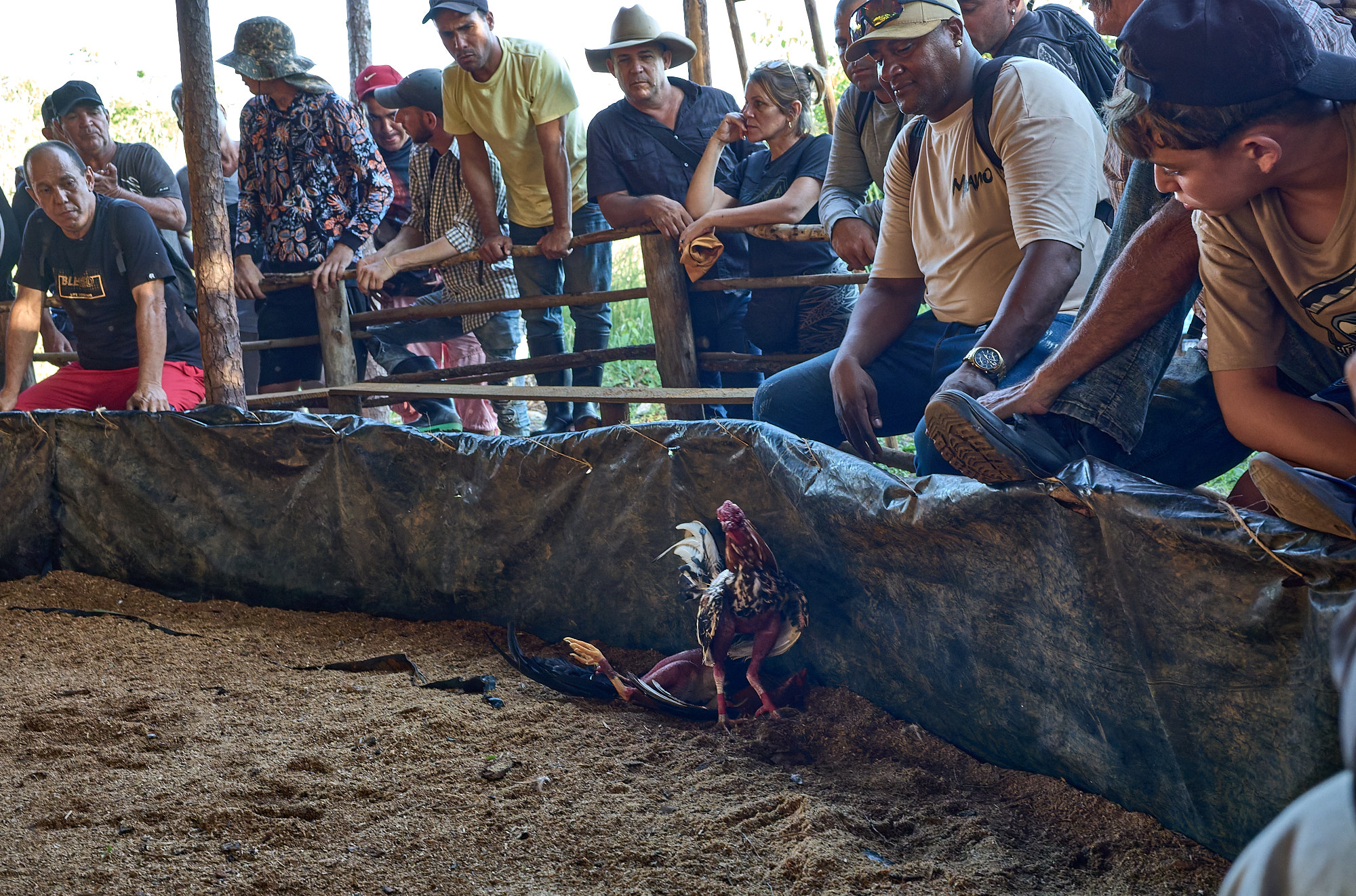
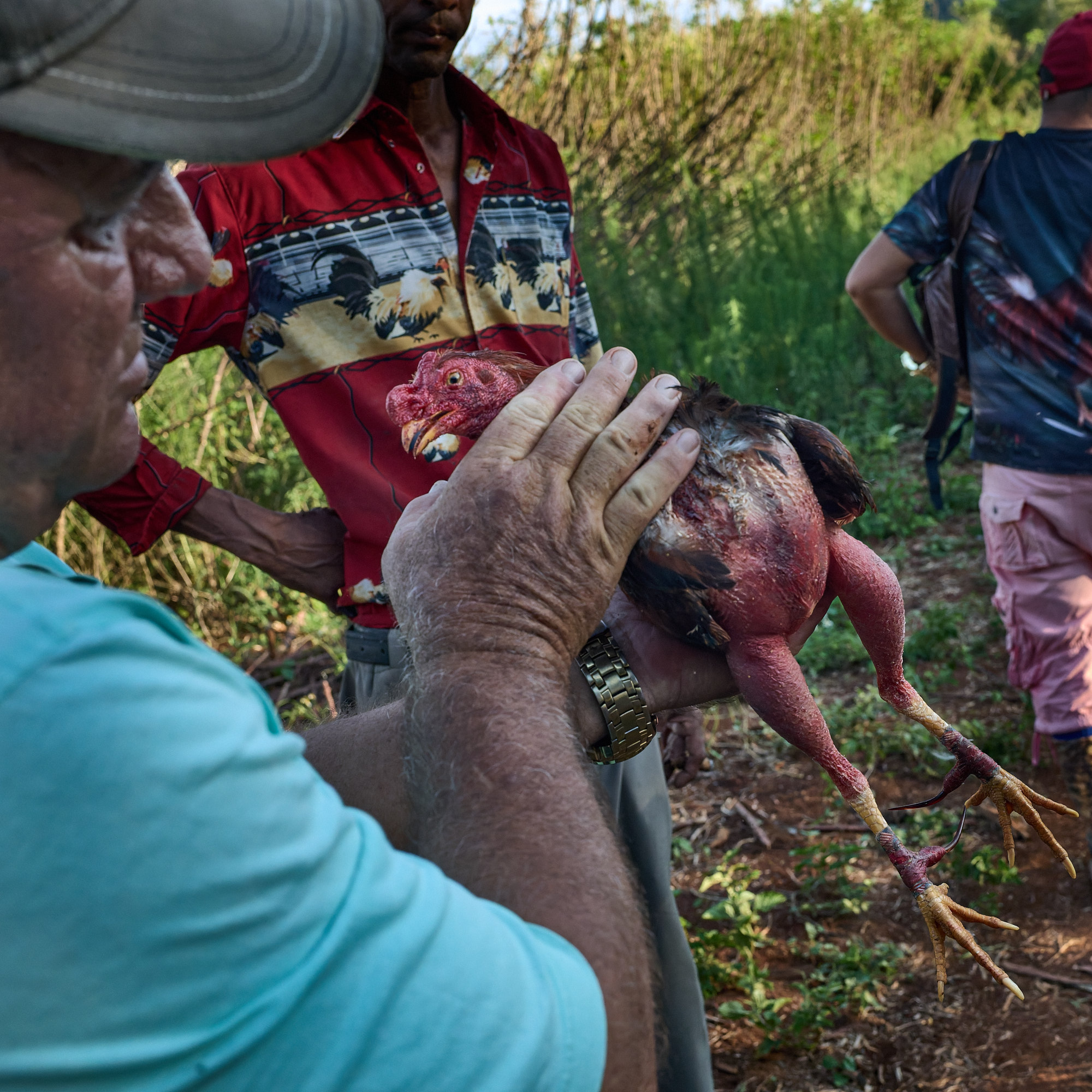
Here, I turned my camera toward the motionless bird. Its owner stepped forward and scooped it up without ceremony, carrying it by the wings through the dust. This bird had been bred and trained for this moment. There was no pause for mourning.
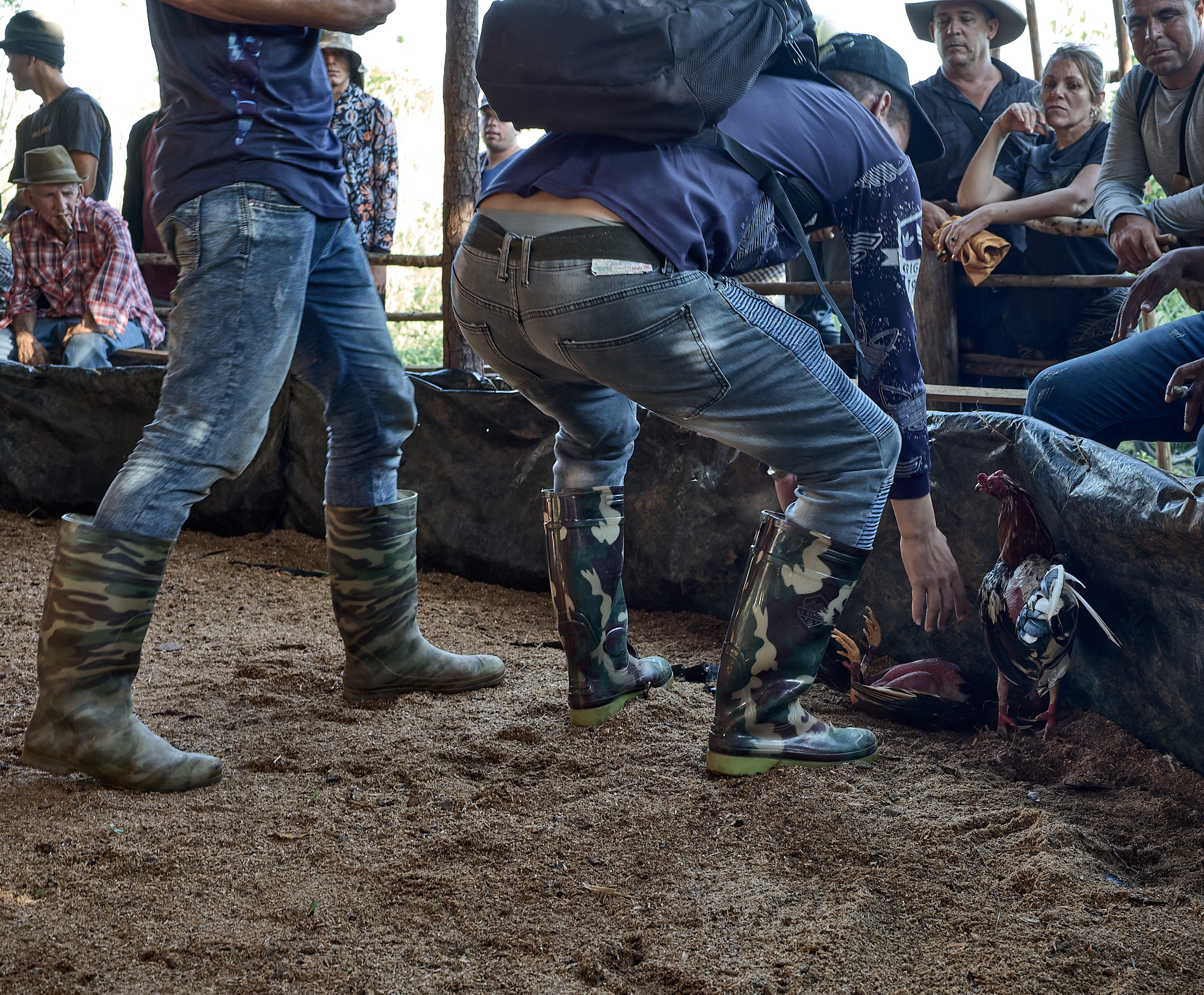
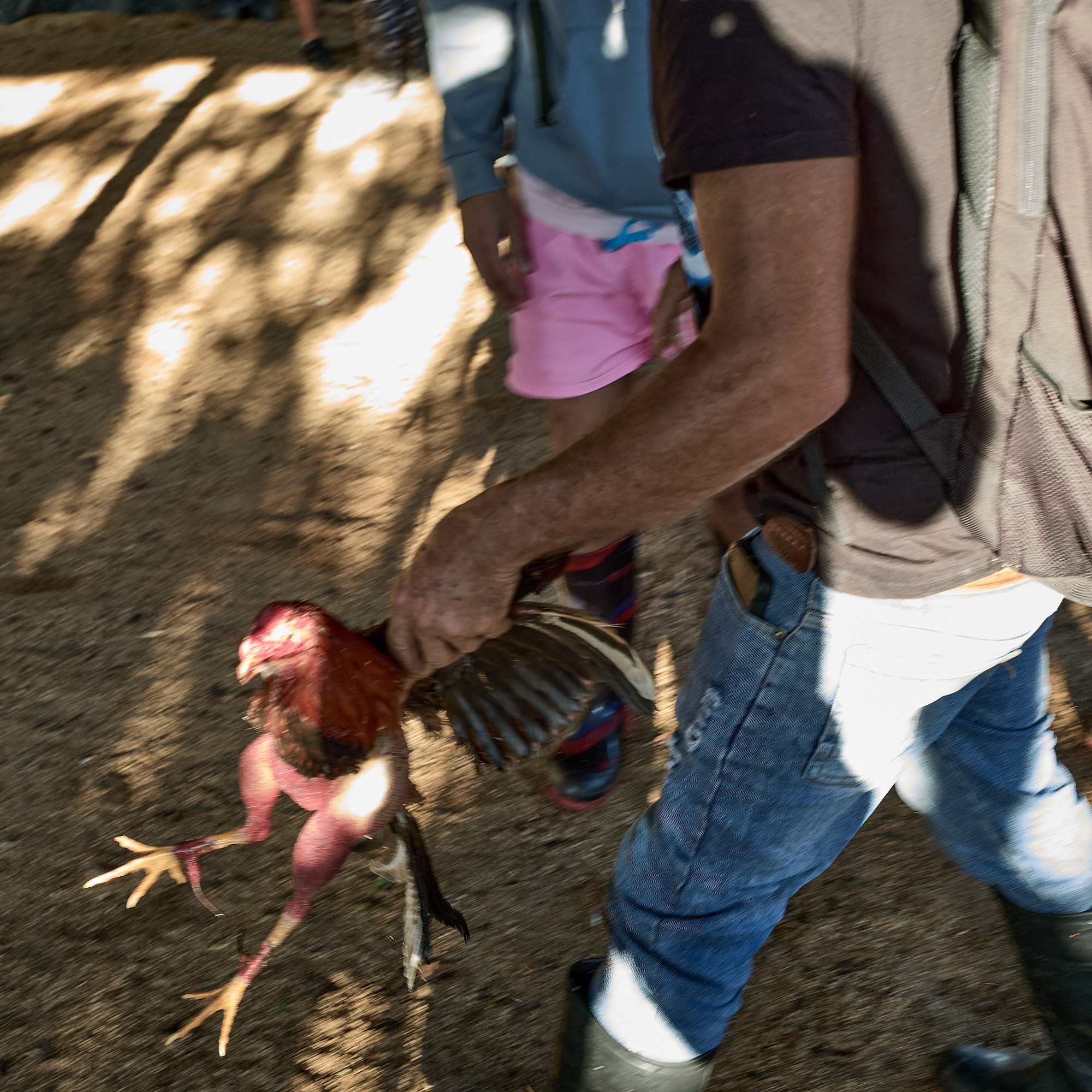
I followed them, assuming the bird had died. But I was wrong.
The handlers crouched to inspect its wounds. One pressed at its breast. Another checked the legs.
Satisfied the bird was salvageable, they tied it back to the same stake where the day had started.
It would fight again.
It was time to leave. I wanted to say goodbye to Michael—the one who made the entire evening possible. This would be the last image I’d take of him on the trip.
He was in his element: confident, composed. A local hero. He’d stay late into the night, after the final cries faded, after the dust settled.

We drove back toward Havana through the pitch-black night. The muffler held, miraculously, despite the punishment from potholes on the highway to Havana.
The bird had clung to life.
And somewhere in the back seat of that rental car, my memory card carried the story of a brutal, beautiful night that almost didn’t happen.
 Documentary Photography and Stories
Leave a comment